Results by title
7 books match the query 'Boundary Waters'
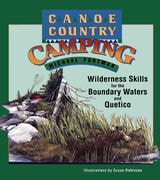
Canoe Country Camping
Wilderness Skills for the Boundary Waters and QueticoMichael Furtman
University of Minnesota Press, 2002
Canoe Country Camping is a complete, entertaining, and up-to-date guide that gives you the information you need for a safe and enjoyable canoe trip.
First-time campers will find answers to all their questions about where to go, how to pack, and what to do. Seasoned campers will find helpful tips to streamline their planning and make their next trip better than ever.
Prepare for all the challenges of the wilderness from the obvious to the unexpected. Michael Furtman, experienced Boundary Waters and Quetico canoeist, helps you: plan your adventure, pick your gear, pack for the portage, paddle efficiently, and prepare a comfortable camp.
Canoe Country Camping is chock full of handy checklists, helpful charts, and detailed drawings. Use it before you go. Take it along in your pack for quick reference. Then get out there with confidence, relax and enjoy your trip.
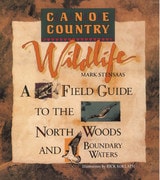
Canoe Country Wildlife
A Field Guide to the North Woods and Boundary WatersMark Stensaas
University of Minnesota Press, 2004
Warblers, wolves, and whirligig beetles—the creatures of the canoe countrywilderness come alive in Canoe Country Wildlife. In this read-aloud treasure, “Sparky” Stensaas, naturalist and storyteller, intrigues you with his tales of encounters with the forest inhabitants—from tiny toads to majestic moose.
Canoe Country Wildlife, a friendly field guide, introduces you to the wildlife you are most likely to see as you travel in the North Woods. It describes these creatures and their habits accurately so you’ll know where and when to look for them. Detailed line drawings illustrate each animal clearly so you’ll recognize what you’re seeing.
The book is filled with fascinating little-known facts: Did you know that wood frogs can freeze solid, only to live again? That loons can fly a hundred miles an hour? That chipmunks can carry seventy sunflower seeds in their cheeks?
Canoe Country Wildlife includes handy checklists to help you keep track of the critters you encounter, a calendar for you to record the natural events you witness, and activities—one for each animal—that will help both adults and children learn by discovery.
Carry Canoe Country Wildlife in your pack. Your trip will be more enjoyable and your memories will last forever. It’s a great gift for anyone who loves the outdoors.
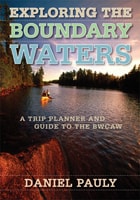
Exploring the Boundary Waters
A Trip Planner and Guide to the BWCAWDaniel Pauly
University of Minnesota Press, 2005
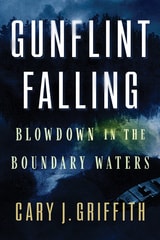
Gunflint Falling
Blowdown in the Boundary WatersCary J. Griffith
University of Minnesota Press, 2023
Stories from survivors of the Boundary Waters Canoe Area Wilderness’s epochal weather disaster
On July 4, 1999, in the Boundary Waters Canoe Area Wilderness (BWCAW), a bizarre confluence of meteorological events resulted in the most damaging blowdown in the region’s history. Originating over the Dakotas, the midsummer windstorm developed amid unusually high heat and water-saturated forests and moved steadily east, bearing down on Fargo, North Dakota, and damaging land as it crossed the Minnesota border. Gunflint Falling tells the story of this devastating storm from the perspectives of those who were on the ground before, during, and after the catastrophic event—from first-time visitors to the north woods to returning paddlers to Forest Service Rangers.
The pre-dawn forecasts from the National Weather Service in Duluth for that Sunday of the holiday weekend predicted the day would be “warm and humid. Partly sunny with a thirty percent chance of thunderstorms.” But as the afternoon and evening settled over the Boundary Waters, the first eyewitness accounts began to tell a dramatic and terrifying story. Five friends camping on Lake Polly watched in wonder as the sky turned green and the winds began to whip. They scrambled to pull canoes on shore and secure tarps when a tree snapped and struck one of them in the head, rendering her unconscious. Three women enjoying their last day of a camping trip near the end of the Gunflint Trail took shelter in their tent as winds increased. Water drenched the nylon walls as trees crashed around them, one flattening the tent and pinning a woman beneath its weight. A family vacationing at their cabin dodged falling trees and strained against straight-line winds as they sprinted from the cabin to the safest place they knew: a crawl space underneath it. They watched in awe as trees snapped and toppled, their twisted root balls torn out of the water-logged earth—as they prayed their cabin would hold.
By the time the storm began to subside, falling trees had injured approximately sixty people, and most needed to be medevacked to safety. Amazingly, no one died. The historic storm laid down timber that would later blaze in the Ham Lake fire of 2007, ultimately reshaping the region’s forests in ways we have yet to fully understand.
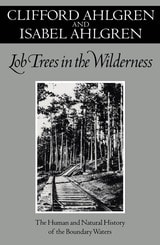
Lob Trees In The Wilderness
The Human and Natural History of the Boundary WatersClifford Ahlgren
University of Minnesota Press, 2001
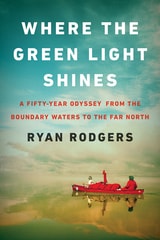
Where the Green Light Shines
A Fifty-Year Odyssey from the Boundary Waters to the Far NorthRyan Rodgers
University of Minnesota Press, 2026
A unique glimpse into the world of arctic canoeing through the travels of one of North America’s most renowned paddlers
A centuries-long story of adventure runs through the Boundary Waters. Stretching from northern Minnesota into the Canadian Shield, this lake-dappled expanse—long an Indigenous homeland and later also a fur trading hub—is the most visited designated wilderness in North America, with more than 200,000 people dipping their paddles into its ancient waterways each year. Bridging the legendary arctic expeditions of the nineteenth century and the making of today’s recreational paddling tradition, Where the Green Light Shines is a fascinating chronicle of canoe exploration, told through the journeys of a true master of the craft, Bob O’Hara.
O’Hara first launched his canoe as a Boy Scout in the 1950s, and he spent every summer for the next sixty-five years venturing further north into the Canadian barrens, a region rarely seen by paddlers. Mentored by a generation of adventurers and by the Inuit who long paddled the northern tundra rivers, O’Hara would become a guiding light for many young canoeists. Passionate yet guarded, O’Hara dedicated his life to the thrill of paddling, and his extraordinary journeys here become a touchstone as Ryan Rodgers tells the story of a nascent canoeing scene that continues to thrive today.
A vivid depiction of the northern wilds traversed by an eclectic roster of paddlers, bush pilots, and historic characters, Where the Green Light Shines illuminates a lost world of arctic canoeing remade in our time. It is bound to transport anyone interested in outdoor adventure—from wilderness canoeists to armchair travelers—and to bring home the eternal allure of the far north.

Woman Of The Boundary Waters
Canoeing, Guiding, Mushing, and SurvivingJustine Kerfoot
University of Minnesota Press, 1994