Results by title
3 books match the query 'Brenner, Rachel Feldhay'
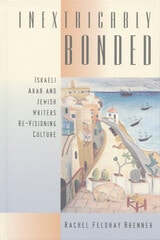
Inextricably Bonded
Israeli Arab and Jewish Writers Re-Visioning CultureRachel Feldhay Brenner
University of Wisconsin Press, 2003
Despite the tragic reality of the continuing Israeli-Arab conflict and deep-rooted beliefs that the chasm between Israeli Jews and Israeli Arabs is unbridgeable, this book affirms the bonds between the two communities. Rachel Feldhay Brenner demonstrates that the literatures of both ethnic groups defy the ideologies that have obstructed dialogue between the two peoples.
Brenner argues that literary critics have ignored the variety and the dissent in the novels of both Arab and Jewish writers in Israel, giving them interpretations that embrace the politics of exclusion and conform with Zionist ideology. Brenner offers insightful new readings that compare fiction by Jewish writers Amos Oz, A.B. Yehoshua, David Grossman, and others with fiction written in Hebrew by such Arab-Israeli writers as Atallah Mansour, Emile Habiby, and Anton Shammas. This parallel analysis highlights the moral and psychological dilemmas faced by both the Jewish victors and the Arab vanquished, and Brenner suggests that the hope for release from the historical trauma lies—on both sides—in reaching an understanding with and of the adversary.
Drawing upon the theories of Walter Benjamin, Jacques Lacan, Sigmund Freud, Emanuel Levinas, and others, Inextricably Bonded is an innovative and illuminating examination of literary dissent from dominant ideology.
Polish Literature and the Holocaust
Eyewitness Testimonies, 1942–1947Rachel Feldhay Brenner
Northwestern University Press, 2019
Polish Literature and the Holocaust: Eyewitness Testimonies,1942–1947 is a particularly timely book in view of the continuing debate about the attitudes of Poles toward the Jews during the war. The literary voices from the past that Brenner examines posit questions that are as pertinent now as they were then. And so, while this book speaks to readers who are interested in literary responses to the Holocaust, it also illuminates the universal issue of the responsibility of witnesses toward the victims of any atrocity.
The Ethics of Witnessing
The Holocaust in Polish Writers' Diaries from Warsaw, 1939-1945Rachel Feldhay Brenner
Northwestern University Press, 2014
Winner, 2015 USC Book Award in Literary and Cultural Studies, for outstanding monograph published on Russia, Eastern Europe or Eurasia in the fields of literary and cultural studies
The Ethics of Witnessing investigates the reactions of five important Polish diaristswriters—Jaroslaw Iwaszkiewicz, Maria Dabrowska, Aurelia Wylezynska, Zofia Nalkowska, and Stanislaw Rembek—during the period when the Nazis persecuted and murdered Warsaw’s Jewish population. The responses to the Holocaust of these prominent prewar authors extended from insistence on empathic interaction with victims to resentful detachment from Jewish suffering. Whereas some defied the dehumanization of the Jews and endeavored to maintain intersubjective relationships with the victims they attempted to rescue, others selfdeceptively evaded the Jewish plight. The Ethics of Witnessing examines the extent to which ideologies of humanism and nationalism informed the diarists’ perceptions, proposing that the reality of the Final Solution exposed the limits of both orientations and ultimately destroyed the ethical landscape shaped by the Enlightenment tradition, which promised the equality and fellowship of all human beings.