Results by title

5 books match the query 'Bride'
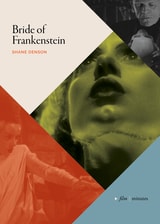
cover of Bride of Frankenstein

Bride of Frankenstein

Shane Denson

Lever Press, 2025

The inaugural volume in the film|minutes book series, this book offers a close, minute-by-minute analysis of director James Whale’s iconic 1935 masterpiece Bride of Frankenstein. Alternating between a variety of analytical lenses, including descriptive, historical, and philosophical, this study breaks from conventional forms of film-analytical writing and offers an experiment in defamiliarization and looking anew. In the 1930s, the film opened a space for reflection on the rapid normalization of filmic sound, which it both relies on and estranges. In the 2020s, Bride of Frankenstein brings forth questions of new technological mediums such as artificial intelligence  and the transformation of human agency. Shane Denson argues that such associations should not be written off as mere anachronism, but seen, rather, as a strategy of serialization; that is, it is by means of such anachronism that a film like Bride of Frankenstein remains open to new developments and novel situations, and thus comes alive for future viewers. 

Volumes in the film|minutes series cut up films into segments of exactly one minute and transform each minute into an innovative tool for thinking with the film. Each volume works rigorously with the concept of “the minute” as a non-cinematic scale/quantity, a means to zoom in on (dis)orderly fragments that do not necessarily respect the confinements of cinematic form or meaning. As a critical practice, the focus on minutes causes disruptions and displacement that create novel connections and perspectives, and uncovers hidden traces, making it possible to watch each film anew.
[more]
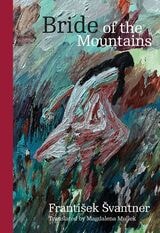
cover of Bride of the Mountains

Bride of the Mountains

František Švantner

Karolinum Press, 2026

A classic work of twentieth-century Slovak literature that blends naturalism and depictions of rural life with the supernatural.

After many years, Libor returns to his native village, where he has been appointed gamekeeper. His childhood sweetheart, Zuna, is waiting for him there. But his homecoming is far from idyllic. He has “tasted city life” and soon becomes an outsider to the villagers. According to them, Zuna has become a local prostitute who sleeps with anyone who pays her. Zuna’s father, an old miller, has gone blind because he made a pact with the devil. The mill where Libor and Zuna used to play as children has fallen into disrepair and ruin. The more Libor gets to know the world that he has returned to, the more confused he becomes. The village is full of superstitions, secrets, and hostility. He meets the charcoal burner Tavo, who lives high in the mountains, and learns from him the mysterious and bloody story of Zuna’s birth. He also learns what matters most to him: Zuna is pure and innocent. Libor starts a relationship with her from scratch. But just when their forgotten love might finally come to fruition, He appears—a vagabond who can transform into a wolf—and Libor discovers that Zuna is meeting with him. Is it a monster that gouges people’s eyes out? The devil, or our immaterial, dark alter ego? Reality, dreams, and fantasy blend in Libor’s mind as his hopes seem crushed beyond redemption.
[more]
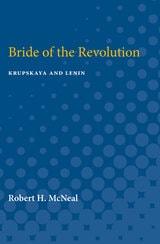
cover of Bride of the Revolution: Krupskaya and Lenin

Bride of the Revolution

Krupskaya and Lenin

Robert H. McNeal

University of Michigan Press, 1972
Some four years after the wedding of Nicholas and Alexandra Romanov in the splendor of the Kremlin, two obscure political convicts—Vladimir Ulyanov (Lenin) and Nadezhda Krupskaya--were married in Siberia. Twenty years later Lenin and Krupskaya were themselves living in the Kremlin, and the royal Romanovs had been shot by Lenin's police. This book re-creates for the first time the full story of the devoted and determined woman who married the greatest among European revolutionary leaders.Krupskaya's marriage was remarkable in many ways. It began with Lenin's ambiguous proposal smuggled into her jail cell, and ended in the intrigue of succession as Lenin lay dying. From close political collaboration during the early emigrant years of the Bolshevik Party, to her role in the long-suppressed story of Lenin's affair with Inessa Armand, Krupskaya proved herself a loyal bride of the revolution. Yet Krupskaya in her own right comes alive in these pages—as a youthful Tolstoyan; as an advocate of progressive education and the liberation of women; as chief cryptologist, secretary, and paymaster for the tiny network of revolutionaries; as an ultimately tragic figure, struggling to defend her husband's legacy against the machinations of Joseph Stalin.Nadezhda Krupskaya has long been revered in Russia as the greatest woman of the Communist era, yet no Soviet writer has dared to write frankly of her fascinating and turbulent life. In this book—based on extensive research in Soviet publications as well as Tsarist and Trotskyan archive materials—the author has succeeded in unraveling many of the enigmas of Krupskaya's biography, and has provided often intimate and very human glimpses of her famous relationship with Lenin. Here, for the first time, Krupskaya at last takes her place as a great figure of the modern age.
[more]
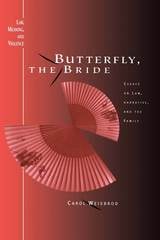
cover of Butterfly, the Bride: Essays on Law, Narrative, and the Family

Butterfly, the Bride

Essays on Law, Narrative, and the Family

Carol Weisbrod

University of Michigan Press, 2004

Carol Weisbrod uses a variety of stories to raise important questions about how society, through law, defines relationships in the family. Beginning with a story most familiar from the opera Madame Butterfly, Weisbrod addresses issues such as marriage, divorce, parent-child relations and abuses, and non-marital intimate contact. Each chapter works with fiction or narratives inspired by biography or myth, ranging from the Book of Esther to the stories of Kafka. Weisbrod frames the book with running commentary on variations of the Madame Butterfly story, showing the ways in which fiction better expresses the complexities of intimate lives than does the language of the law.

Butterfly, the Bride looks at law from the outside, using narrative to provide a fresh perspective on the issues of law and social structure---and individual responses to law. This book thoroughly explores relationships between inner and public lives by examining what is ordinarily classified as the sphere of private life---the world of family relationships.
Carol Weisbrod is Ellen Ash Peters Professor of Law at the University of Connecticut. Her other books include The Boundaries of Utopia and Emblems of Pluralism.
[more]
cover of The Bride of Quietness and Other Plays

The Bride of Quietness and Other Plays

Oscar Firkins

University of Minnesota Press, 1932

The Bride of Quietness and Other Plays was first published in 1932. Minnesota Archive Editions uses digital technology to make long-unavailable books once again accessible, and are published unaltered from the original University of Minnesota Press editions.Oscar Firkins’ books, posthumously published, are finding what the author, during his reclusive life, never looked for – popularity, that wide appeal which is evinced in the demand for a second edition of this book of plays and the friendly reception that has resulted in putting both his plays and the more recently published Memoirs and Letters on “bestseller” lists.John Keats, in a London twilight finds himself one wit the immortal figures of his Ode on a Grecian Urn. That timelessness of beauty to which he gave serene expression in his famous ode is the theme of The Bride of Quietness, the title play of this volume. The romantically wedded Brownings of Turnpikes in Arcady discover, under the spell of an Italian night, that they are not at all the “practical” persons they have supposed themselves to be. Charlotte, Emily, and the other enigmatic Brontës are vividly revealed in the brief, incisive lines of Empurpled Moors. A sprightly Restoration atmosphere pervades The King’s Vigil, in which Samuel Pepys and Charles II spend a night cloistered behind a massive oak door in hiding from importunate wives and mistresses.
[more]