Results by title
5 books match the query 'Brody, David'

Housekeeping by Design
Hotels and LaborDavid Brody
University of Chicago Press, 2016
With Housekeeping by Design, David Brody introduces us to those people—the housekeepers whose labor keeps the rooms clean and the guests happy. Through unprecedented access to staff at several hotels, Brody shows us just how much work goes on behind the scenes—and how much management goes out of its way to make sure that labor stays hidden. We see the incredible amount of hard physical work that is involved in cleaning and preparing a room, how spaces, furniture, and other objects are designed to facilitate a smooth flow of hidden labor, and, crucially, how that design could be improved for workers and management alike if front-line staff were involved in the design process. After reading this fascinating exposé of the ways hotels work—or don’t for housekeepers—one thing is certain: checking in will never be the same again.

Labor in Crisis
THE STEEL STRIKE OF 1919David Brody
University of Illinois Press, 1965
Widely regarded as a failure, the great 1919 steel strike had both immediate and far-reaching consequences that are important to the history of American labor. It helped end the twelve-hour day, dramatized the issues of the rights to organize and to engage in collective bargaining, and forwarded progress toward the passage of the Wagner Act, which, in turn, helped trigger John L. Lewis's decision to launch the CIO.
STEELWORKERS IN AMERIA
THE NONUNION ERADavid Brody
University of Illinois Press, 1960
as well as a symposium on the book in which seven prominent historians
discuss its significance and its place in the historiography of labor.
"Steelworkers in America has emerged and remained one of
the few genuinely classic works of U.S. labor history--one of the axiomatic
starting points for any understanding of the new labor history."
-- Roy Rosenzweig
"The vision of Steelworkers has survived these thirty years
and continues to inspire new work in labor history." -- Lizabeth
Cohen

The English Language Common Law Workbook
A Resource for Students Studying English-medium Law DegreesIan Collins and David Brody
University of Michigan Press, 2025
The English Language Common Law Workbook is designed to support students in developing the core competencies necessary for studying in a common law context. It provides readings and exercises based on authentic legal materials for practicing critical reading and writing skills. In particular, it includes an extensive number of statutes and cases and accompanying exercises that give students an opportunity to work with the type of sources they will encounter in English-medium law degree programs. By emphasizing common law principles throughout, the book helps international students coming from non–common law jurisdictions familiarize themselves with how statutes and cases in common law countries are written and structured. Students are supported in critically reading statutes and cases by focusing on key terminology and language structures. Finally, the book supports students in applying the skills they learn to construct basic case briefs and answer hypothetical legal questions using the IRAC structure.
CEFR Levels: B2–C2
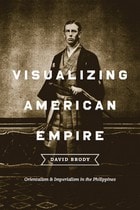
Visualizing American Empire
Orientalism and Imperialism in the PhilippinesDavid Brody
University of Chicago Press, 2010
In 1899 an American could open a newspaper and find outrageous images, such as an American soldier being injected with leprosy by Filipino insurgents. These kinds of hyperbolic accounts, David Brody argues in this illuminating book, were just one element of the visual and material culture that played an integral role in debates about empire in late nineteenth- and early twentieth-century America.
Visualizing American Empire explores the ways visual imagery and design shaped the political and cultural landscape. Drawing on a myriad of sources—including photographs, tattoos, the decorative arts, the popular press, maps, parades, and material from world’s fairs and urban planners—Brody offers a distinctive perspective on American imperialism. Exploring the period leading up to the Spanish-American War, as well as beyond it, Brody argues that the way Americans visualized the Orient greatly influenced the fantasies of colonial domestication that would play out in the Philippines. Throughout, Brody insightfully examines visual culture’s integral role in the machinery that runs the colonial engine. The result is essential reading for anyone interested in the history of the United States, art, design, or empire.