Results by title
8 books match the query 'Bronze Age'
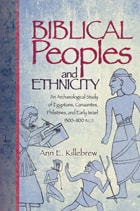
Biblical Peoples and Ethnicity
An Archaeological Study of Egyptians, CanaaniteAnn E. Killebrew
SBL Press, 2005
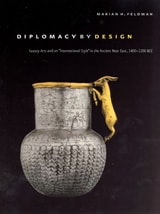
Diplomacy by Design
Luxury Arts and an "International Style" in the Ancient Near East, 1400-1200 BCEMarian H. Feldman
University of Chicago Press, 2006
Marian Feldman's Diplomacy by Design examines the profound connection between art produced during this period and its social context, revealing inanimate objects as catalysts—or even participants—in human dynamics. Feldman's fascinating study shows the ways in which the exchange of these works of art actively mediated and strengthened political relations, intercultural interactions, and economic negotiations. Previous studies of this international style have focused almost exclusively on stylistic attribution at the expense of social contextualization. Written by a specialist in ancient Near Eastern art and archaeology who has excavated and traveled extensively in this area of the world, Diplomacy by Design provides a much broader consideration of the symbolic power of material culture and its centrality in the construction of human relations.
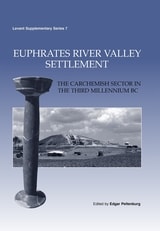
Euphrates River Valley Settlement
The Carchemish Sector in the Third Millennium BCE. Peltenburg
Council for British Research in the Levant, 2007
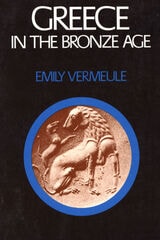
Greece in the Bronze Age
Emily Townsend Vermeule
University of Chicago Press, 1964
Live Stock and Dead Things
The Archaeology of Zoopolitics between Domestication and ModernityHannah Chazin
University of Chicago Press, 2024
In Live Stock and Dead Things, Hannah Chazin combines zooarchaeology and anthropology to challenge familiar narratives about the role of nonhuman animals in the rise of modern societies. Conventional views of this process tend to see a mostly linear development from hunter-gatherer societies, to horticultural and pastoral ones, to large-scale agricultural ones, and then industrial ones. Along the way, traditional accounts argue that owning livestock as property, along with land and other valuable commodities, introduced social inequality and stratification. Against this, Chazin raises a provocative question: What if domestication wasn’t the origin of instrumentalizing nonhuman animals after all?
Chazin argues that these conventional narratives are inherited from conjectural histories and ignore the archaeological data. In her view, the category of “domestication” flattens the more complex dimensions of humans’ relationship to herd animals. In the book’s first half, Chazin offers a new understanding of the political possibilities of pastoralism, one that recognizes the powerful role herd animals have played in shaping human notions of power and authority. In the second half, she takes readers into her archaeological fieldwork in the South Caucasus, which sheds further light on herd animals’ transformative effect on the economy, social life, and ritual. Appealing to anthropologists and archaeologists alike, this daring book offers a reconceptualization of human-animal relationships and their political significance.
Plant Foods of Greece
A Culinary Journey to the Neolithic and Bronze AgesSoultana Maria Valamoti
University of Alabama Press, 2023
2024 INAUGURAL MARY BEAUDRY BOOK AWARD FOR THE ARCHAEOLOGY OF FOOD
A synthesis of culinary practices of prehistoric Greece based on plant food ingredients
In Plant Foods of Greece, Greek archaeologist Soultana Maria Valamoti takes readers on a culinary journey, reconstructing the plant foods and culinary practices of Neolithic and Bronze Age Greece. For more than thirty years, she has been analyzing a large body of archaeobotanical data that was retrieved from nearly twenty sites in mainland Greece and the Greek islands, with an additional analysis of other sites as referenced by published colleagues. Plant foods were the main ingredients of daily meals in prehistoric Greece and most likely of special dishes prepared for feasts and rituals.
Valamoti’s approach allows an exploration of culinary variability through time. The thousands of charred seeds identified from occupation debris correspond to minuscule time capsules. She is able to document changes from the cooking of the first farmers to the sophisticated cuisines of the elites who inhabited palaces in the first cities of Europe in the south of Greece during the Late Bronze Age. Along the way, she explains the complex processes for the addition of new ingredients (such as millet and olives), condiments, sweet tastes, and complex recipes. Valamoti also addresses regional variability and diversity as well as detailing experimentation and research using occasional input from ancient written sources.
Comprehensive and synthetic coverage encompasses bread/cereals, pulses, oils, fruit and nuts, fermented brews, healing foods, cooking, and identity. In addition, Valamoti offers insight into engaging in public archaeology and provides recipes that incorporate ancient plant ingredients and connect prehistory to the present in a critical way. A definitive source for a range of food scientists and scholars, it will also appeal to foodies.
The Battles of Armageddon
Megiddo and the Jezreel Valley from the Bronze Age to the Nuclear AgeEric H. Cline
University of Michigan Press, 2002
> Best Popular Book on Archaeology
--Biblical Archaeology Society
Apocalypse. Judgment Day. The End Time. Armageddon. Students of the Bible know it as the place where the cataclysmic battle between the forces of good and the forces of evil will unfold. Many believe that this battle will take place in the very near future. But few know that Armageddon is a real place--one that has seen more fighting and bloodshed than any other spot on earth.
The name Armageddon is a corruption of the Hebrew phrase Har Megiddo, and it means "Mount of Megiddo." More than thirty bloody conflicts have been fought at the ancient site of Megiddo and adjacent areas of the Jezreel Valley during the past four thousand years. Egyptians, Israelites, Greeks, Muslims, Crusaders, Mongols, British, Germans, Arabs, and Israelis have all fought and died here. The names of the warring leaders reverberate throughout history: Thutmose III, Deborah, Gideon, Saul and Jonathan, Jezebel, Saladin, Napoleon, and Allenby, to name but the most famous. Throughout history Megiddo and the Jezreel Valley have been ground zero for battles that determined the very course of civilization. No wonder that the author of Revelation believed Armageddon, the penultimate battle between good and evil, would also take place here!
The Battles of Armageddon introduces readers to a rich cast of ancient and modern warriors, while bringing together for the first time the wide range of conflicts that have been fought at Megiddo and the Jezreel Valley from the Bronze Age to the Nuclear Age.
Eric H. Cline has participated in more than seventeen seasons of excavation and survey in Israel, Egypt, Jordan, Greece, and the United States. He is currently a Senior Staff Archaeologist at the ongoing excavations of Megiddo.
The Kingdom of Pylos
Warrior-Princes of Mycenaean GreeceSharon R. Stocker
J. Paul Getty Trust, The, 2025
Ancient Pylos has long captivated travelers, archaeologists, and historians familiar with Homer’s Iliad and Odyssey and his account of King Nestor, the prudent elder counselor in the Trojan War. Excavations begun in 1939 unearthed the storied Palace of Nestor in Messenia, an epicenter of Mycenaean civilization.
The Kingdom of Pylos features spectacular arts and crafts, many recently excavated at sites across Messenia, including goldwork of unparalleled artistry, masterfully carved sealstones, weapons, and wall paintings. Essays by international scholars examine the latest discoveries, including the Linear B tablets—the earliest written form of the Greek language—which document the political, religious, and economic organization of the prosperous Pylian realm. New research and cutting-edge science cast light on the 2015 find of the grave of the Griffin Warrior, an extraordinary, intact burial that held thousands of artifacts, including the celebrated Pylos Combat Agate, perhaps the finest work of art from the prehistoric Aegean. With over 300 illustrations, this is the first major publication in English to reconstruct the society of Pylos and settlements in its orbit during the Late Bronze Age (1700–1070 BCE).
This volume is published to accompany an exhibition on view at the Archaeological Museum of Messenia in Kalamata from February 15 to April 27, 2025, the J. Paul Getty Museum at the Getty Villa from June 25, 2025, to January 12, 2026, and the Hellenic National Archaeological Museum in Athens from March 1 to June 30, 2026.