Results by title
3 books match the query 'Brookshaw, David'
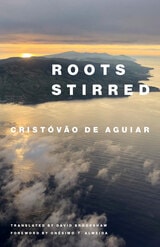
Roots Stirred
Cristóvão de Aguiar, Translated by David Brookshaw, Foreword by Onésimo T. Almeida
Tagus Press, 2026
A vibrant tale of memory, resistance, and the enduring spirit of an island community
This richly woven, multi-voiced novel transports readers to a small village on São Miguel, the largest of Portugal’s Azores islands. Through the eyes of a young boy growing up in the 1940s, and the stories shared by his beloved great-uncle, Tio Pascoal, the novel paints a vivid portrait of island life—its beauty, its hardships, and its quiet defiance.
As Tio Pascoal recounts his own youth at the start of the 20th century, we glimpse a world shaped by poverty, exploitation, and the heavy hands of church, landowners, and, later, the rise of Portugal’s authoritarian regime. Yet amid these struggles, the resilience of the islanders shines through—in their music, their feast days, their customs, and the enduring ties between those who stayed behind and those who set sail for America.
Told in a style alive with the rhythms and color of the local language—carefully rendered into English—Roots Stirred is both a coming-of-age story and a tribute to the rebellious spirit that endures across generations. By the time the young narrator prepares to leave his childhood behind, his uncle’s stories have taken root within him, carrying forward the memory of their people and the islands they call home.

The Crime at Valongo Wharf
A NovelEliana Alves Cruz; Translated from the Portuguese by David Brookshaw
Vanderbilt University Press, 2027
The Crime at Valongo Wharf pays homage to the many thousands of enslaved Africans who were brought ashore at Rio de Janeiro’s Cais do Valongo, the quay that was declared a World Heritage Site by UNESCO in 2017. The novel’s historical backdrop is between 1809 and 1821, when the Portuguese Court established itself in Rio after the Napoleonic invasion of the Iberian Peninsula. The story revolves around the murder of Bernardo Lourenço Viana, a Portuguese slave trader and innkeeper, a social climber of cruel and ruthless character. The twin narrators are Muana, a Macua Mozambican slave girl, and Nuno Alcântara Moutinho, a dark‑skinned “mazombo” (native Brazilian) who is the son of a Portuguese priest and a free African woman. Both narrators had motive enough to kill the murder victim, as did two other enslaved people in the household: Roza the cook, whom Viana raped with impunity, and her protector, Mariano, a gay Angolan slave.
Eliana Alves Cruz’s novel, translated from the Portuguese by David Brookshaw, artfully explores the political interests and social relationships at play in Rio de Janeiro at the beginning of the nineteenth century. In her work as a Black Brazilian author, Alves Cruz is seizing agency over the narrative and history of Afro‑Brazilian women of the past.
The Unknown Islands
Raul Brandão, Translated by David Brookshaw
Tagus Press, 2020