Results by title
3 books match the query 'Brown, Michelle'
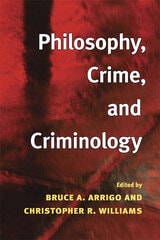
Philosophy, Crime, and Criminology
Edited by Bruce A. Arrigo and Christopher R. Williams
University of Illinois Press, 2006
Charting a provocative and original direction, editors Bruce A. Arrigo and Christopher R. Williams couple theoretically oriented chapters with those centered on application and case study. In doing so, they develop an insightful, sensible, and accessible approach for a philosophical criminology in step with the political and economic challenges of the twenty-first century. Revealing the ways in which philosophical conceits inform prevailing conceptions of crime, Philosophy, Crime, and Criminology is required reading for any serious student or scholar concerned with crime and its impact on society and in our lives.
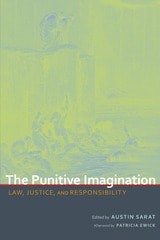
The Punitive Imagination
Law, Justice, and ResponsibilityAustin Sarat
University of Alabama Press, 2014
From the Gospel of Matthew to numerous US Supreme Court justices, many literary and legal sources have observed that how a society metes out punishment reveals core truths about its character. The Punitive Imagination is a collection of essays that engages and contributes to debates about the purposes and meanings of punishment in the United States.
The Punitive Imagination examines some of the critical assumptions that frame America's approach to punishment. It explores questions such as:
· What is the place of concern for human dignity in our prevailing ideologies of punishment?
· Can we justly punish the socially disadvantaged?
· What assumptions about persons, social institutions, and the ordering of social space provide the basis for American punitiveness?
· Who, if anyone, can be held responsible for excessively punitive criminal sentences?
· How does punishment depend on prevailing views of free will, responsibility, desert, blameworthiness?
· Where/how are those views subject to challenge in our punitive practices?
As Sarat posits in his introduction, the way a society punishes demonstrates its commitment to standards of judgment and justice, its distinctive views of blame and responsibility, its understandings of mercy and forgiveness, and its particular ways of responding to evil. He goes on to discuss the history of punishment in the United States and what it reveals about assumptions made about persons that “undergird” the American system of punishment.
The five additional contributors to The Punitive Imagination seek to illuminate what American practices of punishment tell us about who we are as a nation. Synthesizing cultural, sociological, philosophical, and legal perspectives, they offer a distinctive take on the meaning of punishment in America.

Understanding Illuminated Manuscripts
A Guide to Technical Terms, Revised EditionMichelle Brown
J. Paul Getty Trust, The, 2018
Updated to reflect current research and technologies, this beautifully illustrated guide includes images of important manuscript illuminations from the collection of the J. Paul Getty Museum and beyond. Concise, readable explanations of the technical terms most frequently encountered in manuscript studies make this portable volume an essential resource for students, scholars, and readers who wish a deeper understanding and enjoyment of illuminated manuscripts and medieval book production.