Results by title
4 books match the query 'Browning, Robert M.'
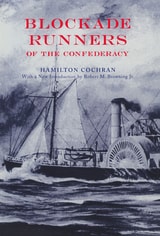
Blockade Runners of the Confederacy
Hamilton Cochran
University of Alabama Press, 2004
An authoritative account of blockade running in Civil War history.
Within four weeks of the fall of Fort Sumter, President Abraham Lincoln had declared a blockade of over four thousand miles of Confederate coastline, from Cape Henry in Virginia to the Mexican border. In response, professional runners, lured by both profits and patriotism, built faster, sleeker, low-profile ships and piloted them through the ever-thickening Northern cordon. The tonnage they imported, including items ranging from straight pins to marine engines, sustained the South throughout the conflict. This exciting chronicle of the men and ships that ran federal naval blockades during the Civil War also provides an overall assessment of the blockades conception, effectiveness, and impact on the Southern populace.
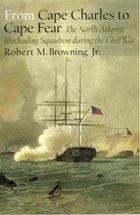
From Cape Charles to Cape Fear
The North Atlantic Blockading Squadron during the Civil WarRobert M. Browning
University of Alabama Press, 2003
A definitive study of Union naval power and the blockade that reshaped the Civil War.
In From Cape Charles to Cape Fear, acclaimed historian Robert M. Browning, Jr. offers a vivid and authoritative account of the Union Navy’s North Atlantic Blockading Squadron, a critical force in the American Civil War. Charged with enforcing the blockade along the Atlantic coastline from Virginia to North Carolina, the squadron played a decisive role in crippling the Confederacy’s economy and restricting its access to vital supplies.
Browning reveals the blockade as far more than a passive defensive strategy. Through detailed analysis of naval operations, coastal engagements, and strategic planning, he demonstrates how Union forces exerted control over key waterways and ports, including Norfolk and Wilmington. These contested hubs became focal points in a high-stakes struggle involving daring blockade runners, shifting naval tactics, and constant pressure on Southern trade networks.
Blending operational history with compelling narrative, Browning also captures the human dimension of naval warfare. Sailors and officers faced unpredictable weather, dangerous missions, and the relentless demands of maintaining control over an expansive coastline. Their experiences illuminate the challenges and complexities of maritime warfare during one of America’s defining conflicts.
Accessible yet richly researched, this book highlights the central importance of naval power in shaping Civil War outcomes. From Cape Charles to Cape Fear stands as an essential work for readers interested in Civil War history, naval strategy, and the enduring impact of maritime operations on the American past.
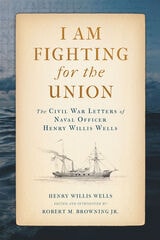
I Am Fighting for the Union
The Civil War Letters of Naval Officer Henry Willis WellsHenry Willis Wells, edited and introduced by Robert M. Browning Jr.
University of Alabama Press, 2023
A young officer’s insightful, detailed and steadfast devotion to the Union Navy—told in his own words.
On May 18, 1862, Henry Willis Wells wrote a letter to his mother telling her in clear terms, “I am fighting for the Union.” Since August 1861, when he joined the US Navy as a master’s mate he never wavered in his loyalty. He wrote to his family frequently that he considered military service a necessary and patriotic duty, and the career that ensued was a dramatic one, astutely and articulately documented by Wells in more than 200 letters home, leaving an invaluable account of daily life in the Union Navy.
Wells joined the navy shortly after the war began, initially on board the Cambridge, attached to the North Atlantic Blockading Squadron, which patrolled the waters of the Chesapeake Bay. He witnessed the Battle of Hampton Roads and the fight between the ironclads CSS Virginia and the USS Monitor. Next, the Cambridge assisted in the blockade of Wilmington, North Carolina. In one instance, the warship chased the schooner J. W. Pindar ashore during her attempt to run the blockade, and Confederate forces captured Henry’s boarding party. After a short prison stay in the infamous Libby Prison in Richmond, his Confederate captors paroled Henry. He travelled back to Brookline, and soon thereafter the Navy Department assigned him to the gunboat Ceres, which operated on the sounds and rivers of North Carolina, protecting army positions ashore. Henry was on board during the Confederate attempt to capture Washington, North Carolina. During this April 1863 attack, Henry was instrumental in the town’s defense, commanding a naval battery ashore during the latter part of the fight.
His exceptional service gained him a transfer to a larger warship, the USS Montgomery, again on the blockade of Wilmington. Later the service assigned him to the Gem of the Sea, part of the East Gulf Blockading Squadron. Through his hard work and professionalism, he finally earned his first command. In September 1864, he became the commanding officer of the Rosalie, a sloop used as a tender to the local warships. Later he commanded the schooner Annie, also a tender. At the end of December 1864, however, the Annie suffered a massive explosion, killing all hands, including Wells. He was twenty-three years old when his life and career ended tragically. Wells’s letters document both his considerable achievements and his frustrations. His challenges, triumphs, and disappointments are rendered with candor. I Am Fighting for the Union is a vital and deeply personal account of a momentous chapter in the history of the Civil War and its navies.
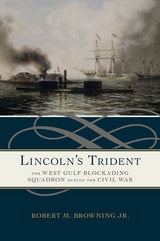
Lincoln's Trident
The West Gulf Blockading Squadron during the Civil WarRobert M. Browning Jr.
University of Alabama Press, 2014
Lincoln’s Trident is the definitive account of the US Navy’s West Gulf Blockading Squadron’s quarantine of the Confederacy in the central and western Gulf of Mexico and adjacent river systems.
In Lincoln’s Trident, Coast Guard historian Robert M. Browning Jr. continues his magisterial series about the Union’s naval blockade of the Confederacy during the American Civil War. Established by the Navy Department in 1862, the West Gulf Blockading Squadron operated from St. Andrews Bay (Panama City), Florida to the Rio Grande River. As with the Navy’s blockade squadrons operating in the Atlantic, the mission of the West Gulf Blockading Squadron was to cripple the South’s economy by halting imports and disrupting cotton exports, the South’s main source of hard currency. The blockade also limited transportation within the South and participated in combined operations with Union land forces.
The history of the squadron comprises myriad parts and players, deployed in a variety of missions across the thousand-mile-wide Western Theater. From disorganized beginnings, the squadron’s leaders and sailors had to overcome setbacks, unfulfilled expectations, and lost opportunities. Browning masterfully captures the many variables that influenced the strategic choices of Navy commanders as they both doggedly pursued unchanging long-term goals as well as improvised and reacted to short-term opportunities.
Notable among its leaders was David Glasgow Farragut, believed by many to be America’s greatest naval hero, who led the squadron through most of the war and the climactic Battle of Mobile Bay. Under his legendary leadership, the squadron not only sealed Confederate sea ports, but also made feints and thrusts up the Mississippi River as far north as Vicksburg, Mississippi.
Knowing the Navy’s role in isolating the Confederate economy and preventing the movement of troops and supplies within the South is crucial to understanding of the outcomes of the Civil War, as well as the importance of naval power in military conflicts. With thirty-five maps and illustrations, Lincoln’s Trident expounds upon an essential part of the Civil War as well as naval and American history.