Results by title
9 books match the query 'Buhle, Paul'
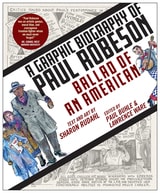
Ballad of an American
A Graphic Biography of Paul RobesonSharon Rudahl
Rutgers University Press, 2021
The first-ever graphic biography of Paul Robeson, Ballad of an American, charts Robeson’s career as a singer, actor, scholar, athlete, and activist who achieved global fame. Through his films, concerts, and records, he became a potent symbol representing the promise of a multicultural, multiracial American democracy at a time when, despite his stardom, he was denied personal access to his many audiences.
Robeson was a major figure in the rise of anti-colonialism in Africa and elsewhere, and a tireless campaigner for internationalism, peace, and human rights. Later in life, he embraced the civil rights and antiwar movements with the hope that new generations would attain his ideals of a peaceful and abundant world. Ballad of an American features beautifully drawn chapters by artist Sharon Rudahl, a compelling narrative about his life, and an afterword on the lasting impact of Robeson’s work in both the arts and politics. This graphic biography will enable all kinds of readers—especially newer generations who may be unfamiliar with him—to understand his life’s story and everlasting global significance.
Ballad of an American: A Graphic Biography of Paul Robeson is published in conjunction with Rutgers University’s centennial commemoration of Robeson’s 1919 graduation from the university.
Study guide for Ballad of an American: A Graphic Biography of Paul Robeson (https://d3tto5i5w9ogdd.cloudfront.net/wp-content/uploads/2021/05/10201015/YA_Adult-Study-Guide-for-A-Graphic-Biography-of-Paul-Robeson.pdf).
View the blad for Ballad of an American.
C. L. R. James's Caribbean
Paget Henry and Paul Buhle, eds.
Duke University Press, 1992
Drawing upon James's observations of his own life as revealed to interviewers and close friends, this volume provides an examination of James's childhood and early years as colonial literatteur and his massive contribution to West Indian political-cultural understanding. Moving beyond previous biographical interpretations, the contributors here take up the problem of reading James's texts in light of poststructuralist criticism, the implications of his texts for Marxist discourse, and for problems of Caribbean development.
History and the New Left
Madison, Wisconsin, 1950-1970Paul Buhle
Temple University Press, 1991
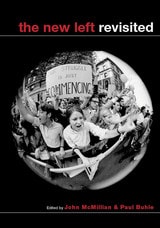
New Left Revisited
edited by John McMillian and Paul Buhle
Temple University Press, 2003

Popular Culture in America
Paul Buhle, Editor
University of Minnesota Press, 1987
Popular Culture in America was first published in 1987. Minnesota Archive Editions uses digital technology to make long-unavailable books once again accessible, and are published unaltered from the original University of Minnesota Press editions.
This book collects some of the best work from the journal Cultural Correspondence (1975–83), which editor Paul Buhle calls "the first political journal of culture to assume its readers (and writers) watched television." The twenty-four contributors are part of a new generation of cultural critics and historians who are self-conscious products of the mass culture of the fifties and sixties. Their work attempts to update an elementary democratic principle - that people seek understanding and solutions, real or fanciful, through the mechanisms available to them. Although these writers condemn the manipulative qualities of commercial culture, they just as vehemently reject most of what has passed for Marxist (or liberal or conservative) orthodoxy on popular culture. Americans, they argue, have had a unique opportunity as well as a unique need to make the most of popular culture; the collective cultural experience is our only shared past. The richness and vitality of that culture is the focus of this book.
The thirty-four essays work toward an understanding of American mass culture not through abstraction but by exploring the real pleasures of ordinary people's lives. Pulp literature (utopian and horror themes, sports and nurse novels, and contemporary science fiction); radio thrillers; TV horror movies: television evangelists; sitcoms; music (polka, country-western, blues, jazz, and rock 'n roll); comic strips (Krazy Kat, Dick Tracy, Zippy); women's humor—these and other topics are given sensitive, detailed—sometimes humorous—attention. Paul Buhle's essay, "The 1960s Meet the 1980s," discusses popular culture scholarship, drawing on a wide range of theory—the Frankfort School, art history, literary criticism, and social science approaches. Buhle argues for the importance of this scholarship as a way of understanding "that missed connection between the cultural promise of a richly diverse, democratic society and the reality at hand."
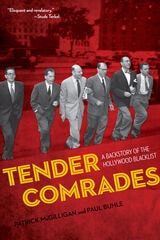
Tender Comrades
A Backstory of the Hollywood BlacklistPatrick McGilligan
University of Minnesota Press, 2012
More than sixty years ago, McCarthyism silenced Hollywood. In the pages of Tender Comrades, those who were suppressed, whose lives and careers were ruined, finally have their say. A unique collection of profiles in cinematic courage, this extraordinary oral history brings to light the voices of thirty-six blacklist survivors (including two members of the Hollywood Ten), seminal directors of film noir and other genres, starring actresses and memorable supporting players, top screenwriters, and many less known to the public, who are rescued from obscurity by the stories they offer here that, beyond politics, open a rich window into moviemaking during the Golden Age of Hollywood.
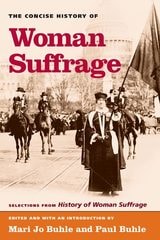
The Concise History of Woman Suffrage
Selections from History of Woman Suffrage, by Elizabeth Cady Stanton, Susan B. Anthony, Matilda Joslyn Gage, and the National American Woman Suffrage AssociationEdited and with an Introduction by Mari Jo Buhle and Paul Buhle
University of Illinois Press, 2005
In their Concise History of Woman Suffrage, Mari Jo Buhle and Paul Buhle have revitalized this classic text by carefully selecting from among its best material. The eighty-two chosen documents, now including interpretative introductory material by the editors, give researchers easy access to material that the original work's arrangement often caused readers to ignore or to overlook.
The volume contains the work of many reform agitators, among them Angelina Grimké, Lucy Stone, Carrie Chapman Catt, Charlotte Perkins Gilman, Anna Howard Shaw, Jane Addams, Sojourner Truth, and Victoria Woodhull, as well as Elizabeth Cady Stanton, Susan B. Anthony, Matilda Joslyn Gage, and Ida Husted Harper.
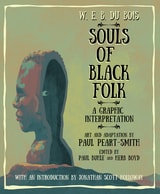
W. E. B. Du Bois Souls of Black Folk
A Graphic InterpretationW. E. B. Du Bois (1868-1963)
Rutgers University Press, 2023
“The problem of the twentieth century is the problem of the color line.” These were the prescient words of W. E. B. Du Bois’s influential 1903 book The Souls of Black Folk. The preeminent Black intellectual of his generation, Du Bois wrote about the trauma of seeing the Reconstruction era’s promise of racial equality cruelly dashed by the rise of white supremacist terror and Jim Crow laws. Yet he also argued for the value of African American cultural traditions and provided inspiration for countless civil rights leaders who followed him. Now artist Paul Peart-Smith offers the first graphic adaptation of Du Bois’s seminal work.
Peart-Smith’s graphic adaptation provides historical and cultural contexts that bring to life the world behind Du Bois’s words. Readers will get a deeper understanding of the cultural debates The Souls of Black Folk engaged in, with more background on figures like Booker T. Washington, the advocate of black economic uplift, and the Pan-Africanist minister Alexander Crummell. This beautifully illustrated book vividly conveys the continuing legacy of The Souls of Black Folk, effectively updating it for the era of the 1619 Project and Black Lives Matter.

Working for Democracy
American Workers from the Revolution to the PresentEdited by Paul Buhle and Alan Dawley
University of Illinois Press, 1985