Results by title
3 books match the query 'Buikstra, Jane E.'
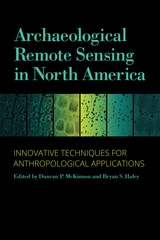
Archaeological Remote Sensing in North America
Innovative Techniques for Anthropological ApplicationsEdited by Duncan P. McKinnon and Bryan S. Haley
University of Alabama Press, 2017
Updating the highly praised 2006 publication Remote Sensing in Archaeology, edited by Jay K. Johnson, Archaeological Remote Sensing in North America: Innovative Techniques for Anthropological Applications is a must-have volume for today’s archaeologist. Targeted to practitioners of archaeological remote sensing as well as students, this suite of current and exemplary applications adheres to high standards for methodology, processing, presentation, and interpretation.
The use of remote sensing technologies to address academic and applied archaeological and anthropological research problems is growing at a tremendous rate in North America. Fueling this growth are new research paradigms using innovative instrumentation technologies and broader-area data collection methods. Increasingly, investigators pursuing these new approaches are integrating remote sensing data collection with theory-based interpretations to address anthropological questions within larger research programs.
In this indispensable volume, case studies from around the country demonstrate the technically diverse and major remote sensing methods and their integration with relevant technologies, such as geographic information systems (GIS) and global positioning systems (GPS), and include various uses of the “big four”: magnetometry, resistivity, ground-penetrating radar (GPR), and electromagnetic induction.
The study explores four major anthropological themes: site structure and community organization; technological transformation and economic change; archaeological landscapes; and earthen mound construction and composition. Concluding commentary from renowned expert Kenneth L. Kvamme overviews the practices, advances, and trends of geophysics and remote sensing in the past decade.
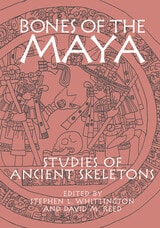
Bones of the Maya
Studies of Ancient SkeletonsEdited by Stephen L. Whittington and David M. Reed
University of Alabama Press, 2006
New techniques in osteology have yielded findings on Maya diet and health that challenge the ecological model of collapse. This benchmark collection of essays defined the state of Mayan skeletal studies. Its coverage spans the formative through colonial periods, with a geographic focus on the Maya lowlands of northern Guatemala, Belize, and western Honduras. Bringing together for the first time a broad spectrum of bioarchaeologists and revealing remarkable data on Maya genetic relationship, demographic, and diseases, the collection covers divers topics such as osteological, dental, bone chemistry, and DNA analyses. The diet and health status of Maya populations is a major theme, especially in relation to social status, gender, and the historical problem of the "collapse."
What Mean These Bones?
Studies in Southeastern BioarchaeologyEdited by Mary Lucas Powell, Patricia S. Bridges, and Ann Marie Wagner Mires
University of Alabama Press, 1991
A Dan Josselyn Memorial Publication
Until recently, archaeological projects that included analysis of human remains had often lacked active collaboration between archaeologists and physical anthropologists from the planning stages onward. During the 1980s, a conjunctive approach developed; known as "bioarchaeology," it draws on the methodological and theoretical strengths of the two subdisciplines to bridge a perceived communications gap and promote a more comprehensive understanding of prehistoric and historic cultures.
This volume addresses questions of human adaptation in a variety of cultural contexts, with a breadth not found in studies utilizing solely biological or artifactual data. These nine case studies from eight Southeastern states cover more than 4,000 years of human habitation, from Archaic hunter-gatherers in Louisiana and Alabama to Colonial planters and slaves in South Carolina. Several studies focus upon variations in health between or within late prehistoric agricultural societies. For example, the discovery that reliance upon maize as a dietary staple did not result invariably in poor health, as claimed by earlier studies, either for entire populations or, in ranked societies, for the non-elite majority, has fostered a new appreciation for the managerial wisdom of the Mississippian peoples, as well as for their agricultural skills.