Results by title
4 books match the query 'Buri︠a︡tii︠a︡'
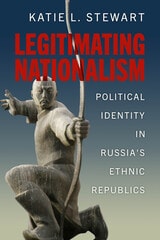
Legitimating Nationalism
Political Identity in Russia's Ethnic RepublicsKatie L. Stewart
University of Wisconsin Press, 2024
Russia is a large, diverse, and complicated country whose far-flung regions maintain their own histories and cultures, even as President Vladimir Putin increases his political control. Powerful, autocratic regimes still need to establish their legitimacy; in Russia, as elsewhere, developing a compelling national narrative and building a sense of pride and belonging in a national identity is key to maintaining a united nation. It can also legitimate political power when leaders present themselves as the nation’s champions. Putin’s hold thus requires effective nation building— propagating the ever-evolving and often contested story of who, exactly, is Russian and what, exactly, that means.
Even in the current autocratic system, however, Russia’s multiethnic nature and fractured political history mean that not all political symbols work the same way everywhere; not every story finds the same audience in the same way. The message may emanate from Moscow, but regional actors—including local governments, civic organizations, and cultural institutions—have some agency in how they spread the message: some regionalization of identity work is permitted to ensure that Russian national symbols and narratives resonate with people, and to avoid protest. This book investigates how nation building works on the ground through close studies of three of Russia’s ethnic republics: Karelia, Tatarstan, and Buryatia. Understanding how the project of legitimating nationalism, in support of a unified country and specifically Putin’s regime, works in practice offers crucial context in understanding the shape and story of contemporary Russia.
Even in the current autocratic system, however, Russia’s multiethnic nature and fractured political history mean that not all political symbols work the same way everywhere; not every story finds the same audience in the same way. The message may emanate from Moscow, but regional actors—including local governments, civic organizations, and cultural institutions—have some agency in how they spread the message: some regionalization of identity work is permitted to ensure that Russian national symbols and narratives resonate with people, and to avoid protest. This book investigates how nation building works on the ground through close studies of three of Russia’s ethnic republics: Karelia, Tatarstan, and Buryatia. Understanding how the project of legitimating nationalism, in support of a unified country and specifically Putin’s regime, works in practice offers crucial context in understanding the shape and story of contemporary Russia.
[more]
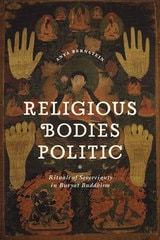
Religious Bodies Politic
Rituals of Sovereignty in Buryat BuddhismAnya Bernstein
University of Chicago Press, 2013
Religious Bodies Politic examines the complex relationship between transnational religion and politics through the lens of one cosmopolitan community in Siberia: Buryats, who live in a semiautonomous republic within Russia with a large Buddhist population. Looking at religious transformation among Buryats across changing political economies, Anya Bernstein argues that under conditions of rapid social change—such as those that accompanied the Russian Revolution, the Cold War, and the fall of the Soviet Union—Buryats have used Buddhist “body politics” to articulate their relationship not only with the Russian state, but also with the larger Buddhist world.
During these periods, Bernstein shows, certain people and their bodies became key sites through which Buryats conformed to and challenged Russian political rule. She presents particular cases of these emblematic bodies—dead bodies of famous monks, temporary bodies of reincarnated lamas, ascetic and celibate bodies of Buddhist monastics, and dismembered bodies of lay disciples given as imaginary gifts to spirits—to investigate the specific ways in which religion and politics have intersected. Contributing to the growing literature on postsocialism and studies of sovereignty that focus on the body, Religious Bodies Politic is a fascinating illustration of how this community employed Buddhism to adapt to key moments of political change.
[more]
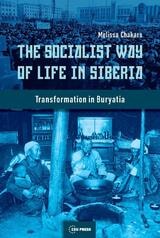
The Socialist Way of Life in Siberia
Transformation in BuryatiaMelissa Chakars
Central European University Press, 2014
The Buryats are a Mongolian population in Siberian Russia, the largest indigenous minority. The Socialist Way of Life in Siberia presents the dramatic transformation in their everyday lives during the late twentieth century. The book challenges the common notion that the process of modernization during the later Soviet period created a Buryat national assertiveness rather than assimilation or support for the state.
[more]
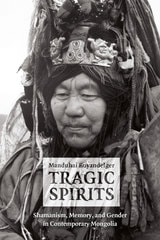
Tragic Spirits
Shamanism, Memory, and Gender in Contemporary MongoliaManduhai Buyandelger
University of Chicago Press, 2013
The collapse of socialism at the end of the twentieth century brought devastating changes to Mongolia. Economic shock therapy—an immediate liberalization of trade and privatization of publicly owned assets—quickly led to impoverishment, especially in rural parts of the country, where Tragic Spirits takes place. Following the travels of the nomadic Buryats, Manduhai Buyandelger tells a story not only of economic devastation but also a remarkable Buryat response to it—the revival of shamanic practices after decades of socialist suppression.
Attributing their current misfortunes to returning ancestral spirits who are vengeful over being abandoned under socialism, the Buryats are now at once trying to appease their ancestors and recover the history of their people through shamanic practice. Thoroughly documenting this process, Buyandelger situates it as part of a global phenomenon, comparing the rise of shamanism in liberalized Mongolia to its similar rise in Africa and Indonesia. In doing so, she offers a sophisticated analysis of the way economics, politics, gender, and other factors influence the spirit world and the crucial workings of cultural memory.
[more]