Results by title
3 books match the query 'Burning'

The Burning And Other Stories
Jack Cady
University of Iowa Press, 1972
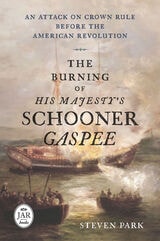
The Burning of His Majesty's Schooner Gaspee
An Attack on Crown Rule Before the American RevolutionSteven Park
Westholme Publishing, 2016
Between the Boston Massacre in 1770 and the Boston Tea Party in 1773—a period historians refer to as “the lull”—a group of prominent Rhode Islanders rowed out to His Majesty’s schooner Gaspee,which had run aground six miles south of Providence while on an anti-smuggling patrol. After threatening and shooting its commanding officer, the raiders looted the vessel and burned it to the waterline. Despite colony-wide sympathy for the June 1772 raid, neither the government in Providence nor authorities in London could let this pass without a response. As a result, a Royal Commission of Inquiry headed by Rhode Island governor Joseph Wanton zealously investigated the incident. In The Burning of His Majesty’s Schooner Gaspee: An Attack on Crown Rule Before the American Revolution, historian Steven Park reveals that what started out as a customs battle over the seizure of a prominent citizen’s rum was soon transformed into the spark that re-ignited Patriot fervor. The significance of the raid was underscored by a fiery Thanksgiving Day sermon given by a little-known Baptist minister in Boston. His inflammatory message was reprinted in several colonies and was one of the most successful pamphlets of the pre-Independence period. The commission turned out to be essentially a sham and made the administration in London look weak and ineffective. In the wake of the Gaspee affair, Committees of Correspondence soon formed in all but one of the original thirteen colonies, and later East India Company tea would be defiantly dumped into Boston Harbor.
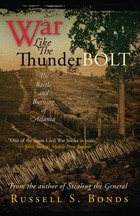
War Like the Thunderbolt
The Battle and Burning of AtlantaRussell S. Bonds
Westholme Publishing, 2009
A masterpiece of prose and research, the definitive history of the struggle for Atlanta during the Civil War, an episode immortalized by the novel Gone with the Wind
Called “the greatest event of the Civil War” by New York diarist George Templeton Strong, the epic struggle for the city of Atlanta in the bloody summer of 1864 was a pivotal moment in American history. Union commander William Tecumseh Sherman’s relentless fight for the city secured the reelection of Abraham Lincoln, sealed the fate of the Southern Confederacy, and set a precedent for military campaigns that endures today. Its depiction in the novel and motion picture Gone with the Wind established the fight for Atlanta as an iconic episode in our nation’s most terrible war. In War Like the Thunderbolt: The Battle and Burning of Atlanta, award-winning author Russell S. Bonds takes the reader behind the lines and across the smoky battlefields of Peachtree Creek, Atlanta, Ezra Church, and Jonesboro, and into the lives of fascinating characters, both the famous and the forgotten, including the fiery and brilliant Sherman; General John Bell Hood, the Confederacy’s last hope to defend Atlanta; Benjamin Harrison, the diminutive young Indiana colonel who would rise to become President of the United States; Patrick Cleburne, the Irishmanturned- Southern officer; and ten-year-old diarist Carrie Berry, who bravely withstood and bore witness to the fall of the city. Here also is the dramatic story of the ordeal of Atlanta itself—the five-week artillery bombardment, the expulsion of its civilian population, and the infamous fire that followed. Based on new research in diaries, newspapers, previously unpublished letters, and other archival sources, War Like the Thunderbolt is a combination of captivating narrative and insightful military analysis—a stirring account of the battle and burning of the “Gate City of the South.”