Results by title
20 books match the query 'Businesswomen'
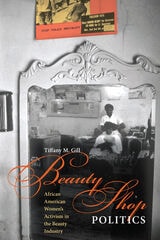
Beauty Shop Politics
African American Women's Activism in the Beauty IndustryTiffany M. Gill
University of Illinois Press, 2010
Looking through the lens of black business history, Beauty Shop Politics shows how black beauticians in the Jim Crow era parlayed their economic independence and access to a public community space into platforms for activism. Tiffany M. Gill argues that the beauty industry played a crucial role in the creation of the modern black female identity and that the seemingly frivolous space of a beauty salon actually has stimulated social, political, and economic change.
From the founding of the National Negro Business League in 1900 and onward, African Americans have embraced the entrepreneurial spirit by starting their own businesses, but black women's forays into the business world were overshadowed by those of black men. With a broad scope that encompasses the role of gossip in salons, ethnic beauty products, and the social meanings of African American hair textures, Gill shows how African American beauty entrepreneurs built and sustained a vibrant culture of activism in beauty salons and schools. Enhanced by lucid portrayals of black beauticians and drawing on archival research and oral histories, Beauty Shop Politics conveys the everyday operations and rich culture of black beauty salons as well as their role in building community.
Before Porn Was Legal
The Erotica Empire of Beate UhseElizabeth Heineman
University of Chicago Press, 2011
Struggling to survive in post–World War II Germany, Beate Uhse (1919–2001)—a former Luftwaffe pilot, war widow, and young mother—turned to selling goods on the black market. A self-penned guide to the rhythm method found eager buyers and started Uhse on her path to becoming the world’s largest erotica entrepreneur. Battling restrictive legislation, powerful churches, and conservative social mores, she built a mail-order business in the 1950s that sold condoms, sex aids, self-help books, and more. The following decades brought the world’s first erotica shop, the legalization of pornography, the expansion of her business into eastern Germany, and web-based commerce.
Uhse was only one of many erotica entrepreneurs who played a role in the social and sexual revolution accompanying Germany’s transition from Nazism to liberal democracy. Tracing the activities of entrepreneurs, customers, government officials, and citizen-activists, Before Porn Was Legal brings to light the profound social, legal, and cultural changes that attended the growth of the erotica sector. Heineman’s innovative readings of governmental and industry records, oral histories, and the erotica industry’s products uncover the roots of today’s sexual marketplace and reveal the indelible ways in which sexual expression and consumption have become intertwined.
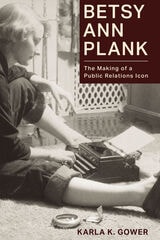
Betsy Ann Plank
The Making of a Public Relations IconKarla K. Gower
University of Missouri Press, 2022
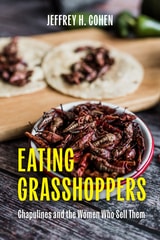
Eating Grasshoppers
Chapulines and the Women Who Sell ThemJeffrey H. Cohen
University of Texas Press, 2025
An approachable ethnography of how grasshoppers are harvested, sold, and consumed in Oaxaca.
Chapulines (toasted grasshoppers) are not a delicacy in Oaxaca. They are just food—good food—and a protein-rich seasonal snack that is the product of a long-standing industry based overwhelmingly on the labor of women. Jeffrey Cohen has interviewed dozens of these chapulineras, who harvest insects from corn and alfalfa fields, prepare them, and sell them in urban and rural marketplaces. An accessible ethnography, Eating Grasshoppers tells their story alongside the broader history of chapulines.
For tourists, chapulines are an experience—a gateway to the “real” Oaxaca. For locals, they are ordinary fare, but also a reminder of Indigenous stability and rural survival. In a sense, eating chapulines is a declaration of independence from a government that has condemned eating insects as backward. Yet, while chapulines are a generations-old favorite, eating them is not an act of preservation. Cohen shows that the business of this traditional food is thoroughly modern and ever evolving, with entrepreneurial chapulineras responding nimbly to complex and dynamic markets. From alfalfa fields to online markets, Eating Grasshoppers takes readers inside one of the world’s most fascinating food cultures.
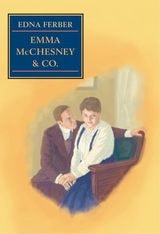
Emma McChesney and Co.
Edna Ferber
University of Illinois Press, 2002
In this final of three volumes chronicling the travels and trials of Emma McChesney, first published in 1915, Emma's son, Jock, has moved to Chicago with his new wife. Struggling with a newly emptied nest, Emma dives into a whirlwind South American sales tour to prove she hasn't lost her touch.
Back in New York, Emma and her business partner, T. A. Buck Jr., try to disguise their budding romance from colleagues. After months of acting like a "captain of finance when he feels like a Romeo," T. A. convinces Emma they should marry. Emma tries to "be what the yellow novels call a doll-wife" but trades in her fancy dressing gowns for more sensible business suits and heads back to the office.
With one hand writing advertising copy and the other wrapped around a pair of shears, Emma saves the company from financial peril amid the arrival of some flustering, if exciting, news from Jock. By turns sales pro, newlywed, fashion maven, and anxious grandmother, Emma symbolizes the ideal woman at the dawn of the twentieth century: sharp, capable, charming, and progressive. Emma McChesney and Co. is enhanced by the illustrations of James Montgomery Flagg, one of the most highly regarded book illustrators of the period.
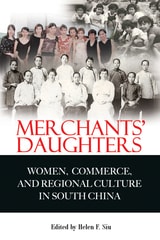
Merchants' Daughters
Women, Commerce, and Regional Culture in South ChinaEdited by Helen F. Siu
Hong Kong University Press, 2010
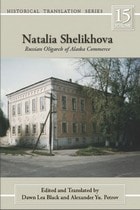
Natalia Shelikhova
Russian Oligarch of Alaska CommerceEdited by Dawn Lea Black and Alexander Petrov
University of Alaska Press, 2010
This volume makes available for the first time in English a variety of primary source materials relating to the life and work of Natalia Shelikov, a pioneering nineteenth-century Russian-American businesswoman. As a principal of the Russian-American Company, Shelikov worked in Alaska, and her business acumen and wide-ranging connections—including the empress of Russia and a swathe of northern leaders—were crucial to the growth of Alaska’s economy, as well as to the welfare of the Native people, in whose life and culture she took a strong interest. The letters, petitions, and personal documents presented here will be indispensable for students of Alaska and nineteenth-century women’s history.
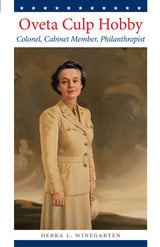
Oveta Culp Hobby
Colonel, Cabinet Member, PhilanthropistBy Debra L. Winegarten
University of Texas Press, 2014
This young adult biography introduces middle school readers to a remarkable woman who founded the Women’s Army Corps, served as Secretary of Health, Education, and Welfare, and ran a media empire that included the Houston Post newspaper and radio and TV stations.
Winner, Gold Medal for Biography, Military Writers Society of America, 2015
Oveta Culp Hobby (1905–1995) had a lifetime of stellar achievement. During World War II, she was asked to build a women’s army from scratch—and did. Hobby became Director of the Women’s Army Corps and the first Army woman to earn the rank of colonel. President Eisenhower chose her as Secretary of Health, Education, and Welfare, making her the second woman in history to be appointed to a president’s cabinet. When she wasn’t serving in the government, Hobby worked with her husband, former Texas governor William P. Hobby, to lead a media empire that included the Houston Post newspaper and radio and TV stations. She also supported the Houston community in many ways, from advocating for civil rights for African Americans to donating generously to the Houston Symphony and the Museum of Fine Arts.
Oveta Culp Hobby is the first biography of this important woman. Written for middle school readers, it traces her life from her childhood in Killeen to her remarkable achievements in Washington, DC, and Houston. Debra Winegarten provides the background to help young adult readers understand the times in which Hobby lived and the challenges she faced as a woman in nontraditional jobs. She shows how Hobby opened doors for women to serve in the military and in other professions that still benefit women today. Most of all, Oveta Culp Hobby will inspire young adults to follow their own dreams and turn them into tangible reality.

Personality Plus
Some Experiences of Emma McChesney and Her Son, JockEdna Ferber
University of Illinois Press, 2002
In this second of three volumes chronicling the travels and trials of Emma McChesney, the plucky heroine trades in her traveling bag and coach tickets for an office and a position a T. A. Buck Jr.'s business partner. Along with this well-earned promotion comes the home–-with a fireplace–-that she had longed for during her ten years on the road.
Her dashing son Jock, now twenty-one, has just entered the business world himself with the Berg, Shriner Advertising company. His colleagues believe that with his heritage he "ought to be able to sell ice to an eskimo." Indeed, Jock dazzles them with his keen business sense and exemplary work ethic, but goes overboard on the charm and ends up alienating clients, unnerving his boss, and even patronizing his business-savvy mother. When his company takes on the challenge of creating a zippy advertising campaign for T. A. Buck's no-frills petticoats, Jock comes through, but not without a reminder that mother always knows best.
In this bracingly modern novel, first published in 1914, Ferber contrasts the virtues of talent with those of experience to provide a fresh, readable, and smartly entertaining contest between a mother and her adult son.

Roast Beef, Medium
The Business Adventures of Emma McChesneyEdna Ferber
University of Illinois Press, 1913
Edna Ferber, Pulitzer Prize-winning author of Show Boat and Giant, achieved her first great success with a series of stories she published in American Magazine between 1911 and 1913. The stories featured Emma McChesney: smart, savvy, stylish, divorced mother, and Midwest traveling sales representative for T. A. Buck's Featherloom skirts and petticoats. With one hand on her sample case and the other fending off advances from salesmen, hotel clerks, and other predators, Emma holds on tightly to her reputation: honest, hardworking, and able to outsell the slickest salesman.
Like her compact bag of traveling necessities, Emma has her life boiled down to essentials: her work and her seventeen-year-old son, Jock. Her experience has taught her that it's best to stick to roast beef, medium--avoiding both physical and moral indigestion--rather than experiment with fancy sauces and exotic dishes. Yet she never shies away from a challenge, and her sharp instincts and common sense serve her well in dealing with the likes of Ed Meyer, a smooth-talking, piano-playing salesman; Blanche LeHay, prima donna of the Sam Levin Crackerjack Belles; and T. A. Buck Jr., the wet-behind-the-ears son of the founder of Featherloom.
Roast Beef, Medium is the first of three volumes chronicling the travels and trials of Emma McChesney. The illustrations by James Montgomery Flagg, one of the most highly regarded book illustrators of the period, enhance both the humor and the vivid characterization in this wise and high-spirited tale.
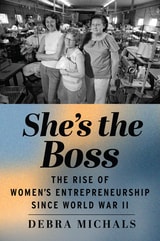
She's the Boss
The Rise of Women’s Entrepreneurship since World War IIDebra Michals
Rutgers University Press, 2025
She’s the Boss chronicles the forces that made entrepreneurship attractive to women. In rich detail, Debra Michals shares the stories of the countless women of all races, ethnicities, genders, and abilities who contributed to this important history. The book also explores the intersection of women’s personal choices within changing social, political, and economic factors, such as the rising divorce rates of the 1960s and 1970s, ongoing workplace and credit discrimination, civil and women’s rights activism and activist entrepreneurs, the 1970s recession and 1980s “Reagan Revolution,” and more recently, the internet, crowd-funding, and social entrepreneurship.

Staking Her Claim
Life Of Belinda MulrooneyMelanie J. Mayer
Ohio University Press, 1999
In Staking Her Claim, Melanie Mayer and Robert N. DeArmond provide a faithful and comprehensive portrait of this unique character in North American frontier history. Their exhaustive research has resulted in a sweeping saga of determination and will, tempered by disaster and opportunity.
Like any good Horatio Alger hero, Belinda overcame the challenges that confronted her, including poverty, prejudice, a lack of schooling, and the early loss of parents. Her travels took her from her native Ireland as a young girl to a coal town in Pennsylvania to Chicago, San Francisco, and finally, in 1897, to the Yukon.
Staking Her Claim is a testament to the human spirit and to the idea of the frontier. It is a biography of a woman who made her own way in the world and in doing so left an indelible mark.

Stars at Noon
Poems from the Life of Jacqueline CochranEnid Shomer
University of Arkansas Press, 2001
These poems give voice to the life of the first woman to fly faster than the speed of sound. While Jacqueline Cochran was alive, no man or woman in the world could match her records for speed, distance, and altitude flying. Founder and director of the Women’s Airforce Service Pilots (WASP) during World War II, Cochran continued to fly competitively until she was sixty, owned and operated her own line of designer cosmetics for three decades, ran for Congress, and generally placed herself on the path of history. Having begun life as a foundling in the crushing poverty of a lumber company town of the Florida panhandle, she described her life as “a passage from sawdust to stardust.” Yet after her death she has barely been remembered.
Poet Enid Shomer brings back this mercurial, dazzling, powerful woman. These poems speak in her voice and in the voices of her mother, teachers, husband, confidants, and political opponents, shaped by Shomer’s consummate formal control and stunning lyricism.
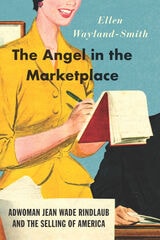
The Angel in the Marketplace
Adwoman Jean Wade Rindlaub and the Selling of AmericaEllen Wayland-Smith
University of Chicago Press, 2020
The Angel in the Marketplace is the story of one of America’s most accomplished advertising executives. It is also the story of how advertisers like Rindlaub sold a postwar American dream of capitalism and a Christian corporate order. Rindlaub was responsible for award-winning, mega sales-generating advertisements for all things domestic, including Oneida silverware, Betty Crocker cake mix, Campbell’s soup, and Chiquita bananas. Her success largely came from embracing, rather than subverting, the cultural expectations of women. She believed her responsibility as an advertiser was not to spring women from their trap, but to make that trap more comfortable.
Rindlaub wasn’t just selling silverware and cakes; she was selling the virtues of free enterprise. By following the arc of Rindlaub’s career from the 1920s through the 1960s, we witness how a range of cultural narratives—advertising chief among them—worked powerfully to shape women’s emotional and economic behavior in support of the free market system. Alongside Rindlaub’s story, Ellen Wayland-Smith provides a riveting history of how women were repeatedly sold the idea that their role as housewives was more powerful, and more patriotic, than any outside the home. And by buying into the image of morality through an unregulated market, many of these women helped fuel backlash against economic regulation and socialization efforts throughout the twentieth century.
The Angel in the Marketplace is a nuanced portrayal of a complex woman, one who both shaped and reflected the complicated cultural, political, and religious forces defining femininity in America at mid-century. This compelling account of one of advertising’s most fervent believers is a tale of a Mad Woman we haven’t been told.

The Best-Kept Secret
Women Corporate Lobbyists, Policy, and Power in the United StatesBenoit, Denise
Rutgers University Press, 2007
From lobbyists such as Jack Abramoff, to corporate executives, like Enron's Kenneth Lay and Jeffrey Skilling, recent scandals dealing with politics and government have focused only on men at the top. But do these high-profile men accurately represent the gendered make up of corporate-government in the United States?
In this first in-depth look at the changing face of corporate lobbying, Denise Benoit shows how women who have historically worked mostly in policy areas relating to "women's issues" such as welfare, family, and health have become increasingly influential as corporate lobbyists, specializing in what used to be considered "masculine" policy, such as taxes and defense. Benoit finds that this new crop of female lobbyists mobilize both masculinity and femininity in ways that create and maintain trusting, open, and strong relations with those in government, and at the same time help corporations to save and earn billions of dollars.
While the media focuses on the dubious behaviors of men at the top of business and government, this book shows that female corporate lobbyists are indeed one of the best kept secrets in Washington.
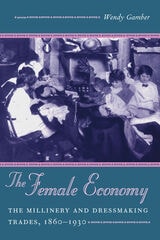
The Female Economy
The Millinery and Dressmaking Trades, 1860-1930Wendy Gamber
University of Illinois Press, 1997
The Female Economy explores that lost world of women's dominance, showing how independent, often ambitious businesswomen and the sometimes imperious consumers they served gradually vanished from the scene as custom production gave way to a largely unskilled modern garment industry controlled by men. Wendy Gamber helps overturn the portrait of wage-earning women as docile souls who would find fulfillment only in marriage and motherhood. She combines labor history, women's history, business history, and the history of technology while exploring topics as wide-ranging as the history of pattern-making and the relationship between entrepreneurship and marriage.
A volume in the series The Working Class in American History, edited by David Brody, Alice Kessler-Harris, David Montgomery, and Sean Wilentz, and in the series Women in American History, edited by Anne Firor Scott, Nancy A. Hewitt, and Stephanie Shaw
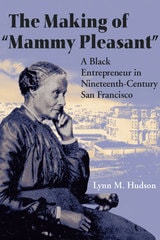
The Making of "Mammy Pleasant"
A Black Entrepreneur in Nineteenth-Century San FranciscoLynn M. Hudson
University of Illinois Press, 2002
Investigating Mary Ellen Pleasant's convoluted legacy
Mary Ellen Pleasant arrived in Gold Rush-era San Francisco a free black woman with abolitionist convictions and a predilection for entrepreneurial success. Behind the convenient and trusted disguise of "Mammy," she transformed domestic labor into enterprise, amassed remarkable real estate, wealth, and power, and gained notoriety for her work in fighting Jim Crow.
Pleasant's legacy is steeped in scandals and lore. Was she a voodoo queen who traded in sexual secrets? A madam? A murderer? In The Making of "Mammy Pleasant," Lynn M. Hudson examines the folklore of Pleasant's real and imagined powers. Emphasizing the significance of her life in the context of how it has been interpreted or ignored in the larger trends of American history, Hudson integrates fact and speculation culled from periodicals, court cases, diaries, letters, Pleasant's interviews with the San Francisco press, and various biographical and fictional accounts.
Addressing the lack of a historical record of black women's lives, the author argues that the silences and mysteries of Pleasant's past, whether never recorded or intentionally omitted, reveal as much about her life as what has been documented. Through Pleasant's life, Hudson also interrogates the constructions of race, gender, and sexuality during the formative years of California's economy and challenges popular mythology about the liberatory sexual culture of the American West.
Unexceptional Women
Female Proprietors in Mid-Nineteenth-Century Albany, New York, 1830–1885Susan Ingalls Lewis
The Ohio State University Press, 2009
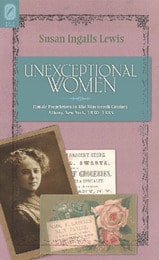
Although the growing city did produce several remarkable businesswomen in trades as diverse as hotel management, plumbing, and the marketing of pianos on the installment plan, Albany’s female proprietors were most often self-employed artisans, shopkeepers, petty manufacturers, and service providers. These women used business as a method of self-employment and survival, as a means of both individual and family mobility, and as a strategy for immigrant assimilation into an urban economy and middle-class lifestyle.
Intriguingly, among the ranks of Albany’s female proprietors Lewis discovered substantial evidence of such supposedly recent phenomena as self-employment, dual-income marriages, working motherhood, home-based business, and the juggling of domestic and professional priorities. The stories of these businesswomen make fascinating reading while simultaneously providing the basis for a theoretical discussion of how to define and understand enterprise for mid-nineteenth-century women.
What Diantha Did
Charlotte Perkins Gilman
Duke University Press, 2005
In her introduction to the novel, Charlotte J. Rich highlights Gilman’s engagement with such hotly debated Progressive Era issues as the “servant question,” the rise of domestic science, and middle-class efforts to protect and aid the working girl. She illuminates the novel’s connections to Gilman’s other feminist works, including “The Yellow Wall-Paper” and Herland; to her personal life; and to her commitment to women’s social and economic freedom. Rich contends that the novel’s engagement with class and race makes it particularly significant to the newly complex understanding of Gilman that has emerged in recent scholarship. What Diantha Did provides essential insight into Charlotte Perkins Gilman’s important legacy of social thought.