Results by title
2 books match the query 'Butler, Lee'
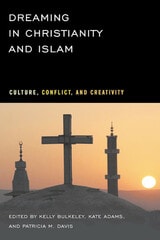
Dreaming in Christianity and Islam
Culture, Conflict, and CreativityEdited and with an Introduction by Kelly Bulkeley, Kate Adams, and Patricia M. Davis
Rutgers University Press, 2009
Dreaming in Christianity and Islam, the first book to explore dreaming in these religions through original essays, fills this void. The editors reach a plateau by focusing on how studying dreams reveals new aspects of social and political reality. International scholars document the impact of dreams on sacred texts, mystical experiences, therapeutic practices, and doctrinal controversies.
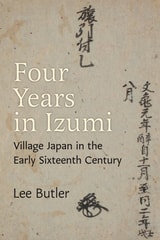
Four Years in Izumi
Village Japan in the Early Sixteenth CenturyLee Butler
University of Michigan Press, 2026
Four Years in Izumi takes an in-depth and critical approach to understanding Japanese village life through analysis of the diary of Kujō Masamoto, the former chancellor of the imperial court who resided briefly in one of his provincial estates from 1501 to 1504. For a high ranking courtier to travel to the countryside and manage a family estate was unheard of during the era of Sengoku, the “country at war.” The diary Masamoto kept offers a remarkably rich and vivid portrait of village Japan, which has seen no significant study in English-language scholarship.
Through extensive examination of the diary and close and critical reading of it and complementary sources, Lee Butler provides a window into the inner workings of late-medieval village life that challenges typical portrayals of the period. In Four Years in Izumi, we see the complexity of relations between commoners and elites in action. We also see the ways in which an estate functioned in practice at the heart of the medieval economy and local social structure.