Results by title
4 books match the query 'C'
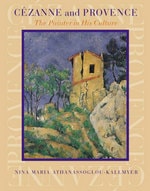
Cezanne and Provence
The Painter in His CultureNina Maria Athanassoglou-Kallmyer
University of Chicago Press, 2003
In 1886 Paul Cézanne left Paris permanently to settle in his native Aix-en-Provence. Nina M. Athanassoglou-Kallmyer argues that, far from an escapist venture like Gauguin's stay in Brittany or Monet's visits to Normandy, Cézanne's departure from Paris was a deliberate abandonment intimately connected with late-nineteenth-century French regionalist politics.
Like many of his childhood friends, Cézanne detested the homogenizing effects of modernism and bourgeois capitalism on the culture, people, and landscapes of his beloved Provence. Turning away from the mainstream modernist aesthetic of his impressionist years, Cézanne sought instead to develop a new artistic tradition more evocative of his Provençal heritage. Athanassoglou-Kallmyer shows that Provence served as a distinct and defining cultural force that shaped all aspects of Cézanne's approach to representation, including subject matter, style, and technical treatment. For instance, his self-portraits and portraits of family members reflect a specifically Provençal sense of identity. And Cézanne's Provençal landscapes express an increasingly traditionalist style firmly grounded in details of local history and even geology. These landscapes, together with images of bathers, cardplayers, and other figures, were key facets of Cézanne's imaginary reconstruction of Provence as primordial and idyllic—a modern French Arcadia.
Highly original and lavishly illustrated, Cézanne and Provence gives us an entirely new Cézanne: no longer the quintessential icon of generic, depersonalized modernism, but instead a self-consciously provincial innovator of mainstream styles deeply influenced by Provençal culture, places, and politics.
[more]
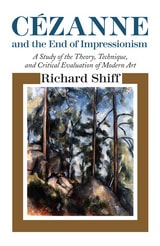
Cezanne and the End of Impressionism
A Study of the Theory, Technique, and Critical Evaluation of Modern ArtRichard Shiff
University of Chicago Press, 1984
Drawing on a broad foundation in the history of nineteenth-century French art, Richard Shiff offers an innovative interpretation of Cézanne's painting. He shows how Cézanne's style met the emerging criteria of a "technique of originality" and how it satisfied critics sympathetic to symbolism as well as to impressionism. Expanding his study of the interaction of Cézanne and his critics, Shiff considers the problem of modern art in general. He locates the core of modernism in a dialectic of making (technique) and finding (originality). Ultimately, Shiff provides not only clarifying accounts of impressionism and symbolism but of a modern classicism as well.
[more]

Parallel Worlds
An Anthropologist and a Writer Encounter AfricaAlma Gottlieb and Philip Graham
University of Chicago Press, 1994
This suspenseful and moving memoir of Africa recounts the experiences of Alma Gottlieb, an anthropologist, and Philip Graham, a fiction writer, as they lived in two remote villages in the rain forest of Cote d'Ivoire. With an unusual coupling of first-person narratives, their alternate voices tell a story imbued with sweeping narrative power, humility, and gentle humor. Parallel Worlds is a unique look at Africa, anthropological fieldwork, and the artistic process.
"A remarkable look at a remote society [and] an engaging memoir that testifies to a loving partnership . . . compelling."—James Idema, Chicago Tribune
"A remarkable look at a remote society [and] an engaging memoir that testifies to a loving partnership . . . compelling."—James Idema, Chicago Tribune
[more]
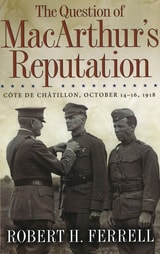
The Question of MacArthur's Reputation
Côte De Châtillon, October 14-16, 1918Robert H. Ferrell
University of Missouri Press, 2008
Perhaps the best known of all American five-star generals, Douglas MacArthur established his military reputation at the hill of Châtillon during the great battle of the Meuse-Argonne in World War I. The thirty-eight-year-old brigadier general in command of the Eighty-fourth Infantry Brigade boasted to a fellow general that he had inspired his troops by example, taking the hill and breaking the main German line in northern France. Ever since, historical accounts and biographies have celebrated his leadership and bravery.
That MacArthur’s forces prevailed is beyond question, as military historians have shown. Yet in all the annals of the Great War there is no detailed description of what happened at Châtillon, nor of what MacArthur had to do with it. Robert Ferrell examines those events and comes to a startling conclusion—one that will revise how we view this archetypal American hero.
After sifting through the inexact accounts of the battle found in regimental and divisional histories—and through the many biographies of MacArthur that assert his leadership at Châtillon but do not describe it—Ferrell has gone into Army records to determine if what MacArthur claimed was true. In a moment-by-moment account of the battle, he reconstructs the movements of troops and the decisions of officers to show in detail how MacArthur’s subordinates were the true heroes.
Ferrell describes how the taking of Côte de Châtillon could have been a disaster had the Eighty-fourth Brigade followed MacArthur's original plan, a bayonet charge at night. Wiser heads prevailed, and the attack of the Iowa and Alabama regiments was a great success.
Ferrell has completed a chapter in the history of World War I that has stood unfinished for years, showing in masterly fashion how MacArthur exaggerated his reputation at Châtillon. The Question of MacArthur’s Reputation will reward historians seeking to fill gaps in the record, engage readers who enjoy descriptions of battle, and startle all who take their heroes for granted.
[more]