Results by title

4 books match the query 'Césaire, Aimé'

cover of ......And the Dogs Were Silent/......Et les chiens se taisaient

......And the Dogs Were Silent/......Et les chiens se taisaient

Aimé Césaire. Translated and with an introduction by Alex Gil. With a foreword by Brent Hayes Edwards.

Duke University Press, 2024
Available to readers for the first time, Aimé Césaire’s three-act drama . . . . . . And the Dogs Were Silent—written during the Vichy regime in Martinique in 1943 and lost until 2008—dramatizes the Haitian Revolution and the rise and fall of Toussaint Louverture as its heroic leader. This bilingual English and French edition stands apart from Césaire’s more widely known 1946 closet drama. Following the slave revolts that sparked the revolution, Louverture arrives as both prophet and poet, general and visionary. With striking dramatic technique, Césaire retells the revolution in poignant encounters between rebels and colonial forces, guided by a prophetic chorus and Louverture’s steady ethical and political vision. In the last act, we reach the hero’s betrayal, his imprisonment, and his last stand against the lures of compromise. Césaire’s masterwork is a strikingly beautiful and brutal indictment of colonial cruelty and an unabashed celebration of Black rebellion and victory.
[more]
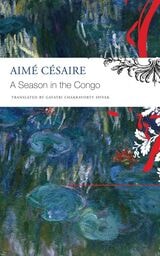
cover of A Season in the Congo

A Season in the Congo

Aimé Césaire

Seagull Books, 2005

 This play by renowned poet and political activist Aime Césairerecounts the tragic death of Patrice Lumumba, the first prime minister of the Congo Republic and an African nationalist hero. A Season in the Congofollows Lumumba’s efforts to free the Congolese from Belgian rule and the political struggles that led to his assassination in 1961. Césaire powerfully depicts Lumumba as a sympathetic, Christ-like figure whose conscious martyrdom reflects his self-sacrificing humanity and commitment to pan-Africanism.

Born in Martinique and educated in Paris, Césaire was a revolutionary artist and lifelong political activist, who founded the Martinique Independent Revolution Party. Césaire’s ardent personal opposition to Western imperialism and racism fuels both his profound sympathy for Lumumba and the emotional strength of A Season in the Congo.

Now rendered in a lyrical translation by distinguished scholar Gayatri Chakravorty Spivak, Césaire’s play will find a new audience of readers interested in world literature and the vestiges of European colonialism.
 
[more]
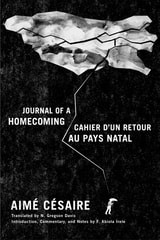
cover of Journal of a Homecoming / Cahier d'un retour au pays natal

Journal of a Homecoming / Cahier d'un retour au pays natal

Aimé Césaire

Duke University Press, 2017
Originally published in 1939, Aimé Césaire’s Cahier d’un retour au pays natal is a landmark of modern French poetry and a founding text of the Négritude movement. This bilingual edition features a new authoritative translation, revised introduction, and extensive commentary, making it a magisterial edition of Césaire’s surrealist masterpiece.
[more]
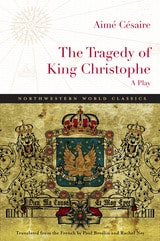
cover of The Tragedy of King Christophe

The Tragedy of King Christophe

Aimé Césaire

Northwestern University Press, 2015

The Tragedy of King Christophe (1963, revised 1970) is recognized as the Martiniquan writer and activist Aime Cesaire’s greatest play. Set in the period of upheaval in Haiti after the assassination of Jean-Jacques Dessalines in 1806, it follows the historical figure of Henri Christophe, a slave who rose to become a general in Toussaint Louverture’s army. Christophe declared himself king in 1811 and ruled the northern part of Haiti until 1820. Cesaire employs Shakespearean plotting and revels in the inexhaustible possibilities of language to convey the tragedy of Christophe’s transformation from a charismatic leader sensitive to the oppression of his people to an oppressor himself. Paul Breslin and Rachel Ney’s nimble, accurate translation includes an introduction and explanatory notes to guide students, scholars, and general readers alike.
[more]