Results by title
2 books match the query 'Çatal Mound'
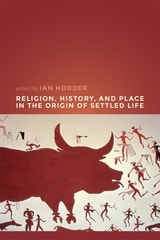
Religion, History, and Place in the Origin of Settled Life
Ian Hodder
University Press of Colorado, 2018
This volume explores the role of religion and ritual in the origin of settled life in the Middle East, focusing on the repetitive construction of houses or cult buildings in the same place. Prominent archaeologists, anthropologists, and scholars of religion working at several of the region’s most important sites—such as Çatalhöyük, Göbekli Tepe, Körtik Tepe, and Aşıklı Höyük—contend that religious factors significantly affected the timing and stability of settled economic structures.
Contributors argue that the long-term social relationships characteristic of delayed-return agricultural systems must be based on historical ties to place and to ancestors. They define different forms of history-making, including nondiscursive routinized practices as well as commemorative memorialization. They consider the timing in the Neolithic of an emerging concern with history-making in place in relation to the adoption of farming and settled life in regional sequences. They explore whether such correlations indicate the causal processes in which history-making, ritual practices, agricultural intensification, population increase, and social competition all played a role.
Religion, History, and Place in the Origin of Settled Life takes a major step forward in understanding the adoption of farming and a settled way of life in the Middle East by foregrounding the roles of history-making and religious ritual. This work is relevant to students and scholars of Near Eastern archaeology, as well as those interested in the origins of agriculture and social complexity or the social role of religion in the past.
Contributors: Kurt W. Alt, Mark R. Anspach, Marion Benz, Lee Clare, Anna Belfer-Cohen, Morris Cohen, Oliver Dietrich, Güneş Duru, Yilmaz S. Erdal, Nigel Goring-Morris, Ian Hodder, Rosemary A. Joyce, Nicola Lercari, Wendy Matthews, Jens Notroff, Vecihi Özkaya, Feridun S. Şahin, F. Leron Shults, Devrim Sönmez, Christina Tsoraki, Wesley Wildman
[more]
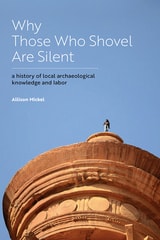
Why Those Who Shovel Are Silent
A History of Local Archaeological Knowledge and LaborAllison Mickel
University Press of Colorado, 2020
For more than 200 years, archaeological sites in the Middle East have been dug, sifted, sorted, and saved by local community members who, in turn, developed immense expertise in excavation and interpretation and had unparalleled insight into the research process and findings—but who have almost never participated in strategies for recording the excavation procedures or results. Their particular perspectives have therefore been missing from the archaeological record, creating an immense gap in knowledge about the ancient past and about how archaeological knowledge is created.
Why Those Who Shovel Are Silent is based on six years of in-depth ethnographic work with current and former site workers at two major Middle Eastern archaeological sites—Petra, Jordan, and Çatalhöyük, Turkey—combined with thorough archival research. Author Allison Mickel describes the nature of the knowledge that locally hired archaeological laborers exclusively possess about artifacts, excavation methods, and archaeological interpretation, showing that archaeological workers are experts about a wide range of topics in archaeology. At the same time, Mickel reveals a financial incentive for site workers to pretend to be less knowledgeable than they actually are, as they risk losing their jobs or demotion if they reveal their expertise.
Despite a recent proliferation of critical research examining the history and politics of archaeology, the topic of archaeological labor has not yet been substantially examined. Why Those Who Shovel Are Silent employs a range of advanced qualitative, quantitative, and visual approaches and offers recommendations for archaeologists to include more diverse expert perspectives and produce more nuanced knowledge about the past. It will appeal to archaeologists, science studies scholars, and anyone interested in challenging the concept of “unskilled” labor.
[more]