Results by title
3 books match the query 'Cable television'
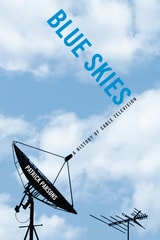
Blue Skies
A History of Cable TelevisionPatrick R. Parsons
Temple University Press, 2008
Since the 1960s, one of the pervasive visions of "cable" has been of a ubiquitous, flexible, interactive communications system capable of providing news, information, entertainment, diverse local programming, and even social services. That set of utopian hopes became known as the "Blue Sky" vision of cable television, from which the book takes its title.
Thoroughly documented and carefully researched, yet lively, occasionally humorous, and consistently insightful, Blue Skies is the genealogy of our media society.
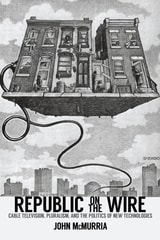
Republic on the Wire
Cable Television, Pluralism, and the Politics of New Technologies, 1948-1984McMurria, John
Rutgers University Press, 2017
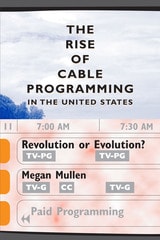
The Rise of Cable Programming in the United States
Revolution or Evolution?By Megan Mullen
University of Texas Press, 2003
Winner, McGannon Communications Research Award, 2004
In 1971, the Sloan Commission on Cable Communications likened the ongoing developments in cable television to the first uses of movable type and the invention of the telephone. Cable's proponents in the late 1960s and early 1970s hoped it would eventually remedy all the perceived ills of broadcast television, including lowest-common-denominator programming, inability to serve the needs of local audiences, and failure to recognize the needs of cultural minorities. Yet a quarter century after the "blue sky" era, cable television programming closely resembled, and indeed depended upon, broadcast television programming. Whatever happened to the Sloan Commission's "revolution now in sight"?
In this book, Megan Mullen examines the first half-century of cable television to understand why cable never achieved its promise as a radically different means of communication. Using textual analysis and oral, archival, and regulatory history, she chronicles and analyzes cable programming developments in the United States during three critical stages of the medium's history: the early community antenna (CATV) years (1948-1967), the optimistic "blue sky" years (1968-1975), and the early satellite years (1976-1995). This history clearly reveals how cable's roots as a retransmitter of broadcast signals, the regulatory constraints that stymied innovation, and the economic success of cable as an outlet for broadcast or broadcast-type programs all combined to defeat most utopian visions for cable programming.