Results by title
8 books match the query 'Cacti & Succulents'

Cacti of the Southwest
Texas, New Mexico, Oklahoma, Arkansas, and LouisianaDel Weniger
University of Texas Press, 0
Del Weniger presents a beautifully illustrated account of all the cacti found in Texas, New Mexico, Oklahoma, Arkansas, and Louisiana. Cactus blossoms often rival the most exotic hothouse plants for delicate beauty. Depending upon the species, they range in color from white through almost the entire spectrum of the rainbow. Nearly every plant in the five-state area is here pictured in color, usually in full bloom.
The cactus was one of the most completely new and different plants encountered by Europeans in the Americas, and the larger species, at least, easily made their presence known to even the most unobservant passerby. To the observant the cactus in its surprising variety of forms has from the beginning exercised a strong fascination. The casual student may easily identify most specimens from these illustrations, and the more serious student will find detailed keys to all of the cacti of the area.

Desert Jewels
Cactus Flowers of the Southwest and MexicoJohn P. Schaefer
University of Arizona Press, 2023
Stunning up-close images by a renowned desert photographer
Cactus flowers are jewels of the desert—they add brilliant pops of color to our arid surroundings. In this book, renowned Tucson photographer John P. Schaefer brings the exquisite and unexpected beauty of the cactus flower to the page. Hundreds of close-up photographs of cactus flowers native to the U.S. Southwest and Mexico offer a visual feast of color and texture, nuance and light.
These stunning photographs allow us to appreciate the spectacular range of color and form cactus flowers have to offer. For the cactus enthusiast, the book offers a comprehensive collection of high-quality flower photographs unlike any other. The photographs cover more than 250 cactus species organized by genus. The book starts with an introduction by the photographer that is both autobiographical and informative. It offers a glimpse into his process for capturing these elusive desert gems, resulting in photographs so beautiful they were featured as a book of stamps issued by the U.S. Postal Service.
This collection of cactus flowers in bloom is a one-of-a-kind work by a master photographer.
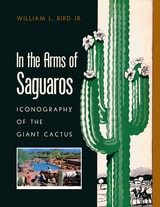
In the Arms of Saguaros
Iconography of the Giant CactusWilliam L. Bird Jr.
University of Arizona Press, 2023
In the Arms of the Saguaros shows how, from the botanical explorers of the nineteenth century to the tourism boosters in our own time, saguaros and their images have fulfilled attention-getting needs and expectations. Through text and lavish images, this work explores the saguaro’s growth into a western icon from the early days of the American railroad to the years bracketing World War II, when Sun Belt boosterism hit its zenith and proponents of tourism succeed in moving the saguaro to the center of the promotional frame.
This book explores how the growth of tourism brought the saguaro to ever-larger audiences through the proliferation of western-themed imagery on the American roadside. The history of the saguaro’s popular and highly imaginative range points to the current moment in which the saguaro touches us as a global icon in art, fashion, and entertainment.
The Cacti of Arizona
Lyman Benson
University of Arizona Press, 1969
"Of tremendous value to the professional botanist and ecologist, and with layman English and careful instructions, the work provides the amateur botanist insight into a fascinating family."—Garden Journal
"For the general desert lover as well as the botanist."—Books of the Southwest

The Cactus Hunters
Desire and Extinction in the Illicit Succulent TradeJared D. Margulies
University of Minnesota Press, 2023
An exploration of the explosive illegal trade in succulents and the passion that drives it
Cacti and succulents are phenomenally popular worldwide among plant enthusiasts, despite being among the world’s most threatened species. The fervor driving the illegal trade in succulents might also be driving some species to extinction. Delving into the strange world of succulent collecting, The Cactus Hunters takes us to the heart of this conundrum: the mystery of how and why ardent lovers of these plants engage in their illicit trade. This is a world of alluring desires, where collectors and conservationists alike are animated by passions that at times exceed the limits of law.
What inspires the desire for a plant? What kind of satisfaction does it promise? The answer, Jared D. Margulies suspects, might be traced through the roots and workings of the illegal succulent trade—an exploration that traverses the fields of botany and criminology, political ecology and human geography, and psychoanalysis. His globe-spanning inquiry leads Margulies from a spectacular series of succulent heists on a small island off the coast of Mexico to California law enforcement agents infiltrating a smuggling ring in South Korea, from scientists racing to discover new and rare species before poachers find them to a notorious Czech “cacto-explorer” who helped turn a landlocked European country into the epicenter of the illegal succulent trade.
A heady blend of international intrigue, social theory, botanical lore, and ecological study, The Cactus Hunters offers complex insight into species extinction, conservation, and more-than-human care.
Retail e-book files for this title are screen-reader friendly with images accompanied by short alt text and/or extended descriptions.
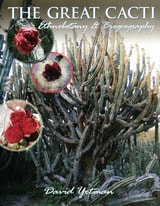
The Great Cacti
Ethnobotany and BiogeographyDavid Yetman
University of Arizona Press, 2007
Yetman has been fascinated by columnar cacti for most of his life and now brings years of study and reflection to a wide-ranging and handsomely illustrated book. Drawing on his close association with the Guarijíos, Mayos, and Seris of Mexico—peoples for whom such cacti have been indispensable to survival—he offers surprising evidence of the importance of these plants in human cultures. The Great Cacti reviews the more than one hundred species of columnar cacti, with detailed discussions of some 75 that have been the most beneficial to humans or are most spectacular. Focusing particularly on northwestern Mexico and the southwestern United States, Yetman examines the role of each species in human society, describing how cacti have provided food, shelter, medicine, even religiously significant hallucinogens.
Taking readers to the exotic sites where these cacti are found—from sea-level deserts to frigid Andean heights—Yetman shows that the great cacti have facilitated the development of native culture in hostile environments, yielding their products with no tending necessary. Enhanced by over 300 superb color photos, The Great Cacti is both a personal and scientific overview of sahuesos, soberbios, and other towering flora that flourish where few other plants grow—and that foster human life in otherwise impossible places.

The Organ Pipe Cactus
David Yetman
University of Arizona Press, 2006

The Saguaro Cactus
A Natural HistoryDavid Yetman, Alberto Búrquez, Kevin Hultine, and Michael Sanderson, with Frank S. Crosswhite
University of Arizona Press, 2020
This book offers a complete natural history of this enduring and iconic desert plant. Gathering everything from the saguaro’s role in Sonoran Desert ecology to its adaptations to the desert climate and its sacred place in Indigenous culture, this book shares precolonial through current scientific findings.
The saguaro is charismatic and readily accessible but also decidedly different from other desert flora. The essays in this book bear witness to our ongoing fascination with the great cactus and the plant’s unusual characteristics, covering the saguaro’s: history of discovery, place in the cactus family, ecology, anatomy and physiology, genetics, and ethnobotany. The Saguaro Cactus offers testimony to the cactus’s prominence as a symbol, the perceptions it inspires, its role in human society, and its importance in desert ecology.