Results by title
17 books match the query 'Cairo'
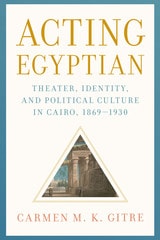
Acting Egyptian
Theater, Identity, and Political Culture in Cairo, 1869–1930By Carmen M. K. Gitre
University of Texas Press, 2019
In the late nineteenth and early twentieth centuries, during the “protectorate” period of British occupation in Egypt—theaters and other performance sites were vital for imagining, mirroring, debating, and shaping competing conceptions of modern Egyptian identity. Central figures in this diverse spectrum were the effendis, an emerging class of urban, male, anticolonial professionals whose role would ultimately become dominant. Acting Egyptian argues that performance themes, spaces, actors, and audiences allowed pluralism to take center stage while simultaneously consolidating effendi voices.
From the world premiere of Verdi’s Aida at Cairo’s Khedivial Opera House in 1871 to the theatrical rhetoric surrounding the revolution of 1919, which gave women an opportunity to link their visibility to the well-being of the nation, Acting Egyptian examines the ways in which elites and effendis, men and women, used newly built performance spaces to debate morality, politics, and the implications of modernity. Drawing on scripts, playbills, ads, and numerous other sources, the book brings to life provocative debates that fostered a new image of national culture and performances that echoed the events of urban life in the struggle for independence.
Afloat on the Ohio
An Historical Pilgrimage of a Thousand Miles in a Skiff, from Redstone to CairoReuben Gold Thwaites
Southern Illinois University Press, 1999
This edition is a reprinting of the original 1897 edition.
Archive of Aurelius Isidorus
in the Egyptian Museum, Cairo, and the University of MichiganArthur E. R. Boak and Herbert Chayyim Youtie, Editors
University of Michigan Press, 1960
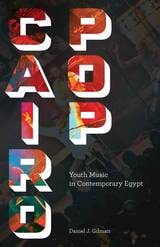
Cairo Pop
Youth Music in Contemporary EgyptDaniel J. Gilman
University of Minnesota Press, 2014
Cairo Pop is the first book to examine the dominant popular music of Egypt, shababiyya. Scorned or ignored by scholars and older Egyptians alike, shababiyya plays incessantly in Cairo, even while Egyptian youth joined in mass protests against their government, which eventually helped oust longtime Egyptian president Hosni Mubarak in early 2011. Living in Cairo at the time of the revolution, Daniel Gilman saw, and more importantly heard, the impact that popular music can have on culture and politics. Here he contributes a richly ethnographic analysis of the relationship between mass-mediated popular music, modernity, and nationalism in the Arab world.
Before Cairo Pop, most scholarship on the popular music of Egypt focused on musiqa al-ṭarab. Immensely popular in the 1950s and ’60s and even into the ’70s, musiqa al-ṭarab adheres to Arabic musical theory, with non-Western scales based on tunings of the strings of the ‘ud—the lute that features prominently, nearly ubiquitously, in Arabic music. However, today one in five Egyptians is between the ages of 15 and 24; half the population is under the age of 25. And shababiyya is their music of choice. By speaking informally with dozens of everyday young people in Cairo, Gilman comes to understand shababiyya as more than just a musical genre: sometimes it is for dancing or seduction, other times it propels social activism, at others it is simply sonic junk food.
In addition to providing a clear Egyptian musical history as well as a succinct modern political history of the nation, Cairo Pop elevates the aural and visual aesthetic of shababiyya—and its role in the lives of a nation’s youth.
Cairo
City of SandMaria Golia
Reaktion Books, 2004
Cairo steps inside the interactions between Cairenes, examining the roles of family, tradition and bureaucracy in everyday life. The book explores Cairo's relationship with its "others", from the French and British occupations to modern influences like tourism and consumerism. Cairo also discusses characteristic styles of communication, and linguistic mêmes, including slang, grandiloquence, curses and jokes.
Cairo exists by virtue of these interactions, synergies of necessity, creativity and the presence or absence of power. Cairo: City of Sand reveals a peerless balancing act, and transmits the city's overriding message: the breadth of the human capacity for loss, astonishment and delight.
Intimate Outsiders
The Harem in Ottoman and Orientalist Art and Travel LiteratureMary Roberts
Duke University Press, 2007
Roberts draws on a range of sources, including paintings, photographs, and travelogues discovered in archives in Britain, Turkey, Egypt, and Denmark. She rethinks the influential harem works of the realist painter John Frederick Lewis, a British artist living in Cairo during the 1840s, whose works were granted an authoritative status by his British public despite the actual limits of his insider knowledge. Unlike Lewis, British women were able to visit Ottoman harems, and from the mid-nineteenth century on they did so in droves. Writing about their experiences in published travelogues, they undermined the idea that harems were the subject only of male fantasies. The elite Ottoman women who orchestrated these visits often challenged their guests’ misapprehensions about harem life, and a number of them exercised power as patrons, commissioning portraits from European artists. Their roles as art patrons defy the Western idea of the harem woman as passive odalisque.
Key Command
Ulysses S. Grant's District of CairoT. K. Kionka
University of Missouri Press, 2006
Markets of Dispossession
NGOs, Economic Development, and the State in CairoJulia Elyachar
Duke University Press, 2005
Julia Elyachar studied the efforts of bankers, social scientists, ngo members, development workers, and state officials to turn the craftsmen and unemployed youth of Cairo into the vanguard of a new market society based on microenterprise. She considers these efforts in relation to the alternative notions of economic success held by craftsmen in Cairo, in which short-term financial profit is not always highly valued. Through her careful ethnography of workshop life, Elyachar explains how the traditional market practices of craftsmen are among the most vibrant modes of market life in Egypt. Long condemned as backward, these existing market practices have been seized on by social scientists and development institutions as the raw materials for experiments in “free market” expansion. Elyachar argues that the new economic value accorded to the cultural resources and social networks of the poor has fueled a broader process leading to their economic, social, and cultural dispossession.
On the Semicivilized
Coloniality, Finance, and Embodied Sovereignty in CairoJulia Elyachar
Duke University Press, 2025
Picturing Illinois
Twentieth-Century Postcard Art from Chicago to CairoJohn A. Jakle and Keith A. Sculle
University of Illinois Press, 2012
Politics in the Crevices
Urban Design and the Making of Property Markets in Cairo and IstanbulSarah El-Kazaz
Duke University Press, 2023
Pyramids and Nightclubs
A Travel Ethnography of Arab and Western Imaginations of Egypt, from King Tut and a Colony of Atlantis to Rumors of Sex Orgies, Urban Legends about a Marauding Prince, and Blonde Belly DancersBy L. L. Wynn
University of Texas Press, 2007
2008 — Leeds Honor Book in Urban Anthropology – Society for Urban, National, and Transnational/Global Anthropology
Living in Egypt at the turn of the millennium, cultural anthropologist L. L. Wynn was struck by the juxtapositions of Western, Gulf Arab, and Egyptian viewpoints she encountered. For some, Egypt is the land of mummies and pharaohs. For others, it is a vortex of decadence, where nightlife promises a chance to salivate over belly dancers and maybe even glimpse a movie star. Offering a new approach to ethnography, Pyramids and Nightclubs examines cross-cultural encounters to bring to light the counterintuitive ways in which Egypt is defined.
Guiding readers on an armchair journey that introduces us to Russian and Australian belly dancers on Nile cruise ships, Egyptian rumors about an Arab prince and his royal entourage, Saudi girls looking for a less restrictive dating scene, and other visitors to this "antique" land, Wynn uses the lens of travel and tourism to depict a fascinating and often surprising version of Egypt, while exploring the concept of stereotype itself. Tracing the history of Western and Arab fascination with Egypt through spurious hunts for lost civilizations and the new economic disparities brought about by the oil industry, Pyramids and Nightclubs ultimately describes the ways in which moments of cultural contact, driven by tourism and labor migration, become eye-opening opportunities for defining self and other.
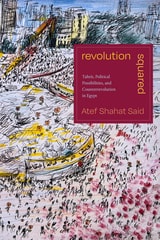
Revolution Squared
Tahrir, Political Possibilities, and Counterrevolution in EgyptAtef Shahat Said
Duke University Press, 2024
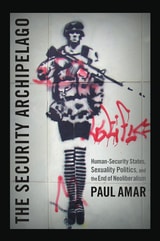
The Security Archipelago
Human-Security States, Sexuality Politics, and the End of NeoliberalismPaul Amar
Duke University Press, 2013
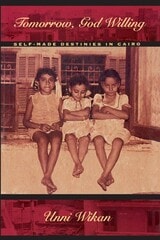
Tomorrow, God Willing
Self-made Destinies in CairoUnni Wikan
University of Chicago Press, 1996
Umm Ali's story is amazing not only for what it reveals about her resourcefulness but for the light it sheds on the resilience of Cairo's poor in the face of disastrous poverty. Like countless other poor people in Cairo, she has developed a personal buoyancy to cope with relentless economic need. It stems from a belief in the ability of people to shape their own destiny and helps explain why Cairo remains virtually free of the social ills—violent street crime and homelessness—that have eroded the lives of poor people in other major cities.
Unni Wikan first met Umm Ali and her family twenty-five years ago and has returned almost every year. She draws on her firsthand experience of their lives to create an intimate portrait of Cairo's back streets and the people who live there. Wikan's innovative approach to ethnographic writing reads like a novel that presents the experiences of Umm Ali's family and neighbors in their own words.
As Umm Ali recounts triumphs and defeats—from forming a savings club with neighbors to the gradual drifting away and eventual return of her husband—she unveils a deeply reflective attitude and her unwavering belief that she can improve her situation. Showing how Egyptian culture interprets poverty and family, this book attests to the capacity of an individual's self-worth to withstand incredible adversity.
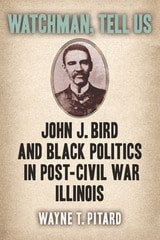
Watchman, Tell Us
John J. Bird and Black Politics in Post-Civil War IllinoisWayne T. Pitard
Southern Illinois University Press, 2024
The most influential Black leader in 19th century southern Illinois
This key biography of John J. Bird unveils the forgotten story of a remarkable Black political figure in post-Civil War Illinois. Emerging as a leader in Cairo, the city with Illinois’ second-largest Black community, Bird played a pivotal role in advancing civil rights within the state, also becoming Illinois’ first Black elected judge and first Black trustee of the University of Illinois. Watchman, Tell Us deftly examines Bird’s lifetime of service and advocacy for a vulnerable community and the ways in which he successfully advocated for and protected voting rights, educational opportunity, and public access for the Black residents of southern Illinois.
Bird arrived in Cairo at age twenty during the Civil War to aid the 2,000 Black refugees from the South living there. By 1870, he had established the city’s substantial Black Republican wing, providing the Black community with unprecedented political influence in this hostile, majority white, Democratic town. Under Bird’s leadership, the Black Republicans pressed for policies that improved the well-being of the African American population, including the early establishment of a Black public school, the rise of an integrated judicial system, and the ability to access public and private businesses. Bird became influential across Illinois as a judge and university trustee, a leader in the Black convention movement, and a significant newspaper editor in Cairo and Springfield. When Bird died in 1912, the nation he loved had once again betrayed its Black citizens, and it appeared that most of the achievements he had fought for had collapsed. But the work of Bird and the other civil rights workers of the nineteenth century created the foundation upon which the movements of the twentieth century could stand.

You Can Crush the Flowers
A Visual Memoir of the Egyptian RevolutionBahia Shehab
Gingko, 2021