Results by title
7 books match the query 'California, Gulf of'
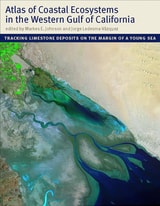
Atlas of Coastal Ecosystems in the Western Gulf of California
Tracking Limestone Deposits on the Margin of a Young SeaEdited by Markes E. Johnson and Jorge Ledesma-Vásquez
University of Arizona Press, 2009
With an emphasis on the intricate workings of the Gulf, a team of scientists led by Markes E. Johnson and Jorge Ledesma-Vázquez explores how marine invertebrates such as corals and bivalves, as well as certain algae, contribute to the operation of a vast “organic engine” that acts as a significant carbon trap. The Atlas reveals that the role of these organisms in the ecology of the Gulf was greatly underestimated in the past. The organisms that live in these environments (or provide the sediments for beaches and dunes) are mass producers of calcium carbonate. Until now, no book has considered the centrality of calcium carbonate production as it functions today across multiple ecosystems and how it has evolved over time.
An important work of scholarship that also evokes the region’s natural splendor, the Atlas will be of interest to a wide range of scientists, including geologists, paleontologists, marine biologists, ecologists, and conservation biologists.
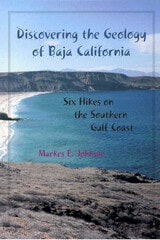
Discovering the Geology of Baja California
Six Hikes on the Southern Gulf CoastMarkes E. Johnson
University of Arizona Press, 2009
For those who wish to unlock the mysteries of Baja California, geologist Markes Johnson offers the key. He has taken a body of technical research on the geology and paleontology of the region and made it accessible in plain language for anyone who visits the peninsula, whether for study or recreation. His book teaches general concepts in coastal geomorphology and tectonics, as well as the basic geological and natural history of the Gulf of California, in a conversive, intellectually stimulating fashion.
Johnson's guide takes the form of six day-long hikes in the area of Punta Chivato on the east coast of the southern Baja California peninsula. Punta Chivato is presented as a microcosm of the entire region; it can enable visitors to better understand major themes in the natural history of the Gulf of California and its geological past. All of the hikes begin at the southeast corner of the Punta Chivato promontory and loop out in different directions. Each circuit is designed to minimize overlap with adjacent hikes and to maximize the visitor's exposure to instructive variations in the landscape. Each chapter features additional reflections on a geologist of another time and place who has advanced the field in a way that elucidates the material covered in that chapter. Through these asides, readers will learn the basic lessons about how geologists read the secrets hidden in landscapes.
Discovering the Geology of Baja California invites visitors to these shores to explore not only rocks and fossils but also the continuum of past ecosystems with the ecology of the present. It offers both an unparalleled guide to a remote area and a new understanding of life caught in an endless cycle of change.
Net Values
Environmental, Economic, and Social Entanglements in the Gulf of CaliforniaNicole D. Peterson
University of Arizona Press, 2025
In Loreto, Baja California Sur, Mexico, artisanal fishing families and staff of Loreto Bay National Park face an array of choices as tourism, environmental concerns, and economic precarity challenge livelihoods and natural resource availability. In Net Values, Nicole D. Peterson offers a critical examination of how the idea of “choice” is understood, and what it means for policies, planning, and programs to ignore the social, political, economic, and cultural contexts surrounding these choices.
Anchored by more than twenty years of research, Peterson provides insight into the fishing community of Loreto and reveals an important role in decision-making that diverges from previous studies. She argues that decisions about fishing, natural resource management, and other aspects of life are influenced by context, values, and expectations in ways that go beyond the typical psychological or cognitive theories of choice. Instead, Net Values highlights the ways that choices are constrained and enabled by values and expectations of cultures, histories, relationships, and experiences, both personal and shared. Peterson answers questions such as “why do the fishermen fish?” or “what is the marine park staff doing?” These decisions and choices are related to the larger implication addressed by this book: that in order to make effective policies around natural resource management and other issues, we must understand how those potential policies interact with the decision processes already underway.
Divided into five chapters, Net Values is rich in ethnographic detail, drawing from real people to inform the narratives, chapters, and theoretical elaboration. Peterson’s interactions with fishers such as Don Javier and his family and friends support the ideas offered around choice, values, and strategies, connecting ideas to real experiences.
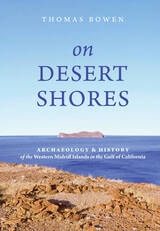
On Desert Shores
Archaeology and History of the Western Midriff Islands in the Gulf of CaliforniaThomas Bowen
University of Utah Press, 2022
Bowen draws on a wide range of sources, including the first archaeological field work ever conducted on the islands, written accounts dating back to the sixteenth century, oral histories of native people, contemporary interviews, and his own firsthand experiences. Among those cast in the islands’ historical drama are the Seri (Comcaac) people of Sonora, the extinct Cochimís of Baja California, Spanish explorers, Jesuit missionaries, pearl fishers, egg collectors, guano miners, hydrographers, cartographers, small-scale Mexican fishermen, recreational anglers, writers, photographers, ecotourists, shipwreck victims, and, most importantly, scientists. The final chapter documents the impact of this human activity on the islands’ ecosystems and examines conservation efforts now underway. Compelling and richly illustrated, this broadly based work provides a unique picture of these extraordinary islands.
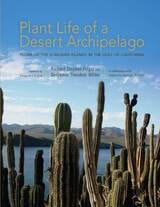
Plant Life of a Desert Archipelago
Flora of the Sonoran Islands in the Gulf of CaliforniaRichard Stephen Felger and Benjamin Theodore Wilder, in collaboration with Humberto Romero-Morales; Foreword by Exequiel Ezcurra
University of Arizona Press, 2012
The desert islands of the Gulf of California are among the world's best-preserved archipelagos. The diverse and unique flora, from the cardón forests of Cholludo to the agave-dominated slopes of San Esteban remain much as they were centuries ago, when the Comcaac (Seri people) were the only human presence in the region. Almost 400 plant species exist here, with each island manifesting a unique composition of vegetation and flora. For thousands of years, climatic and biological forces have sculpted a set of unparalleled desert worlds.
Plant Life of a Desert Archipelago is the first in-depth coverage of the plants on islands in the Gulf of California found in between the coasts of Baja California and Sonora. The work is the culmination of decades of study by botanist Richard Felger and recent investigations by Benjamin Wilder, in collaboration with Sr. Humberto Romero-Morales, one of the most knowledgeable Seris concerning the region's flora. Their collective effort weaves together careful and accurate botanical science with the rich cultural and stunning physical setting of this island realm.
The researchers surveyed, collected, and studied thousands of plants—seen here in meticulous illustrations and stunning color photographs—providing the most precise species accounts of the islands ever made. To access remote parts of the islands the authors worked directly with the Comcaac, an indigenous community who have lived off marine and terrestrial life in this coastal desert region for centuries. Invaluable information regarding indigenous names and distributions are an intrinsic part of this work.
The flora descriptions are extraordinarily detailed and painstakingly crafted for field biologists. Conservationists, students, and others who are interested in learning about the natural wealth of the Gulf of California, desert regions, or islands in general are sure to be captivated by this rich and fascinating volume.
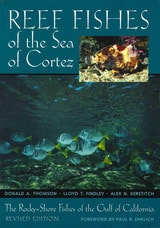
Reef Fishes of the Sea of Cortez
The Rocky-Shore Fishes of the Gulf of California, Revised EditionBy Donald A. Thomson, Lloyd T. Findley, and Alex N. Kerstitch
University of Texas Press, 2000
First published in 1979, this guide has become the standard resource for scientists, divers, and spearfishers interested in the fishes of the tropical Pacific Coast. The authors have revised and updated this edition to include the most current taxonomic information, additional species descriptions, and new illustrations.
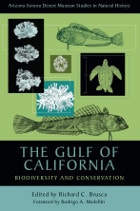
The Gulf of California
Biodiversity and ConservationRichard C. Brusca
University of Arizona Press, 2010
Few places in the world can claim such a diversity of species as the Gulf of California (Sea of Cortez), with its 6,000 recorded animal species estimated to be half the number actually living in its waters. So rich are the Gulf's water that over a half-million tons of seafood are taken from them annually—and this figure does not count the wasted by-catch, which would triple or quadruple that tonnage. This timely book provides a benchmark for understanding the Gulf's extraordinary diversity, how it is threatened, and in what ways it is—or should be—protected.
In spite of its dazzling richness, most of the Gulf's coastline now harbors but a pale shadow of the diversity that existed just a half-century ago. Recommendations based on sound, careful science must guide Mexico in moving forward to protect the Gulf of California.
This edited volume contains contributions by twenty-four Gulf of California experts, from both sides of the U.S.-Mexico border. From the origins of the Gulf to its physical and chemical characteristics, from urgently needed conservation alternatives for fisheries and the entire Gulf ecosystem to information about its invertebrates, fishes, cetaceans, and sea turtles, this thought-provoking book provides new insights and clear paths to achieve sustainable use solidly based on robust science. The interdisciplinary, international cooperation involved in creating this much-needed collection provides a model for achieving success in answering critically important questions about a precious but rapidly disappearing ecological treasure.