Results by title
14 books match the query 'Call'
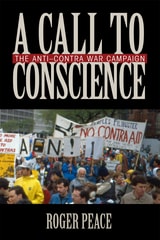
A Call to Conscience
The Anti-Contra War CampaignRoger Peace
University of Massachusetts Press, 2012
Unlike earlier U.S. interventions in Latin America, the Reagan administration's attempt to overthrow the Sandinista government of Nicaragua during the 1980s was not allowed to proceed quietly. Tens of thousands of American citizens organized and agitated against U.S. aid to the counterrevolutionary guerrillas, known as “contras.” Believing the Contra War to be unnecessary, immoral, and illegal, they challenged the administration's Cold War stereotypes, warned of “another Vietnam,” and called on the United States to abide by international norms.
A Call to Conscience offers the first comprehensive history of the anti–Contra War campaign and its Nicaragua connections. Roger Peace places this eight-year campaign in the context of previous American interventions in Latin America, the Cold War, and other grassroots oppositional movements. Based on interviews with American and Nicaraguan citizens and leaders, archival records of activist organizations, and official government documents, this book reveals activist motivations, analyzes the organizational dynamics of the anti–Contra War campaign, and contrasts perceptions of the campaign in Managua and Washington.
Peace shows how a variety of civic groups and networks—religious, leftist, peace, veteran, labor, women's rights—worked together in a decentralized campaign that involved extensive transnational cooperation.
Answer the Call
Virtual Migration in Indian Call CentersAimee Carrillo Rowe
University of Minnesota Press, 2013
What happens over time to Indians who spend their working hours answering phone calls from Americans—and acting like Americans themselves? To find out, the authors of Answer the Call conducted long-term interviews with forty-five agents, trainers, managers, and CEOs at call centers in Bangalore and Mumbai from 2003 to 2012. For nine or ten hours every day, workers in call centers are not quite in India or America but rather in a state of “virtual migration.” Encouraged to steep themselves in American culture from afar, over time the agents come to internalize and indeed perform Americanness for Americans—and for each other.
Call center agents “migrate” through time and through the virtual spaces generated by voice and information sharing. Drawing from their rich interviews, the authors show that the virtual migration agents undergo has no geographically distant point of arrival, yet their perception of moving is not merely abstract. Over the duration of the job, agents’ sense of place and time changes: agents migrate but still remain, leaving them somewhere in between—between India and America, experience and imagination, class mobility and consumption, tradition and modernity, here and there, then and now, past and future.
However tangible and elastic their virtual mobility might seem in these relatively lucrative jobs, it is also suspended within the confines of the very boundaries they migrate across. Having engaged with these vivid and often poignant interviews, readers will never again be indifferent to an Indian agent’s greeting at the other end of a toll-free call: “Hello, my name is Roxanne. How may I help you?”

Art, Sustainability and Learning Communities
Call to ActionEdited by Raphael Vella and Victoria Pavlou
Intellect Books, 2024
The main aim of Art, Sustainability and Learning Communities is to show how shared spaces for exchange in the fields of art education and continuous professional development can reflect, inspire, and integrate sustainability principles that are becoming crucial in today’s world. The authors propose the idea that coordinated action can lead to a more sustainable future by promoting a sense of community, lifelong learning, and confidence in the possibility of changing current conditions.
Its three parts combine expertise in visual arts education, education for sustainable development, contemporary art practice, and sustainability activism. While Part I focuses on literature in the field and the interrelation of different disciplines, Part II provides concrete examples of professional learning communities and pedagogies that can be used to enrich the field of art education. Finally, Part III presents brief case studies illustrating international projects by contemporary artists, curators, environmentalists, and others, providing educators with several inspirational models of concrete and creative action.
Call the Next Witness
Philip Mason
University of Chicago Press, 1986
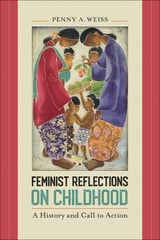
Feminist Reflections on Childhood
A History and Call to ActionPenny A. Weiss
Temple University Press, 2021
In Feminist Reflections on Childhood, Penny Weiss rediscovers the radically feminist tradition of advocating for the liberatory treatment of youth. Weiss looks at both historical and contemporary feminists to understand what issues surrounding the inequality experienced by both women and children were important to the authors as feminist activists and thinkers. She uses the writings of Mary Wollstonecraft, Elizabeth Cady Stanton, and Simone de Beauvoir to show early feminist arguments for the improved status and treatment of youth. Weiss also shows how Charlotte Perkins Gilman, a socialist feminist, and Emma Goldman, an anarchist feminist, differently understood and re-visioned children’s lives, as well as how children continue to show up on feminist agendas and in manifestos that demand better conditions for children’s lives.
Moving to contemporary theory, Feminist Reflections on Childhood also looks at how feminist disability theory is well-positioned to recognize the voices of children, and how queer theory provides lessons on contemporary trends that provide visions and strategies for more constructive adult-child relations. Weiss, who includes her own experiences as a mother and foster mother throughout the book, closes her distinctively feminist takes on childhood with a consideration of speculative fiction stories that offer examples of what feminists think makes childhood (un)livable.
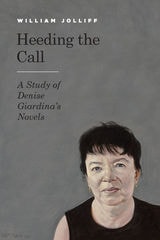
Heeding the Call
A Study of Denise Giardina's NovelsWilliam Jolliff
West Virginia University Press, 2020
In chapters devoted to each of Giardina’s novels, Jolliff attends to her uses of history, her formal techniques, and the central themes that make each work significant. What becomes clear is that while the author’s religious beliefs inform her fiction, she never offers easy answers. Her narratives consistently push her characters—and her readers—into more challenging and meaningful questions. Jolliff concludes by arguing that although Giardina’s initial fame has been tied to her significance as an Appalachian novelist, future studies must look beyond the regional to the deeply human questions her novels so persistently engage.
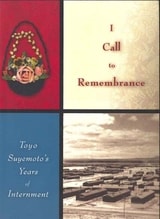
I Call to Remembrance
Toyo Suyemoto's Years of InternmentToyo Suyemoto and Edited by Susan B. Richardson
Rutgers University Press, 2007
A uniquely poetic contribution to the small body of internment memoirs, Suyemoto's account includes information about policies and wartime decisions that are not widely known, and recounts in detail the way in which internees adjusted their notions of selfhood and citizenship, lending insight to the complicated and controversial questions of citizenship, accountability, and resistance of first- and second-generation Japanese Americans.
Suyemoto's poems, many written during internment, are interwoven throughout the text and serve as counterpoints to the contextualizing narrative. Suyemoto's poems, many written during internment, are interwoven throughout the text and serve as counterpoints to the contextualizing narrative. A small collection of poems written in the years following her incarceration further reveal the psychological effects of her experience.
Spiritual Herstories
Call of the Soul in Dance ResearchEdited by Amanda Williamson and Barbara Sellers-Young
Intellect Books, 2019
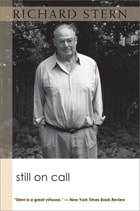
Still on Call
Richard Stern
University of Michigan Press, 2010
"Richard Stern is a literary treasure."
---Scott Turow
"Stern's new miscellany reveals a literary mind of the first order, thinking in elegant prose about dozens of interesting subjects."
---Philip Roth
"Stern is a great virtuoso. . . . [I]n an ailing literary culture, we should be grateful for a work like this and a career, too, spanning the American half-century."
---New York Times Book Review
"Stern's skill gives vitality to everything he treats."
---Edmund White, Los Angeles Times
"Like a gifted dancer in a small space, Stern has tremendous grace and ease on the page, executing dynamic turns and dips with a fine economy of motion and without sacrificing nuance."
---Booklist
Still on Call is the sixth and final collection of critically acclaimed novelist and educator Richard Stern. "Orderly miscellany" is the author's term for this aggregation of reflections, essays, reviews, reportage, commentary, and observations on writing and fellow writers, life, and contemporary culture.
The collection's three sections, Coasting, Posting, and Hosting, contain pieces that range from reflections on becoming a writer in the 1940s to assessments of such major writers and close colleagues as Saul Bellow, and Donald Justice to topical offerings from Stern's popular blog for the New Republic.
This wide-ranging collection is intended as the culmination of sixty years of the writing life but, first and foremost, as provocative entertainment. Stern is a prolific writer, and this selection of some of his highest-quality writing both educates and enthralls.
Richard Stern is the Helen A. Regenstein Emeritus Professor of English and of the Humanities at the University of Chicago and the author of nineteen works of fiction and nonfiction. His books include the novels A Father's Words and Golk, and, most recently, the collection What Is What Was. Stern has been the subject of two books: The Writings of Richard Stern: The Education of an Intellectual Everyman by David Garret Izzo and Richard Stern by James Schiffer.
The Call
Rawi Hage
Diaphanes, 2025
Following one of the Turfan archaeological expeditions in the early 1900s, a fragment of a Manichaean text written in Uighur and Old Turkic found its way to the Asian Art Museum in Berlin. Originating from the Northern Silk Road region (now the Xinjiang Uighur Region in China), these “loose leaves” became a source of inspiration for Rawi Hage.
Hage writes, “I was born near Byblos in Lebanon. The ancient city of Byblos is believed to be the place where the first alphabet was invented.” Encountering this rare and precious manuscript, with its layered and multicolored words, Hage reflects on the movement, uprooting, displacement, and migration of both objects and people.
The Call of Conscience
Protestant Clergy and Jews in the NetherlandsJohan Hegeman
Central European University Press, 2026
The Call
Eloquence in the Service of TruthCraig R. Smith
Michigan State University Press, 2022

To You I Call
Psalms Throughout Our LivesRabbi Jade Sank Ross
Central Conference of American Rabbis, 2024
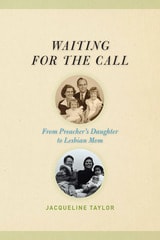
Waiting for the Call
From Preacher's Daughter to Lesbian MomJacqueline Taylor
University of Michigan Press, 2007
“Well-written, absorbing, and a great pleasure to read . . . will appeal to Christians struggling to square their traditional beliefs with acceptance of homosexuality as well as to all those interested in adoption, lesbian marriage, and the changing shape of America’s families.”
—Elizabeth C. Fine, Virginia Tech University
Waiting for the Call takes readers from the foothills of the Appalachians—where Jacqueline Taylor was brought up in a strict evangelical household—to contemporary Chicago, where she and her lesbian partner are raising a family. In a voice by turns comic and loving, Taylor recounts the amazing journey that took her in profoundly different directions from those she or her parents could have ever envisioned.
Taylor’s father was a Southern Baptist preacher, and she struggled to deal with his strictures as well as her mother’s manic-depressive episodes. After leaving for college, Taylor finds herself questioning her faith and identity, questions that continue to mount when—after two divorces, a doctoral degree, and her first kiss with a woman—she discovers her own lesbianism and begins a most untraditional family that grows to include two adopted children from Peru.
Even as she celebrates and cherishes this new family, Taylor insists on the possibility of maintaining a loving connection to her religious roots. While she and her partner search for the best way to explain adoption to their children and answer the inevitable question, “Which one is your mom?” they also seek out a church that will unite their love of family and their faith. Told in the great storytelling tradition of the American South, full of deep feeling and wry humor, Waiting for the Call engagingly demonstrates how one woman bridged the gulf between faith and sexual identity without abandoning her principles.