Results by title
3 books match the query 'Calligraphy'
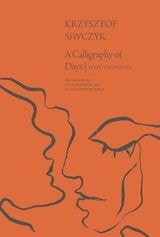
A Calligraphy of Days
Selected PoemsKrzysztof Siwczyk
Seagull Books, 2024
Verses that oscillate between the turmoil of post-communist Eastern Europe to understated reflections on grief and mortality.
The sixty-four poems in A Calligraphy of Days reflect Krzysztof Siwczyk’s wide-ranging and variegated style. Born in 1977, Siwczyk has lived most of his life in the Silesian city of Gliwice. In 1995, he became a wunderkind of the Polish poetry scene with his debut volume Wild Kids, an edgy and unsentimental narrative of youthful tribulations and urban malaise during Poland’s transition from communism to capitalism. Siwczyk’s poems careen down the page at great speed, relying on clever turns of phrase or an idea that illuminates a larger meaning. As in calligraphy, a meandering subterranean process connects meaning and memory, thought and verse. Teased to the surface, words and images emerge in rapid, terse, and precise bursts.
Throughout his career, Siwczyk has never ceased to challenge our sense of who we are—changing course multiple times in the process. Following several volumes full of expansive lines, his most recent works offer spare meditations on illness and grief. Clipped and understated, these post-Holocaust poems address our inability to speak of death and tragedy.
[more]

Handwriting of the Twentieth Century
Rosemary Sassoon
Intellect Books, 2007
As letter-writing has fallen by the wayside, the art of lavish yet legible handwriting is no longer being taught to schoolchildren or employed in daily life—much to the dismay of those who receive hastily scrawled love notes or try to decipher a doctor’s prescription. In an age when script manuals for students are disappearing at a rapid rate and writing samples are ephemeral, Rosemary Sassoon’s Handwriting of the Twentieth Century provides the first historical record of teaching the skill of writing in the last 100 years.
In addition to illustrating the techniques used by handwriting instructors and documenting the ever-changing views of script stylists, this volume probes the development and manufacture of writing equipment as well as useful examples for today’s teachers of writing. Handwriting of the Twentieth Century is a delightful, comprehensive account of our constant quest for fluent and clear handwritten script.
“...excellent and comprehensive illustrated book—which takes us through not only what happened in the United Kingdom, but brings in information about other English speaking countries such as America and Australia as well as European scripts, providing samples and explanations that are valuable as a reference. . . . The book's well-written Epilogue merits a section being printed—It couldn't be put better by a graphologist!”—Elaine Quigley, Graphologist
[more]
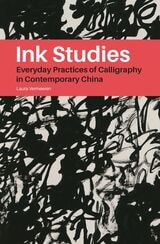
Ink Studies
Everyday Practices of Calligraphy in Contemporary ChinaLaura Vermeeren
National University of Singapore Press, 2025
In a world where writing by hand is disappearing, Laura Vermeeren studies why calligraphy in China is not just surviving, but evolving in surprising ways.
As handwriting fades in the digital age, calligraphy in China is caught between tradition and reinvention. Ink Studies deconstructs this paradox, determining how calligraphy is not simply an ancient art form, but more so a site of ongoing cultural negotiation. Laura Vermeeren investigates how calligraphy moves through five distinct visual and social fields, shaping and being shaped by its practitioners. While often framed as an act of repetition and tied to centuries of disciplined copying, calligraphy also emerges here as a force of creativity—one that is actively mobilized in contemporary China, whether through state-sponsored initiatives or the aesthetics of modern design.
Uniting contemporary art and media history, Ink Studies provides vital perspectives on how China’s past is continually reimagined in the present, portraying calligraphy’s enduring relevance in an era of rapid technological change.
[more]