Results by title
35 books match the query 'Cambodia'

A Head in Cambodia
A Jenna Murphy MysteryNancy Tingley
Ohio University Press, 2017
When the alluring, eleventh-century Cambodian stone head of Radha, consort to Krishna, shows up at the Searles Museum, young curator Jenna Murphy doesn’t suspect that it will lead her to a murder. Asian art is her bailiwick, not criminal investigation, and her immediate concern is simply figuring out whether the head is one famously stolen from its body, or a fake.
When a second decapitation happens—this time of an art collector, not a statue—Jenna finds herself drawn into a different kind of mystery, and the stakes are life or death. It turns out that the same talents for research and for unraveling puzzles—the bread and butter of an art historian—have perfectly equipped her to solve crimes. She’s certain the sculpture provides clues to help her solve the case, which takes her to Thailand and Cambodia. But the collectors, dealers, and con artists of the Bangkok art world only compound her questions.
A Head in Cambodia is the fiction debut of noted Asian art expert Nancy Tingley. Readers will delight in the rarified world of collecting, as well as getting to know Jenna, an intrepid and shrewd observer who will easily find her place among V.I. Warshawski, Kinsey Milhone, and other great female sleuths.
A New Sun Rises Over the Old Land
A Novel of Sihanouk’s CambodiaSuon Sorin
National University of Singapore Press, 2020
First published in 1961, eight years after Cambodia gained independence from French colonial rule, A New Sun Rises Over the Old Land is an iconic work of modern Khmer literature, a singularly illuminating document of the new nation. This is one of the first English translations of a modern Khmer novel, and the text is accompanied by an extended introduction that situates the author in his historical and artistic context and examines the novel’s literary value.
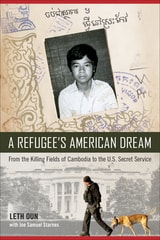
A Refugee's American Dream
From the Killing Fields of Cambodia to the U.S. Secret ServiceLeth Oun with Joe Samuel Starnes
Temple University Press, 2023
“I saw many killed. I almost starved. But I escaped to refugee camps in Thailand and eventually made it to the U.S.” Thus begins Leth Oun’s poignant and vivid memoir. A survivor of the Cambodian Killing Fields—having spent a torturous three years, eight months, and ten days imprisoned by the Khmer Rouge—Oun thrived in America, learning English, becoming a citizen, and working as an officer in the United States Secret Service Uniformed Division.
In A Refugee’s American Dream, Oun shares hard memories of Cambodia, where his father was executed, and his family enslaved in labor camps.
Following the fall of the Khmer Rouge, Oun survived a year of homelessness then nearly four years in refugee camps. Arriving in America, 17 and penniless, Oun struggled, washing dishes at a Chinese restaurant for $3.15 an hour. Still, he persevered, graduating from Widener University and completing thousands of hours of training to pursue a career in the Secret Service.
While on President Obama’s protection team, he returns to Cambodia after 32 years, reunites with family, and bonds with Reik, the Secret Service dog he handles. Through his most difficult moments, Oun displays truly inspiring resilience that ultimately leads to great achievements.
The authors’ proceeds will go to help Cambodians in need
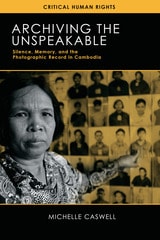
Archiving the Unspeakable
Silence, Memory, and the Photographic Record in CambodiaMichelle Caswell
University of Wisconsin Press, 2014
Winner, Waldo Gifford Leland Award, Society of American Archivists
Longlist, ICAS Book Prize, International Convention of Asia Scholars
Betting on Education
The Costs of Schooling for Cambodian YouthJennifer Estes
Rutgers University Press, 2025
Educational credentials are one of the most reliable tickets to a middle-class livelihood across the globe today. But as the costs of schooling rise, young people increasingly wonder whether their investment will pay off. Betting on Education: The Costs of Schooling for Cambodian Youth follows the experiences of rural secondary school students navigating Cambodia’s semiprivatized state education system. It reveals that when students are compelled to speculate about the value of their education, the “winners” of this gamble are the ones already most securely part of the middle class. The rest are left behind. In the process, the very meaning of education is transformed, as schooling becomes less about learning and more about its potential financial returns. By situating these stories in the wider global logics of neoliberal capitalism, Betting on Education challenges readers to consider what is at stake when young people must wager so much on the promise of schooling.
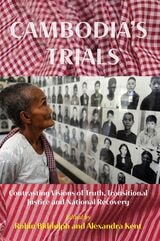
Cambodia's Trials
Contrasting Visions of Truth, Transitional Justice and National RecoveryEdited by Robin Biddulph and Alexandra Kent
National University of Singapore Press, 2023
More than four decades have passed since the end of Khmer Rouge rule in Cambodia in 1979. Even so, the country is still coming to terms with the destruction wrought by the Khmer Rouge during both the time they were in power and during the period of guerrilla resistance that lasted until 1998. The Khmer Rouge Tribunal, or the Extraordinary Chambers in the Court of Cambodia (ECCC), was established in 2006 to bring the Khmer Rouge leadership to justice. In many ways a product of the 1990s, when liberal democracy appeared to be on the rise both in Cambodia and internationally, the ECCC was imagined as a transitional justice initiative that would help ease the transition to liberal democracy.
The ECCC has long been the focus of scholarly attention in Cambodia’s recovery, but this compelling study argues that such an approach is dated, noting that the political circumstances in which the ECCC was born have since changed profoundly, both globally and locally. Cambodia’s current situation can no longer be analyzed solely in terms of transitional justice narratives or the work of the ECCC, and other ways in which Cambodians have come to terms with their past and built new lives must be considered. By decentering the ECCC in the scholarly narrative of Cambodia’s recovery, the volume’s authors offer fascinating new insights into the Khmer Rouge period and more recent years of social, cultural, and political change in Cambodia.
Civil Society Elites
Field Studies from Cambodia and IndonesiaEdited by Astrid Norén-Nilsson, Amalinda Savirani, and Anders Uhlin
National University of Singapore Press, 2023
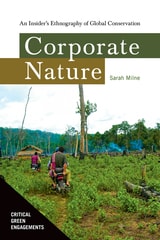
Corporate Nature
An Insider's Ethnography of Global ConservationSarah Milne
University of Arizona Press, 2022
Sarah Milne spent more than a decade working for and observing global conservation projects in Cambodia. During this time, she saw how big environmental NGOs can operate rather like corporations. Their core practice involves rolling out appealing and deceptively simple policy ideas, like Payments for Ecosystem Services (PES). Yet, as policy ideas prove hard to implement, NGOs must also carefully curate evidence from the field to give the impression of success and effectiveness.
In Corporate Nature, Milne delves inside the black box of mainstream global conservation. She reveals how big international NGOs struggle in the face of complexity—especially in settings where corruption and political violence prevail. She uses the case of Conservation International’s work in Cambodia to illustrate how apparently powerful NGOs can stumble in practice: policy ideas are transformed on the ground, while perverse side effects arise, like augmented authoritarian power, illegal logging, and Indigenous dispossession.
The real power of global conservation NGOs is therefore not in their capacity to control what happens in the field but in their capacity to ignore or conceal failings. Milne argues that this produces an undesirable form of socionature, called corporate nature, that values organizational success over diverse knowledges and ethical conduct.
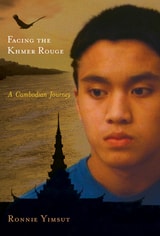
Facing the Khmer Rouge
A Cambodian JourneyRonnie Yimsut
Rutgers University Press, 2011
As a child growing up in Cambodia, Ronnie Yimsut played among the ruins of the Angkor Wat temples, surrounded by a close-knit community. As the Khmer Rouge gained power and began its genocidal reign of terror, his life became a nightmare. In this stunning memoir, Yimsut describes how, in the wake of death and destruction, he decides to live.
Escaping the turmoil of Cambodia, he makes a perilous journey through the jungle into Thailand, only to be sent to a notorious Thai prison. Fortunately, he is able to reach a refugee camp and ultimately migrate to the United States, where he attended the University of Oregon and became an influential leader in the community of Cambodian immigrants. Facing the Khmer Rouge shows Ronnie Yimsut’s personal quest to rehabilitate himself, make a new life in America, and then return to Cambodia to help rebuild the land of his birth.

Ferryman of Memories
The Films of Rithy PanhDeirdre Boyle
Rutgers University Press, 2023

Fuchsia in Cambodia
PoemsRoy Jacobstein
Northwestern University Press, 2008
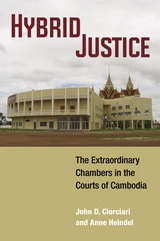
Hybrid Justice
The Extraordinary Chambers in the Courts of CambodiaJohn D. Ciorciari and Anne Heindel
University of Michigan Press, 2014
Since 2006, the United Nations and Cambodian Government have participated in the Extraordinary Chambers in the Courts of Cambodia, a hybrid tribunal created to try key Khmer Rouge officials for crimes of the Pol Pot era. In Hybrid Justice, John D. Ciorciari and Anne Heindel examine the contentious politics behind the tribunal’s creation, its flawed legal and institutional design, and the frequent politicized impasses that have undermined its ability to deliver credible and efficient justice and leave a positive legacy. They also draw lessons and principles for future hybrid and international courts and proceedings.

Hybrid Justice
The Extraordinary Chambers in the Courts of CambodiaJohn D. Ciorciari and Anne Heindel
University of Michigan Press, 2023
Since 2006, the United Nations and Cambodian Government have participated in the Extraordinary Chambers in the Courts of Cambodia, a hybrid tribunal created to try key Khmer Rouge officials for crimes of the Pol Pot era. In Hybrid Justice, John D. Ciorciari and Anne Heindel examine the contentious politics behind the tribunal’s creation, its flawed legal and institutional design, and the frequent politicized impasses that have undermined its ability to deliver credible and efficient justice and leave a positive legacy. They also draw lessons and principles for future hybrid and international courts and proceedings.
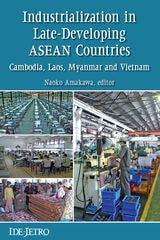
Industrialization in Late-Developing ASEAN Countries
Cambodia, Laos, Myanmar and VietnamNaoko Amakawa
National University of Singapore Press, 2010
The outcomes differed significantly owing to geographical location, government policies, and internal economic conditions. Industrialization in Late-Developing ASEAN Countries explores these differences through case studies based on an extended research program conducted by the Institute of Developing Economies in Tokyo, which offered insights into models of economic growth, and into the trajectories followed by the four countries examined.
Jin Ping Mei – A Wild Horse in Chinese Literature
Essays on Texts, Illustrations and Translations of a Late Sixteenth-Century MasterpieceEdited by Vibeke Børdahl and Lintao Qi
National University of Singapore Press, 2022
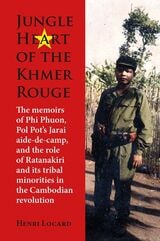
Jungle Heart of the Khmer Rouge
The memoirs of Phi Phuon, Pol Pot’s Jarai aide-de-camp, and the role of Ratanakiri and its tribal minorities in the Cambodian revolutionHenri Locard
National University of Singapore Press, 2023
Landbridge
Life in FragmentsY-Dang Troeung
Duke University Press, 2024
Life in a Cambodian Orphanage
A Childhood Journey for New OpportunitiesKathie Carpenter
Rutgers University Press, 2021
Man or Monster?
The Trial of a Khmer Rouge TorturerAlexander Laban Hinton
Duke University Press, 2016
Mixed Medicines
Health and Culture in French Colonial CambodiaSokhieng Au
University of Chicago Press, 2011
During the first half of the twentieth century, representatives of the French colonial health services actively strove to expand the practice of Western medicine in the frontier colony of Cambodia. But as the French physicians ventured beyond their colonial enclaves, they found themselves negotiating with the plurality of Cambodian cultural practices relating to health and disease. These negotiations were marked by some success, a great deal of misunderstanding, and much failure.
Bringing together colorful historical vignettes, social and anthropological theory, and quantitative analyses, Mixed Medicines examines these interactions between the Khmer, Cham, and Vietnamese of Cambodia and the French, documenting the differences in their understandings of medicine and revealing the unexpected transformations that occurred during this period—for both the French and the indigenous population.
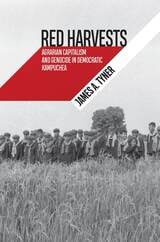
Red Harvests
Agrarian Capitalism and Genocide in Democratic KampucheaJames A. Tyner
West Virginia University Press, 2021
Reassessing the Cambodian genocide through the lens of global capitalist development.
James Tyner reinterprets the place of agriculture under the Khmer Rouge, positioning it in new ways relative to Marxism, capitalism, and genocide. The Cambodian revolutionaries’ agricultural management is widely viewed by critics as irrational and dangerous, and it is invoked as part of wider efforts to discredit leftist movements. Researching the specific functioning of Cambodia’s transition from farms to agriculture within the context of the global economy, Tyner comes to a different conclusion. He finds that analysis of “actually existing political economy”—as opposed to the Marxist identification the Khmer Rouge claimed—points to overlap between Cambodian practice and agrarian capitalism.
Tyner argues that dissolution of the traditional Khmer family farm under the aegis of state capitalism is central to any understanding of the mass violence unleashed by the Khmer Rouge. Seen less as a radical outlier than as part of a global shift in farming and food politics, the Cambodian tragedy imparts new lessons to our understanding of the political economy of genocide.
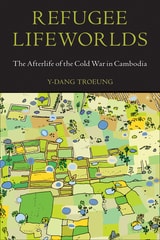
Refugee Lifeworlds
The Afterlife of the Cold War in CambodiaY-Dang Troeung
Temple University Press, 2022
Cambodian history is Cold War history, asserts Y-Dang Troeung in Refugee Lifeworlds. Constructing a genealogy of the afterlife of the Cold War in Cambodia, Troeung mines historical archives and family anecdotes to illuminate the refugee experience, and the enduring impact of war, genocide, and displacement in the lives of Cambodian people.
Troeung, a child of refugees herself, employs a method of autotheory that melds critical theory, autobiography, and textual analysis to examine the work of contemporary artists, filmmakers, and authors. She references a proverb about the Cambodian kapok tree that speaks to the silences, persecutions, and modes of resistance enacted during the Cambodian Genocide, and highlights various literary texts, artworks, and films that seek to document and preserve Cambodian histories nearly extinguished by the Khmer Rouge regime.
Addressing the various artistic responses to prisons and camps, issues of trauma, disability, and aphasia, as well as racism and decolonialism, Refugee Lifeworlds repositions Cambodia within the broader transpacific formation of the Cold War. In doing so, Troeung reframes questions of international complicity and responsibility in ways that implicate us all.
Return Engagements
Contemporary Art's Traumas of Modernity and History in Sài Gòn and Phnom PenhViet Lê
Duke University Press, 2021
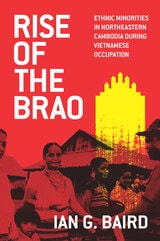
Rise of the Brao
Ethnic Minorities in Northeastern Cambodia during Vietnamese OccupationIan G. Baird
University of Wisconsin Press, 2022
Based on detailed research and interviews, Ian G. Baird documents this golden age of the Brao, including the voices of those who are too frequently omitted from official records. Rise of the Brao challenges scholars to look beyond the prevailing historical narratives to consider the nuanced perspectives of peripheral or marginal regions.
Storytelling in Cambodia
Willa Schneberg
Calyx, 2006
Survivors
CAMBODIAN REFUGEES IN THE UNITED STATESSucheng Chan
University of Illinois Press, 2004
Unparalleled in scope, Survivors begins with the Cambodians' experiences under the brutal Khmer Rouge regime, following them through escape to refugee camps in Thailand and finally to the United States, where they try to build new lives in the wake of massive trauma. Their struggle becomes primarily economic as they continue to negotiate new cultures and deal with rapidly changing gender and intergenerational relations within their own families. Poverty, crime, and racial discrimination all have an impact on their experiences in America, and each is examined in depth.
Although written as a history, this is a thoroughly multidisciplinary study, and Chan makes use of research from anthropology, sociology, psychology, medicine, social work, linguistics and education. She also captures the perspective of individual Cambodians. Drawing on interviews with more than fifty community leaders, a hundred government officials, and staff members in volunteer agencies, Survivors synthesizes the literature on Cambodian refugees, many of whom come from varying socioeconomic backgrounds.
A major scholarly achievement, Survivors is unique in the Asian American canon for its memorable presentation of cutting-edge research and its interpretation of both sides of the immigration process.
The Apathy of Empire
Cambodia in American GeopoliticsJames A. Tyner
University of Minnesota Press, 2024
What America’s intervention in Cambodia during the Vietnam War reveals about Cold War–era U.S. national security strategy
The Apathy of Empire reveals just how significant Cambodia was to U.S. policy in Indochina during the Vietnam War, broadening the lens to include more than the often-cited incursion in 1970 or the illegal bombing after the Paris Peace Accords in 1973. This theoretically informed and thoroughly documented case study argues that U.S. military intervention in Cambodia revealed America’s efforts to construct a hegemonic spatial world order.
James Tyner documents the shift of America’s post-1945 focus from national defense to national security. He demonstrates that America’s expansionist policies abroad, often bolstered by military power, were not so much about occupying territory but instead constituted the construction of a new normal for the exercise of state power. During the Cold War, Vietnam became the geopolitical lodestar of this unfolding spatial order. And yet America’s grand strategy was one of contradiction: to build a sovereign state (South Vietnam) based on democratic liberalism, it was necessary to protect its boundaries—in effect, to isolate it—through both covert and overt operations in violation of Cambodia’s sovereignty. The latter was deemed necessary for the former.
Questioning reductionist geopolitical understandings of states as central or peripheral, Tyner explores this paradox to rethink the formulation of the Cambodian war as sideshow, revealing it instead as a crucial site for the formation of this new normal.
Retail e-book files for this title are screen-reader friendly.
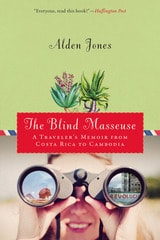
The Blind Masseuse
A Traveler's Memoir from Costa Rica to CambodiaAlden Jones
University of Wisconsin Press, 2013
Gold Winner for Travel Essays, Foreword Books of the Year
Gold Medal for Travel Essays, Independent Publisher Book Awards
Winner, Bisexual Book Awards, Bisexual Biography/Memoir Category
Finalist, Housatonic Book Awards
Longlist of eight, PEN/Diamonstein Spielvogel Award for the Art of the Essay
Finalist, Travel Book or Guide Award, North American Travel Journalists Association
The Blind Masseuse
A Traveler's Memoir from Costa Rica to CambodiaAlden Jones
University of Wisconsin Press, 2017
By way of explorations to Costa Rica, Bolivia, Nicaragua, Cuba, Burma, Cambodia, Egypt, and around the world on a ship, Jones chronicles her experience as a young American traveler while pondering her role as an outsider in the cultures she temporarily inhabits. Her wanderlust fuels a strong, high-adventure story and, much in the vein of classic travel literature, Jones's picaresque tale of personal evolution informs her own transitions, rites of passage, and understandings of her place as a citizen of the world. With sharp insight and stylish prose, Jones asks: Is there a right or wrong way to travel? The Blind Masseuse concludes that there is, but that it's not always black and white.
The Khmer Rouge Tribunal
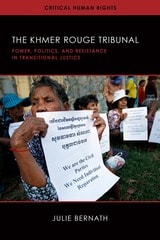
Power, Politics, and Resistance in Transitional JusticeJulie Bernath
University of Wisconsin Press, 2023
Here, Julie Bernath takes a different tack, deliberately decentering the trials in an effort to understand the ECCC in its particular context—and, by extension, the degree to which notions of transitional justice generally must be understood in particular social, cultural, and political contexts. She focuses on “sites of resistance” to the ECCC, including not only members of the elite political class but also citizens who do not, for a variety of tangled reasons, participate in the tribunal—and even resistance from victims of the regime and participants in the trials. Bernath demonstrates that the ECCC both shapes and is shaped by long-term contestation over Cambodia’s social, economic, and political transformations, and thereby argues that transitional justice must be understood locally rather than as a homogenous good that can be implanted by international actors.
The Politics of Lists
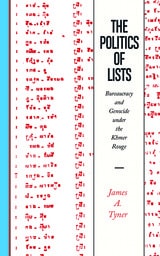
Bureaucracy and Genocide under the Khmer RougeJames A. Tyner
West Virginia University Press, 2018
2019 Julian Minghi Distinguished Book Award winner
Scholars from a number of disciplines have, especially since the advent of the war on terror, developed critical perspectives on a cluster of related topics in contemporary life: militarization, surveillance, policing, biopolitics (the relation between state power and physical bodies), and the like. James A. Tyner, a geographer who has contributed to this literature with several highly regarded books, here turns to the bureaucratic roots of genocide, building on insight from Hannah Arendt, Zygmunt Bauman, and others to better understand the Khmer Rouge and its implications for the broader study of life, death, and power.
The Politics of Lists analyzes thousands of newly available Cambodian documents both as sources of information and as objects worthy of study in and of themselves. How, Tyner asks, is recordkeeping implicated in the creation of political authority? What is the relationship between violence and bureaucracy? How can documents, as an anonymous technology capable of conveying great force, be understood in relation to newer technologies like drones? What does data create and what does it destroy? Through a theoretically informed, empirically grounded study of the Khmer Rouge security apparatus, Tyner shows that lists and telegrams have often proved as deadly as bullet and bombs.
Undesirable
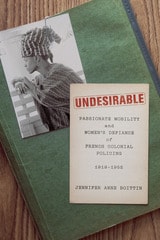
Passionate Mobility and Women’s Defiance of French Colonial Policing, 1919–1952Jennifer Anne Boittin
University of Chicago Press, 2022
Examining little-known policing archives in France, Senegal, and Cambodia, Jennifer Anne Boittin unearths the stories of hundreds of women labeled “undesirable” by the French colonial police and society in the early twentieth century. These “undesirables” were often women traveling alone, women who were poor or ill, women of color, or women whose intimate lives were deemed unruly. To refute the label and be able to move freely, they spoke out or wrote impassioned letters: some emphasized their “undesirable” qualities to suggest that they needed the care and protection of the state to support their movements, while others used the empire’s own laws around Frenchness and mobility to challenge state or societal interference. Tacking between advocacy and supplication, these women summoned intimate details to move beyond, contest, or confound surveillance efforts, bringing to life a practice that Boittin terms “passionate mobility.” In considering how ordinary women pursued autonomy, security, companionship, or simply a better existence in the face of surveillance and control, Undesirable illuminates pressing contemporary issues of migration and violence.
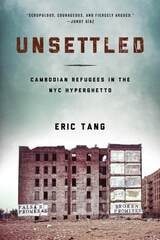
Unsettled
Cambodian Refugees in the New York City HyperghettoEric Tang
Temple University Press, 2015
After surviving the Khmer Rouge genocide, followed by years of confinement to international refugee camps, as many as 10,000 Southeast Asian refugees arrived in the Bronx during the 1980s and ‘90s. Unsettled chronicles the unfinished odyssey of Bronx Cambodians, closely following one woman and her family for several years as they survive yet resist their literal insertion into concentrated Bronx poverty.
Eric Tang tells the harrowing and inspiring stories of these refugees to make sense of how and why the displaced migrants have been resettled in the “hyperghetto.” He argues that refuge is never found, that rescue discourses mask a more profound urban reality characterized by racialized geographic enclosure, economic displacement and unrelenting poverty, and the criminalization of daily life.
Unsettled views the hyperghetto as a site of extreme isolation, punishment, and confinement. The refugees remain captives in late-capitalist urban America. Tang ultimately asks: What does it mean for these Cambodians to resettle into this distinct time and space of slavery’s afterlife?
Vietnam's Strategic Thinking during the Third Indochina War
Kosal Path
University of Wisconsin Press, 2023
In contrast to earlier studies, Path traces the moving target of these changing policy priorities, providing a vital addition to existing scholarship on asymmetric wartime decision-making and alliance formation among small states. The result uncovers how this critical period had lasting implications for the ways Vietnam continues to conduct itself on the global stage.
War, Genocide, and Justice
Cambodian American Memory WorkCathy J. Schlund-Vials
University of Minnesota Press, 2012
In the three years, eight months, and twenty days of the Khmer Rouge’s deadly reign over Cambodia, an estimated 1.7 million Cambodians perished as a result of forced labor, execution, starvation, and disease. Despite the passage of more than thirty years, two regime shifts, and a contested U.N. intervention, only one former Khmer Rouge official has been successfully tried and sentenced for crimes against humanity in an international court of law to date. It is against this background of war, genocide, and denied justice that Cathy J. Schlund-Vials explores the work of 1.5-generation Cambodian American artists and writers.
Drawing on what James Young labels “memory work”—the collected articulation of large-scale human loss—War, Genocide, and Justice investigates the remembrance work of Cambodian American cultural producers through film, memoir, and music. Schlund-Vials includes interviews with artists such as Anida Yoeu Ali, praCh Ly, Sambath Hy, and Socheata Poeuv. Alongside the enduring legacy of the Killing Fields and post-9/11 deportations of Cambodian American youth, artists potently reimagine alternative sites for memorialization, reclamation, and justice. Traversing borders, these artists generate forms of genocidal remembrance that combat amnesic politics and revise citizenship practices in the United States and Cambodia.
Engaged in politicized acts of resistance, individually produced and communally consumed, Cambodian American memory work represents a significant and previously unexamined site of Asian American critique.