Results by title
12 books match the query 'Cambridge'

A Curious and Ingenious Art
Reflections on Daguerreotypes at HarvardMelissa Banta
University of Iowa Press, 2000
Around the time Louis Jacques Mandé Daguerre perfected his method for fixing images on polished metal plates in 1839, Harvard was emerging as a modern research institution. Accordingly, the college began amassing vast collections for teaching and research. Among these collections in the university's libraries, museums, archives, and academic departments are some of the earliest photographic documents of American life: daguerreotypes.
A Curious and Ingenious Art brings together a representative sampling of Harvard's internationally significant but relatively unknown collection of daguerreotypes. Many of these images were made for, by, and of members of the university's community and have been in its holdings for more than 150 years. The collection includes the work of some of America's pioneering daguerreotypists, such as Mathew Brady, Southworth and Hawes, and John Adams Whipple. Most notably, the Harvard collection preserved for posterity such faces of the era as Oliver Wendell Holmes, Ralph Waldo Emerson, Harriet Beecher Stowe, Henry James, James McNeill Whistler, Dorothea Dix, Jenny Lind, and even Tom Thumb.
The university also seized upon photography as a tool of scientific research, stunningly exemplified in one of the first detailed daguerreotypes of the moon taken in 1851 as well as in images capturing the emergence of modern anesthesia. An unfortunate misuse of photography is recalled in the now famous slave daguerreotypes commissioned by natural historian Louis Agassiz, who believed in the theory of separate human species.
The Harvard collection represents the early history of photography and its social meaning. The accompanying essays explore the personal, telling histories behind the images, stories that unveil the reflections of individuals who searched for purpose and promise in the new medium.
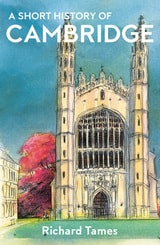
A Short History of Cambridge
Richard Tames
Haus Publishing, 2025
A Short History of Cambridge provides a narrative of the city and university, from the Middle Ages to the present day. Going beyond the world-renowned research attractions of Cambridge University, this revised paperback edition explores the vast cultural output of the town, from art and literature to theater and comedy. Richard Tames sheds light on the very origins of academia in the area, the intricate lives of the students and scholars who studied there, and how this community interacted with the townsfolk over the past eight hundred years.
Cambridge offers the splendor of King's College Chapel and the beauty of “the Backs” as well as outstanding collections of fans and fritillaries, sculpture and stained glass, and medieval coins and oriental manuscripts. Attractions include the world-class Fitzwilliam Museum and Botanic Gardens, quirky Kettle’s Yard, and museums devoted to archaeology, anthropology, zoology, earth sciences, polar research, and the history of science, plus Britain's oldest bookshop. Enter the world of “Bumps and Bedders” and learn why May Week is in June. This joyful history of the town to which more than eight million visitors flock every year will delight both readers familiar with the cobbles of Cambridge and those who have seen no further than the stained-glass windows of King’s College Chapel.

A Short History of Cambridge
Richard Tames
Haus Publishing, 2025
An Armchair Traveller's History of Cambridge
Richard Tames
Haus Publishing, 2014
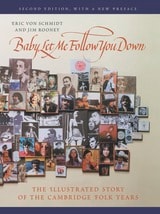
Baby, Let Me Follow You Down
The Illustrated Story of the Cambridge Folk YearsEric von Schmidt
University of Massachusetts Press, 1979
Compiled by two musicians who were active participants in the Cambridge folk scene, the volume documents a special time in United States culture when the honesty and vitality of traditional folk music were combined with the raw power of urban blues and the high energy of electric rock and roll to create a new American popular music.
Black Space
Negotiating Race, Diversity, and Belonging in the Ivory TowerSherry L. Deckman
Rutgers University Press, 2022
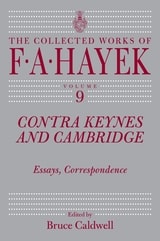
Contra Keynes and Cambridge
Essays, CorrespondenceF. A. Hayek
University of Chicago Press, 1995
When the journal Economica published a review of Keynes's Treatise on Money by Hayek in 1931, Keynes's response consisted principlally of an attack on Hayek's own work on monetary theory, Prices and Production. Conducted almost entirely in economics journals, the battle that followed revealed two very different responses to a world in economic crisis. Keynes sought a revision of the liberal political order—arguing for greater government intervention in the hope of protecting against the painful fluctuations of the business cycle. Hayek instead warned that state involvement would cause irreparable damage to the economy.
This volume begins with Hayek's 1963 reminiscence "The Economics of the 1930s as Seen from London," which has never been published before. The articles, letters, and reviews from journals published in the 1930s are followed by Hayek's later reflections on Keynes's work and influence. The Introduction by Bruce Caldwell puts the debate in context, providing detailed information about the economists in Keynes's circle at Cambridge, their role in the acceptance of his ideas, and the ways in which theory affected policy during the interwar period.
Caldwell calls the debate between Hayek and Keynes "a battle for the minds of the rising generation of British-trained economists." There is no doubt that Keynes won the battle during his lifetime. Now, when many of Hayek's ideas have been vindicated by the collapse of collectivist economies and the revival of the free market around the world, this book clarifies Hayek's work on monetary theory—formed in heated opposition to Keynes—and illuminates his efforts to fight protectionism in an age of economic crisis.
F. A. Hayek (1899-1992), recipient of the Medal of Freedom in 1991 and co-winner of the Nobel Memorial Prize in Economics in 1974, was a pioneer in monetary theory and the principal proponent of classical liberal thought in the twentieth century. He taught at the University of London, the University of Chicago, and the University of Freiburg.
Maria Baldwin's Worlds
A Story of Black New England and the Fight for Racial JusticeKathleen Weiler
University of Massachusetts Press, 2019
Maria Baldwin (1856–1922) held a special place in the racially divided society of her time, as a highly respected educator at a largely white New England school and an activist who carried on the radical spirit of the Boston area's internationally renowned abolitionists from a generation earlier.
African American sociologist Adelaide Cromwell called Baldwin “the lone symbol of Negro progress in education in the greater Boston area” during her lifetime. Baldwin used her respectable position to fight alongside more radical activists like William Monroe Trotter for full citizenship for fellow members of the black community. And, in her professional and personal life, she negotiated and challenged dominant white ideas about black womanhood. In Maria Baldwin's Worlds, Kathleen Weiler reveals both Baldwin's victories and what fellow activist W. E. B. Du Bois called her “quiet courage” in everyday life, in the context of the wider black freedom struggle in New England.
Masters of Theory
Cambridge and the Rise of Mathematical PhysicsAndrew Warwick
University of Chicago Press, 2003
When Isaac Newton published the Principia three centuries ago, only a few scholars were capable of understanding his conceptually demanding work. Yet this esoteric knowledge quickly became accessible in the nineteenth and early twentieth centuries when Britain produced many leading mathematical physicists. In this book, Andrew Warwick shows how the education of these "masters of theory" led them to transform our understanding of everything from the flight of a boomerang to the structure of the universe.
Warwick focuses on Cambridge University, where many of the best physicists trained. He begins by tracing the dramatic changes in undergraduate education there since the eighteenth century, especially the gradual emergence of the private tutor as the most important teacher of mathematics. Next he explores the material culture of mathematics instruction, showing how the humble pen and paper so crucial to this study transformed everything from classroom teaching to final examinations. Balancing their intense intellectual work with strenuous physical exercise, the students themselves—known as the "Wranglers"—helped foster the competitive spirit that drove them in the classroom and informed the Victorian ideal of a manly student. Finally, by investigating several historical "cases," such as the reception of Albert Einstein's special and general theories of relativity, Warwick shows how the production, transmission, and reception of new knowledge was profoundly shaped by the skills taught to Cambridge undergraduates.
Drawing on a wealth of new archival evidence and illustrations, Masters of Theory examines the origins of a cultural tradition within which the complex world of theoretical physics was made commonplace.
The College Graces of Oxford and Cambridge
Compiled by Reginald H. Adams
Bodleian Library Publishing, 2013
Following a historical introduction, The College Graces of Oxford and Cambridge reproduces in chronological order the full Latin texts of all the graces alongside facing English-language translations. Also included are the special graces reserved for feast days, as well as an explanation of some of the traditions that accompany them, including the trumpeters that summon students to dinner to the use of the Sconce Cup and the Rose Bowl.
From the twelfth-century monastic texts and the two-word graces of the nineteenth century to the new graces written for the modern age, this meticulous collection reveals how the tradition of the Latin grace has survived and evolved over the centuries and offers a rare glimpse inside the private halls of Oxford and Cambridge.
The New Metaphysicals
Spirituality and the American Religious ImaginationCourtney Bender
University of Chicago Press, 2010
We Cant Eat Prestige
The Women Who Organized HarvardJohn Hoerr
Temple University Press, 2001
This story explodes the popular belief that women white-collar workers tend to reject unionization and accept a passive role in the workplace. On the contrary, the women workers of Harvard University created a powerful and unique union--one that emphasizes their own values and priorities as working women and rejects unwanted aspects of traditional unionism.
The workers involved comprise Harvard's 3,600-member "support staff," which includes secretaries, library and laboratory assistants, dental hygienists, accounting clerks, and a myriad of other office workers who keep a great university functioning. Even at prestigious private universities like Harvard and Yale, these workers--mostly women--have had to put up with exploitive management policies that denied them respect and decent wages because they were women. But the women eventually rebelled, declaring that they could not live on "prestige" alone.
Encouraged by the women's movement of the early 1970's, a group of women workers (and a few men) began what would become a 15-year struggle to organize staff employees at Harvard. The women persisted in the face of patronizing and sexist attitudes of university administrators and leaders of their own national unions. Unconscionably long legal delays foiled their efforts. But they developed innovative organizing methods, which merged feminist values with demands for union representation and a means of influencing workplace decisions.
Out of adversity came an unorthodox form of unionism embodied in the Harvard Union of Clerical and Technical Workers (HUCTW). Its founding was marked by an absorbing human drama that pitted unknown workers, such as Kris Rondeau, a lab assistant who came to head the union, against famous educators such as Harvard President Derek Bok and a panoply of prestigious deans. Other characters caught up in the drama included Harvard's John T. Dunlop, the nation's foremost industrial relations scholar and former U.S. Secretary of Labor. The drama was played out in innumerable hearings before the National Labor Relations Board, in the streets of Cambridge, and on the walks of historic Harvard Yard, where union members marched and sang and employed new tactics like "ballooning," designed to communicate a message of joy and liberation rather than the traditional "hate-the-boss" hostility.
John Hoerr tells this story from the perspective of both Harvard administrators and union organizers. With unusual access to its meetings, leaders, and files, he examines the unique culture of a female-led union from the inside. Photographs add to the impact of this dramatic narrative.
postamble();