Results by title
2 books match the query 'Canham, Hugo ka'
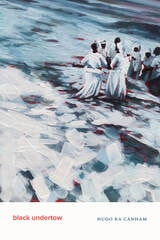
Black Undertow
Hugo ka Canham
Duke University Press, 2026
Meditative and theoretical, Black Undertow reorients the thinking of blackness away from the Atlantic to the African shorelines of the Indian Ocean, places where queerness and black life frequently brush up against one another. Hugo ka Canham listens for what he names the buzz of the undertow, the traces of African ancestors who linger in water, sand, coastal forts, corals, ritual practices, and unruly imaginations along the shore. In tracking these elusive figures, he develops an approach that honors a queer right to opacity, reconstituting the siloed disciplinarity that imagines African studies, Black studies, Queer African studies, and Queer studies as necessarily different. When read as coconstitutive instead, Canham demonstrates that they better allow for explicating local life, history, poetics, and theory. In so doing, he forges methods of studying black life that think beyond the limits of traditional, textual archives.
[more]
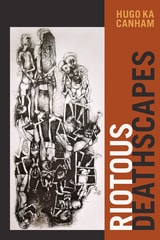
Riotous Deathscapes
Hugo ka Canham
Duke University Press, 2023
In Riotous Deathscapes, Hugo ka Canham presents an understanding of life and death based on indigenous and black ways of knowing that he terms Mpondo theory. Focusing on amaMpondo people from rural Mpondoland, in South Africa’s Eastern Cape, Canham outlines the methodologies that have enabled the community’s resilience and survival. He assembles historical events and a cast of ancestral and living characters, following the tenor of village life, to offer a portrait of how Mpondo people live and die in the face of centuries of abandonment, trauma, antiblackness, and death. Canham shows that Mpondo theory is grounded in and develops in relation to the natural world, where the river and hill are key sites of being and resistance. Central too, is the interface between ancestors and the living, in which life and death become a continuity and a boundlessness that white supremacy and neoliberalism cannot interdict. By charting a course of black life in Mpondoland, Canham tells a story of blackness on the African continent and beyond.
[more]