Results by title
16 books match the query 'Canoeing'
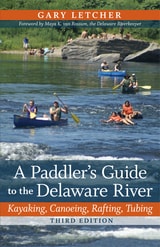
A Paddler's Guide to the Delaware River
Kayaking, Canoeing, Rafting, TubingLetcher, Gary
Rutgers University Press, 2012
When Henry Hudson explored the Delaware River in 1609, he dubbed it “one of the finest, best, and pleasantest rivers in the world.” Today, those same qualities make the Delaware one of the most popular rivers for recreational use in the United States. Although in places a near-wilderness, the Delaware is easily accessible to millions of residents. On any summer day there may be thousands of people rushing down its exciting rapids or lazing through its serene eddies.
A Paddler’s Guide to the Delaware River is an indispensable resource for anyone who wants to experience the Delaware River in a kayak, canoe, raft, or tube—or, for that matter, an automobile or an armchair. Reading the book is like travelling down the river with an experienced guide. It charts the non-tidal Delaware 200 miles from Hancock, New York, to Trenton, New Jersey, describing access points, rapids, natural features, villages, historical sites, campgrounds, outfitters, and restaurants. The Delaware comes alive as the author introduces some of the people, places, events, and controversies that have marked the river from earliest times to the present day.
Completely revised, the third edition offers:
- An overview of the river including watershed, history, place names, paddlecraft, safety, and fishing.
- The River Guide: ten sections that can each be paddled in one day (about 20 miles), with a mile-by-mile account of rapids, access, natural features, historic sites, and other features.
- All new maps, with names for virtually every rapid, eddy, and other river feature, plus detailed diagrams for routes through even the most severe rapids.
- Features in the River Guide highlight the people, events, natural history, and communities that define the river experience, such as Tom Quick, the infamous “avenger of the Delaware”; the mysterious migration of eels, the battle over Tocks Island Dam; and many others.
- Appendices of Important Contacts, Outfitters and Campgrounds, River Trip Checklists, and more.
Whether you are a novice out for an afternoon float, a seasoned adventurer on an overnight expedition, or a resident fascinated by the lore of the Delaware Valley, this book is an invaluable guide.
Alabama Canoe Rides and Float Trips
John Foshee
University of Alabama Press, 1986
A detailed guide to 102 canoe trips on the Cahaba River and 40 other creeks and rivers within the state.
John H. Foshee’s popular and informative Alabama Canoe Rides and Float Trips has been a favorite of canoeing enthusiasts since 1975, providing a detailed guide to 102 canoe trips on the Cahaba River and 40 other creeks and rivers within the state. The trips highlighted in the book range from 3½ to 14 miles in length, with difficulty factors varying from leisurely float trips to Class 4 rapids.
This handy guide will assist beginning and expert canoeists in the selection of and preparation for a variety of float experiences. The author gives suggestions for river safety and makes recommendations for equipment. In addition, he points out major danger areas and obstacles that may be encountered and includes information on river access and use of topographical maps. An appendix contains brief descriptions of the rides, including their put-ins and take-outs, and follows the general format of the individual trip descriptions.
Barren Grounds
The Story of the Tragic Moffatt Canoe TripSkip Pessl
Dartmouth College Press, 2014
Canoe Country Camping
Wilderness Skills for the Boundary Waters and QueticoMichael Furtman
University of Minnesota Press, 2002
Canoe Country Camping is a complete, entertaining, and up-to-date guide that gives you the information you need for a safe and enjoyable canoe trip.
First-time campers will find answers to all their questions about where to go, how to pack, and what to do. Seasoned campers will find helpful tips to streamline their planning and make their next trip better than ever.
Prepare for all the challenges of the wilderness from the obvious to the unexpected. Michael Furtman, experienced Boundary Waters and Quetico canoeist, helps you: plan your adventure, pick your gear, pack for the portage, paddle efficiently, and prepare a comfortable camp.
Canoe Country Camping is chock full of handy checklists, helpful charts, and detailed drawings. Use it before you go. Take it along in your pack for quick reference. Then get out there with confidence, relax and enjoy your trip.
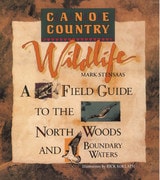
Canoe Country Wildlife
A Field Guide to the North Woods and Boundary WatersMark Stensaas
University of Minnesota Press, 2004
Warblers, wolves, and whirligig beetles—the creatures of the canoe countrywilderness come alive in Canoe Country Wildlife. In this read-aloud treasure, “Sparky” Stensaas, naturalist and storyteller, intrigues you with his tales of encounters with the forest inhabitants—from tiny toads to majestic moose.
Canoe Country Wildlife, a friendly field guide, introduces you to the wildlife you are most likely to see as you travel in the North Woods. It describes these creatures and their habits accurately so you’ll know where and when to look for them. Detailed line drawings illustrate each animal clearly so you’ll recognize what you’re seeing.
The book is filled with fascinating little-known facts: Did you know that wood frogs can freeze solid, only to live again? That loons can fly a hundred miles an hour? That chipmunks can carry seventy sunflower seeds in their cheeks?
Canoe Country Wildlife includes handy checklists to help you keep track of the critters you encounter, a calendar for you to record the natural events you witness, and activities—one for each animal—that will help both adults and children learn by discovery.
Carry Canoe Country Wildlife in your pack. Your trip will be more enjoyable and your memories will last forever. It’s a great gift for anyone who loves the outdoors.
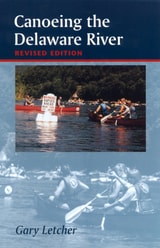
Canoeing the Delaware River
Letcher, Gary
Rutgers University Press, 1997
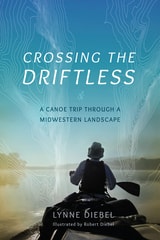
Crossing the Driftless
A Canoe Trip through a Midwestern LandscapeLynne Diebel
University of Wisconsin Press, 2015
Crossing the Driftless is both a traveler’s tale and an exploration of this dramatic environment, following the streams of geologic and human history. Lynne Diebel and her husband, Bob, crossed the Driftless Area by canoe, journeying 359 river miles (and six Mississippi River locks and five portages) from Faribault, Minnesota, where her family has a summer home on Cedar Lake, to their Wisconsin home in Stoughton, one block from the Yahara River. Traveling by river and portage, they paddled downstream on the Cannon and Mississippi rivers and upstream on the Wisconsin River, in the tradition of voyageurs. Lynne tells the story of their trip, but also the stories of the rivers they canoed and the many tributaries whose confluences they passed.
Finalist, Travel, Foreword Reviews IndieFab Book of the Year Awards
Honorable mention, Nonfiction book, Council for Wisconsin Writers
Winner, Recreation/Sports/Travel, Midwest Book Awards
Best books for public & secondary school libraries from university presses, American Library Association
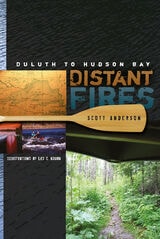
Distant Fires
Duluth to Hudson BayScott Anderson
University of Minnesota Press, 2008
"Distant Fires, a true-life adventure, describes a 1,700-mile canoe trip from Duluth to York Factory on Hudson Bay. Anderson and a companion retraced the paddles taken by Eric Sevareid and a companion almost sixty years earlier. Their trials and tribulations, plus Anderson’s sense of humor, make the trip fun in book form. Pen-and-ink illustrations are by noted Minnesota wildlife artist Les Kouba." —Minneapolis Star Tribune
"Distant Fires is a voyage of discovery. Scott Anderson is an inquisitive traveler, and when he sees something that piques his interest, he stops for a chat. He also has a marvelous eye for the natural world that surrounds him in his summerlong journey. He is a natural-born writer." —Duluth News Tribune
"Some of [Anderson’s] phrasing is very happy indeed: ‘the resting place of the rivers.’ I wish I had written that." —Eric Sevareid
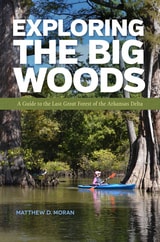
Exploring the Big Woods
A Guide to the Last Great Forest of the Arkansas DeltaMatthew D. Moran
University of Arkansas Press, 2016
Exploring the Big Woods: A Guide to the Last Great Forest of Eastern Arkansas is both a natural history and a guide to one of the last remnants of Mississippi bottomland forest, an ecosystem that once stretched from southern Illinois to the Gulf Coast.
Crossed by the White River and its tributaries, which periodically flood and release nutrients, the Big Woods is one of the few places in the Mississippi River Valley where this life-giving flood cycle persists. As a result, it is home to an unusual abundance of animals and plants.
Immense cypresses, hickories, sweetgums, oaks, and sycamores; millions of migrating waterfowl; incredible scenery; and the complex relationship between humans and nature are all to be discovered here.
Exploring the Big Woods will introduce readers to the natural features, plants, animals, and hiking and canoeing trails going deep into the forests and swamps of this rare and beautiful natural resource.
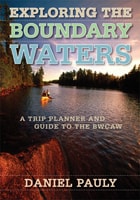
Exploring the Boundary Waters
A Trip Planner and Guide to the BWCAWDaniel Pauly
University of Minnesota Press, 2005
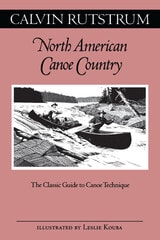
North American Canoe Country
The Classic Guide to Canoe TechniqueCalvin Rutstrum
University of Minnesota Press, 2000
The essential resource on how to canoe, now back in print.
Calvin Rutstrum’s fans have long known about his nuts-and-bolts approach to wilderness living. With this reissue of North American Canoe Country, a new generation of readers has the opportunity to learn time-tested secrets of a safe canoe adventure from a master outdoorsman.
First published in 1964, North American Canoe Country is a complete treatise on the art of canoeing. Written as a guide for travelers who want to embark on self-sufficient trips deep into the wilderness, this book offers readers all the information they need to plan and undertake a canoe trip. Rutstrum gives the essentials on canoes, comparing birch-bark, wood, wood-and-canvas, and aluminum crafts. His paddling techniques are timeless-he describes strategies for rough waters and rapids, for boating alone or in tandem, including stroke diagrams. Portaging, safety procedures, direction finding, towing, and much more are systematically explained.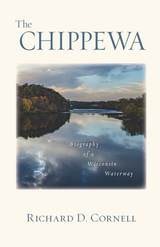
The Chippewa
Biography of a Wisconsin WaterwayRichard D. Cornell
Wisconsin Historical Society Press, 2017
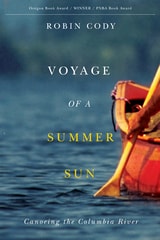
Voyage of a Summer Sun
Canoeing the Columbia RiverRobin Cody
Oregon State University Press, 2012
On a June morning in 1990, high up in the Canadian Rockies, Robin Cody pushed his sixteen-foot Kevlar canoe through tall grass and mud to launch it on peaceful Columbia Lake, the nominal source of the river that heaves more water into the Pacific ocean than any other in North or South America. For the next eighty-two days, Cody would portage massive dams and revel in the rapids as the great river plunges 2,700 feet in 1,200 miles before reaching the river’s mouth in Astoria.
Cody’s canoe sneaks up on the bear and moose and raptors and beavers who make a living on the Columbia. He drops in on riverpeople: the trapper, the wind surfer, the archeologist, the lock operator, the native woman who grew up at riverside in a dwelling of tule reeds. With a generous and infectious spirit, Cody draws us into the mysteries of a much-altered and regulated river that is still, at heart, a life-giving place.
This first OSU Press edition of Voyage of a Summer Sun—winner of the Pacific Northwest Booksellers Association Book Award and the Oregon Book Award, and an Oregon State Library choice for “150 Books for the Oregon Sesquicentennial”—includes a new afterword by the author.
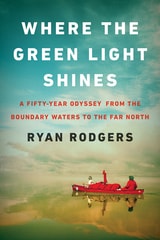
Where the Green Light Shines
A Fifty-Year Odyssey from the Boundary Waters to the Far NorthRyan Rodgers
University of Minnesota Press, 2026
A unique glimpse into the world of arctic canoeing through the travels of one of North America’s most renowned paddlers
A centuries-long story of adventure runs through the Boundary Waters. Stretching from northern Minnesota into the Canadian Shield, this lake-dappled expanse—long an Indigenous homeland and later also a fur trading hub—is the most visited designated wilderness in North America, with more than 200,000 people dipping their paddles into its ancient waterways each year. Bridging the legendary arctic expeditions of the nineteenth century and the making of today’s recreational paddling tradition, Where the Green Light Shines is a fascinating chronicle of canoe exploration, told through the journeys of a true master of the craft, Bob O’Hara.
O’Hara first launched his canoe as a Boy Scout in the 1950s, and he spent every summer for the next sixty-five years venturing further north into the Canadian barrens, a region rarely seen by paddlers. Mentored by a generation of adventurers and by the Inuit who long paddled the northern tundra rivers, O’Hara would become a guiding light for many young canoeists. Passionate yet guarded, O’Hara dedicated his life to the thrill of paddling, and his extraordinary journeys here become a touchstone as Ryan Rodgers tells the story of a nascent canoeing scene that continues to thrive today.
A vivid depiction of the northern wilds traversed by an eclectic roster of paddlers, bush pilots, and historic characters, Where the Green Light Shines illuminates a lost world of arctic canoeing remade in our time. It is bound to transport anyone interested in outdoor adventure—from wilderness canoeists to armchair travelers—and to bring home the eternal allure of the far north.
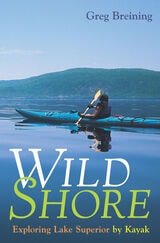
Wild Shore
Exploring Lake Superior By KayakGreg Breining
University of Minnesota Press, 2002
A real-life adventure and journey of discovery on the greatest of the Great Lakes
Over two years, Greg Breining set out to circle Lake Superior by kayak. Paddling more than one thousand miles, he camped on the lake’s islands and shorelines, visited its places of rare beauty and solitude, experienced its wildly varied moods, and explored remote historic sites and isolated communities. The result is Wild Shore, a tale of outdoor adventure, colorful characters, memorable stories, and personal discovery.

Woman Of The Boundary Waters
Canoeing, Guiding, Mushing, and SurvivingJustine Kerfoot
University of Minnesota Press, 1994