Results by title

20 books match the query 'Canon law'
cover of A Service Beyond All Recompense

A Service Beyond All Recompense

Kurt Martens

Catholic University of America Press, 2018
When Monsignor Thomas J. Green, professor at the School of Canon Law at The Catholic University of America, approached his seventy-fifth birthday and the fiftieth anniversary of his priestly ordination, his colleagues planned on offering him a fitting tribute in the form of a festschrift. Six people with different backgrounds, but all related to Msgr. Green on one way or another, have written a laudatio – a short congratulatory letter – in honor of Monsignor Green. No less than fifteen contributions on various topics by colleagues, canon law scholars, clearly relate and reflect upon the honoree's scholarly contributions to canon law. The topics are extremely varied, and illustrate how Monsignor Green has been or is active in nearly every area of canon law. Virtually every book of the Code of Canon Law is covered, if not directly, at least indirectly. While the book is a tribute to an eminent professor, the various scholarly contributions are unique pieces of scholarship. The authors of the laudatio are: John Garvey (President, The Catholic University of America); Andrew Abela (Provost, The Catholic University of America); Rev. Msgr. J. Brian Bransfield (General Secretary of the United States Conference of Catholic Bishops); Rev. Msgr. Ronny E. Jenkins (Dean, School of Canon Law, The Catholic University of America); Rev. Msgr. J. James Cuneo (Diocese of Bridgeport) and Sister Sharon Euart, RSM (Executive Director, Resource Center for Religious Institutes, Silver Spring, MD).
[more]
cover of Canon Law and Cloistered Women: Periculoso and Its Commentators, 1298–1545 (Studies in Medieval and Early Modern Canon Law,  Volume 5)

Canon Law and Cloistered Women

Periculoso and Its Commentators, 1298–1545 (Studies in Medieval and Early Modern Canon Law, Volume 5)

Elizabeth Makowski

Catholic University of America Press, 1997

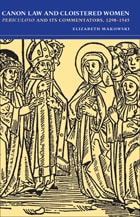
Pope Boniface VIII (1294-1303) published a decree in 1298 that transformed long-standing attitudes toward nuns into universal Church law. Referred to as Periculoso, the first word of the Latin text, this decree announced that all nuns, no matter what rule they observed and no matter where their monasteries were located, were to be perpetually cloistered. With the exception of those who were contagiously ill, nuns were under no circumstances to break the law of enclosure, either by leaving their monasteries or by inviting unauthorized persons into them. Ultimately, the decree altered the lives of nuns, while indirectly abetting the move toward alternatives to the cloister. Although historians of women religious have frequently cited Periculoso as a milestone, the text of the law and the legal comment that its publication occasioned have never before been exhaustively studied. Canon Law and Cloistered Women provides the most thorough examination to date of the landmark decree. Elizabeth Makowski surveys precedents for Periculoso as well as some of the problems Boniface VIII hoped to solve with his legislation. She further analyzes the commentary on Periculoso, much of it written by practicing lawyers, which unveils late medieval attitudes toward nuns and their male counterparts. Finally, she concludes with a discussion of the attempts to enforce the legislation. Makowski's analysis illustrates not only the contribution that similar investigations of local efforts on the Continent might make to our understanding of conventual life, but also the difficulties—so often alluded to by medieval canonists—of making the "ideal" real.


ABOUT THE AUTHOR: Elizabeth Makowski is associate professor of history at Southwest Texas State University. She is the coauthor of Wykked Wyves and the Woes of Marriage: Misogamous Literature from Juvenal to Chaucer (SUNY Press, 1989) and the author of numerous articles and book reviews. PRAISE FOR THE BOOK: "This is a significant contribution to the study of female monasticism. . . . Makowski's work is a welcome effort to understand the monastic discipline of enclosure and its application to convents. . . . What Makowski does in this fine study is to help scholars understand what [Periculoso] meant, both in the context in which it was fashioned and in the world of subsequent commentary. . . . An important book that should be required reading for all scholars of male and female monasticism."—Sixteenth Century Journal


"This is a clearly written survey of the decree and of medieval commentaries on it up to the Council of Trent. It will be of interest to historians both of legal and social history as well as throwing light upon the background of a much debated topic among religious orders."—English Historical Review "[The] work is well-written, contains helpful information on the topic in context, and should be a useful resource for those interested in this historical era as well as for those intrigued by the institutional Church's less than even-handed treatment of cloistered contemplative women through the centuries."—Studia Canonica "The clearly written survey of legal commentary on Periculoso is this book's greatest contribution. Even technical points of law are explained with sufficient clarity, so that the matters at issue can be understood even by one who is not a specialist in mediaeval canon law."—Ecclesiastical Law Journal


"This study provides insight into the way in which the leaders of the late medieval Church dealt with what they saw as the threat that women's spirituality posed to the Church and how to control it. To that extent alone, it is a valuable contribution to scholarship."—Catholic Historical Review


"Makowski has explored the comment
[more]
cover of Canon Law in the Age of Reforms (c. 1000 to c. 1150)

Canon Law in the Age of Reforms (c. 1000 to c. 1150)

Christof Rolker

Catholic University of America Press, 2023
This monograph addresses the history of canon law in Western Europe between ca. 1000 and ca. 1150, specifically the collections compiled and the councils held in that time. The main part consists of an analysis of all major collections, taking into account their formal and material sources, the social and political context of their origin, the manuscript transmission, and their reception more generally. As most collections are not available in reliable editions, a considerable part of the discussion involves the analysis of medieval manuscripts. Specialized research is available for many but not all these works, but tends to be scattered across miscellaneous publications in English, German, French, Italian, and Spanish; one purpose of the book is thus to provide relatively uniform, up-to-date accounts of all major collections of the period. At the same time, the book argues that the collections are much more directly influenced by the social milieux from which they emerged, and that more groups were involved in the development of high medieval canon law than it has previously been thought. In particular, the book seeks to replace the still widely held belief that the development of canon law in the century before Gratian’s Decretum (ca. 1140) was largely driven by the Reform papacy. Instead, it is crucial to take into account the contribution of bishops, monks, and other groups with often conflicting interests. Put briefly, local needs and conflicts played a considerably more important role than central (papal) ‘reform’, on which older scholarship has largely focused.
[more]
cover of Canon Law, Religion, and Politics: "Liber Amicorum" Robert Somerville

Canon Law, Religion, and Politics

"Liber Amicorum" Robert Somerville

Uta-Renate Blumenthal

Catholic University of America Press, 2012

Canon Law, Religion, and Politics extends and honors the work of the distinguished historian Robert Somerville, a preeminent expert on medieval church councils, law, and papal history.
[more]
cover of Canonical Collections of the Early Middle Ages (ca. 400-1400)

Canonical Collections of the Early Middle Ages (ca. 400-1400)

Lotte Kery

Catholic University of America Press, 1999
[more]
cover of Espana Pontifica: Papal Letters to Spain 1198-1303

Espana Pontifica

Papal Letters to Spain 1198-1303

Peter Linehan

Catholic University of America Press, 2022
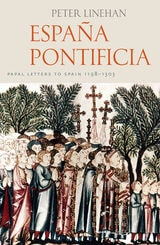
Peter Linehan (+2020) followed his survey of original papal letters in Portugal, Portugalia pontifica 1198-1417 (2013) with the present volume, España Pontifica, that covers papal letters to Spanish recipients from Pope Innocent II (1198-1216) to Pope Boniface VIII (+1303). This volume will provide students of the medieval papacy and the Spanish church with an invaluable research tool to explore the relationship between Rome and Spain during the crucial period of the Spanish Reconquistà after the battles of Navas de Tolosa (1212) to the capture of Seville (1248). Linehan spent his career cataloguing papal letters from more than sixty Spanish repositories. For the past sixty years the Vatican has also been engaged in publishing surveys of original papal letters preserved from various European archives. However, this volume includes material that has not been included in these surveys.
[more]
cover of Huguccio: The Life, Works, and Thought of a Twelfth-Century Jurist

Huguccio

The Life, Works, and Thought of a Twelfth-Century Jurist

Wolfgang Muller

Catholic University of America Press, 1994

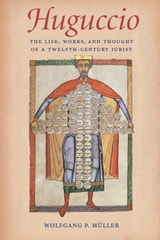
Huguccio was an important lawyer of the medieval church, bishop of Ferrara, and one of the greatest representatives of twelfth-century scholasticism. In this book-length study of this influential figure, Wolfgang P. Müller provides a critical account of the biographical information on the man and his writings. He discusses the various aspects of Huguccio's career and thought as well as the manuscript tradition of some of his works. The author's scholarship rests on direct consultation and painstaking analysis of enormous quantities of manuscript material.

This book provides the point of departure for anyone wishing to study Huguccio first-hand. It will be worthy reading for students of medieval canon law and an essential addition to all libraries supporting research in medieval studies.
[more]
cover of Law and Religion in a Secular Age

Law and Religion in a Secular Age

Rafael Domingo

Catholic University of America Press, 2023
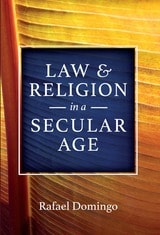
Law and Religion in a Secular Age seeks to restore the connection between spirituality and justice, religion and law, theology and jurisprudence, and natural law and positive law by building a new bridge suitable for pluralistic societies in the secular age. The author argues for a multidimensional view of reality that includes legal, political, moral, and spiritual dimensions of human nature and society. Each of these dimensions of life needs to recognize the existence, influence, and function of the others, which act as a filter or check on the excesses of each other. This multidimensionality of reality clarifies why no legal theory can fully account for law from the legal dimension alone, just as no moral theory makes perfect sense of morality from the moral dimension—and, for that matter, nothing in physics can fully interpret the physical dimension of reality. The premises of a legal system cannot be fully explained by the legal dimension alone because the fundamental conditions and qualities of justice, freedom, and dignity touch all the dimensions of reality in which the human person acts, including the moral and the spiritual, not just the legal. Building on this multidimensional theory of reality, the author explores the core differences and the essential interconnections between law, morality, religion, and spirituality and some of the legal implications of these connections. Rafael Domingo reminds readers of the vital role of religion in shaping the conceptual framework of Western legal systems, underscores the spirit of Christianity that inspired legal institutions, principles, and values, and recalls the contributions of specific Christian jurists as central figures for the development of justice in society. Law and Religion in a Secular Age aims to be a valuable antidote against the dominant legal positivism that has cornered public morality, the defiant secularism that has marginalized religion, and any other legal doctrine that diminishes the spiritual dimension of law and justice.
[more]
cover of Medieval Church Law and the Origins of the Western Legal Tradition: A Tribute to Kenneth Pennington

Medieval Church Law and the Origins of the Western Legal Tradition

A Tribute to Kenneth Pennington

Wolfgang P. Müller

Catholic University of America Press, 2006
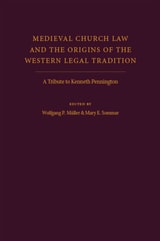
In this volume dedicated to medieval canon law expert Kenneth Pennington, leading scholars from around the world discuss the contribution of medieval church law to the origins of the western legal tradition.
[more]
cover of Newman, Canon Law and Development: Quarrying Granite Rocks with Razors

Newman, Canon Law and Development

Quarrying Granite Rocks with Razors

David P. Long

Catholic University of America Press, 2024

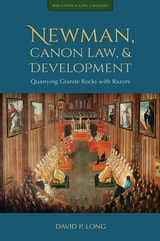
John Henry Newman is well-known as a theologian, philosopher, historian, writer, University rector, and poet, but can he also be associated with the field of canon law? When Newman first proposed the possibility of doctrinal development as proof that the Catholic faith was free from corruption and error, he claimed “the Church is declared to be the great and special support of the Truth, her various functionaries are said to be means towards the settlement of diversities and of uncertainty of doctrine, and securing unity of faith.” For Newman, these various functionaries included not only apostles, prophets, evangelists, and pastors, but also theologians and, as is argued in this work, canon lawyers. While Newman and doctrinal development have become well-explored topics in the field of theology, there has been little scholarship on how Newman’s thoughts on doctrinal development can influence current canon law and Church governance. David Long addresses that lacuna by offering a systematic analysis of Newman’s concept of development within current canonical practice. It starts by tracing Newman’s notions of personal judgment, public discussion, and episcopal moderation, followed by a presentation of the current canonical understanding of the theologian, and finally an application of the connection between Newman’s theory on development and present canonical legislation as it involves the role of the theologian. By undertaking such an application, and by creating a model for discussion that preserves both development and Tradition, this work humbly proposes a valuable model for understanding the theologian’s contribution within the life of the contemporary Church in ways not previously explored.
[more]
cover of Papal Letters in the Early Middle Ages

Papal Letters in the Early Middle Ages

Detlev Jasper

Catholic University of America Press, 2001
[more]
cover of Prefaces to Canon Law Books in Latin Christianity: Selected Translations, 500-1317, second edition

Prefaces to Canon Law Books in Latin Christianity

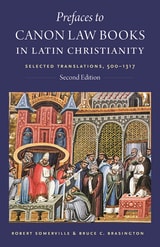
Selected Translations, 500-1317, second edition

Robert Somerville

Catholic University of America Press, 2021
An updated and expanded version of the original edition, published in 1998. That original edition went up through 1245. This new version extends to 1317 and adds two important prefaces. Praise for the First Edition “Both students and specialists can be grateful to the authors for this major contribution in English to the study of medieval canon law. It is a clear statement--one emphasized by the late John Gilchrist-that because of its critical importance in medieval life and culture canon law should not remain the obscure domain of specialists, but should be shared with students and non-specialists alike.” – The American Journal of Legal History “[A] learned and useful book, which for the first time assembles a body of canonistic prefaces, presents them in an accessible form, and provides students of medieval canonical thought with a valuable new resource for study and teaching.” – The Catholic Historical Review “This volume is an important and welcome addition to a field of studies where translations into English are few and far between. The breadth of the works selected, the quality of the translations, and the attention to detail that has long characterized the work of both editors make this a valuable resource for specialist and student alike.” – Church History “A welcome combination: a text that is informative for students and professionals alike. The translations succeed in rendering accessible to a general audience some otherwise highly inaccessible material. Somerville and Brasington are to be greatly commended for undertaking this very original enterprise and bringing it to successful parturition.” – Journal of Law and Religion “Somerville and Brasington have chosen to let their compilers and commentators speak for themselves. In doing so, they have had to wrestle with often obscure Latin and frequently less than satisfactory editions. That they succeed in making these texts intelligible through translation and annotation is no small feat.” – Sixteenth Century Journal “This is a significant, elegantly presented contribution to the field of theology, cultural history, and canon law.” – Theological Studies
[more]
cover of That Which Is Just in the Church: An Introduction to Canon Law: Volume 1

That Which Is Just in the Church

An Introduction to Canon Law: Volume 1

Carlos José Errázuriz

St. Augustine's Press, 2021

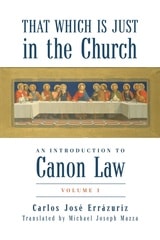
Consonant with its commitment to publish seminal works in the field of canon law, St. Augustine's Press is pleased to make available the first volume in a series that will undoubtedly endure as a masterpiece of scholarship. Carlos José Errázuriz, Professor of Canon Law at the Pontifical University of the Holy Cross (Rome) has provided a comprehensive and insightful treatment of rights, justice, and law in the Catholic Church, beginning with the most basic questions regarding the essence of these realities. His responses exhibit the perspective of that which is just in the Church, which consists of ecclesial juridical goods: the Word of God, the sacraments, the freedom of the children of God, and sacred potestas. This work vindicates the institution of law, but also addresses the "spontaneity" of just freedom proper to what has been instituted by Christ.
 
Errázuriz presents more than the current Code of Canon Law. He instills a realistic perspective of right and law in the Church, and in so doing fills a massive gap in English scholarship. No introduction to canon law available in English rivals Errázuriz's description of justice in the Church and its relationship with communion and sacramentality.
 
Volume I is comprised of the first three chapters of the original, Corso fondamentale sul diritto nella Chiesa (in two volumes, Giuffrè: Milan, 2009 and 2017): "Rights, Justice and Law in the Church," "Canon Law in History," and "The Configuration of Rights and Law in the Church."
[more]
cover of That Which Is Just in the Church: Volume 2: The Human Person in the Church

That Which Is Just in the Church

Volume 2: The Human Person in the Church

Carlos José Errázuriz

St. Augustine's Press, 2023

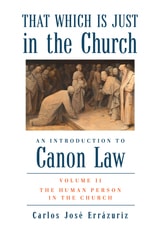
Volume one of Prof. Carlos J. Errázuriz's monumental treatment of canon law establishes that law in the Catholic Church is properly understood as that which is just. In the second volume, he moves to the foremost protagonist in this arena––namely, the human person. The human person is the primary holder of rights and obligations in the Church, destined for the salvation merited by Christ. The salvific goods constituted by the Word of God and the sacraments are fundamental aspects of juridical relationships and life in the Church.

Being subject to law, Errázuriz observes, does not undermine the freedom and dignity of the person. Rather, ecclesial law intends to confront the human person with his true supernatural inheritance, while preserving him in the mystery of communion within which the Church herself exists. Indeed, the human person has both natural and supernatural dignity, and likewise responsibilities that bear upon the seen and unseen realms of communion.

Prof. Errázuriz examines the practical applications of personhood and law, as well as the perspectives of the human subject that derive from his ontological status. This is further drawn across various states of life that occur within the Church and the differing juridical relations encountered.  Also considered is the nature of association in the Church, and Errázuriz breaks down the concepts and particular realities pertaining to this natural tendency and the legal discipline. 
 
[more]
cover of The Hibernensis: Book 1: A Study and Edition

The Hibernensis

Book 1: A Study and Edition

Roy Flechner

Catholic University of America Press, 2019

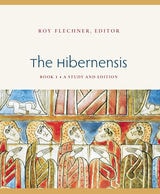
The Hibernensis is the longest and most comprehensive canon-law text to have circulated in Carolingian Europe. Compiled in Ireland in the late seventh or early eighth century, it exerted a strong and long-lasting influence on the development of European canon law. The present edition offers—for the first time—a complete text of the Hibernensis combining the two main branches of its manuscript transmission. This is accompanied by an English translation and a commentary that is both historical and philological. The Hibernensis is an invaluable source for those interested in church history, the history of canon law, social-economic history, as well as intellectual history, and the history of the book.

Widely recognized as the single most important source for the history of the church in early medieval Ireland, the Hibernensis is also our best index for knowing what books were available in Ireland at the time of its compilation: it consists of excerpted material from the Bible, Church Fathers and doctors, hagiography, church histories, chronicles, wisdom texts, and insular normative material unattested elsewhere. This in addition to the staple sources of canonical collections, comprising the acta of church councils and papal letters. Altogether there are forty-two cited authors and 135 cited texts. But unlike previous canonical collections, the contents of the Hibernensis are not simply derivative: they have been modified and systematically organised, offering an important insight into the manner in which contemporary clerical scholars attempted to define, interpret, and codify law for the use of a growing Christian society.
[more]
cover of The Hibernensis: Book 2: Translation, Commentary, and Indexes

The Hibernensis

Book 2: Translation, Commentary, and Indexes

Roy Flechner

Catholic University of America Press, 2019

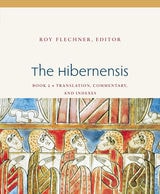
The Hibernensis is the longest and most comprehensive canon-law text to have circulated in Carolingian Europe. Compiled in Ireland in the late seventh or early eighth century, it exerted a strong and long-lasting influence on the development of European canon law. The present edition offers—for the first time—a complete text of the Hibernensis combining the two main branches of its manuscript transmission. This is accompanied by an English translation and a commentary that is both historical and philological. The Hibernensis is an invaluable source for those interested in church history, the history of canon law, social-economic history, as well as intellectual history, and the history of the book.

Widely recognized as the single most important source for the history of the church in early medieval Ireland, the Hibernensis is also our best index for knowing what books were available in Ireland at the time of its compilation: it consists of excerpted material from the Bible, Church Fathers and doctors, hagiography, church histories, chronicles, wisdom texts, and insular normative material unattested elsewhere. This in addition to the staple sources of canonical collections, comprising the acta of church councils and papal letters. Altogether there are forty-two cited authors and 135 cited texts. But unlike previous canonical collections, the contents of the Hibernensis are not simply derivative: they have been modified and systematically organised, offering an important insight into the manner in which contemporary clerical scholars attempted to define, interpret, and codify law for the use of a growing Christian society.
[more]
cover of The History of Byzantine and Eastern Canon Law to 1500

The History of Byzantine and Eastern Canon Law to 1500

Wilfried Hartmann

Catholic University of America Press, 2012
This newest volume in the History of Medieval Canon Law series surveys the history of Byzantine and Eastern canon law. Beginning in the Patristic Age, Susan Wessel outlines the evolution of ecclesiastical law before the Council of Nicaea (325 A.D.).
[more]
cover of The History of Courts and Procedure in Medieval Canon Law

The History of Courts and Procedure in Medieval Canon Law

Wilfried Hartmann

Catholic University of America Press, 2016
By the end of the thirteenth century, court procedure in continental Europe in secular and ecclesiastical courts shared many characteristics. As the academic jurists of the Ius commune began to excavate the norms of procedure from Justinian's great codification of law and then to expound them in the classroom and in their writings, they shaped the structure of ecclesiastical courts and secular courts as well. These essays also illuminate striking differences in the sources that we find in different parts of Europe. In northern Europe the archives are rich but do not always provide the details we need to understand a particular case. In Italy and Southern France the documentation is more detailed than in other parts of Europe but here too the historical records do not answer every question we might pose to them. In Spain, detailed documentation is strangely lacking, if not altogether absent. Iberian conciliar canons and tracts on procedure tell us much about practice in Spanish courts. As these essays demonstrate, scholars who want to peer into the medieval courtroom, must also read letters, papal decretals, chronicles, conciliar canons, and consilia to provide a nuanced and complete picture of what happened in medieval trials. This volume will give sophisticated guidance to all readers with an interest in European law and courts.
[more]
cover of The History of Medieval Canon Law in the Classical Period, 1140-1234: From Gratian to the Decretals of Pope Gregory IX (History of Medieval Canon Law)

The History of Medieval Canon Law in the Classical Period, 1140-1234

From Gratian to the Decretals of Pope Gregory IX (History of Medieval Canon Law)

Wilfried Hartmann

Catholic University of America Press, 2008
This latest volume in the ongoing History of Medieval Canon Law series covers the period from Gratian's initial teaching of canon law during the 1120s to just before the promulgation of the Decretals of Pope Gregory IX in 1234.
[more]
cover of Thomas Aquinas and Medieval Canon Law

Thomas Aquinas and Medieval Canon Law

Justin M. Anderson

Catholic University of America Press, 2025

Thomas Aquinas and Medieval Canon Law bridges, for the first time, two worlds of scholarship that have never been explored in book-length form and investigates an under-researched area in Thomistic studies, namely the question of how Thomas Aquinas engaged the ecclesiastical law and jurisprudence of his day. Neither historians of medieval canon law nor experts on Thomas's thought have previously paid much attention to the canon law tradition as a source for Thomas's work and an influence on his thought. But, as this volume shows, his consideration of mendicant life, law, justice, oaths, penance, clerical orders, the Eucharist, baptism, property, commerce, marriage and more reveal engagement with key canon law texts and concepts and with the jurisprudence of major canonists. The book uncovers how Aquinas encountered canonical regulations and jurisprudence as a Dominican, an educator in both theology and pastoral care, and a participant in the secular-mendicant controversy. In his life, education, community, and his way of thought, Thomas Aquinas could not avoid and necessarily encountered and dealt with the canonical tradition. He did so in a distinctive way, working as he did with his theological and philosophical source material to craft his own great synthesis. What this volume shows, if nothing else, is that the canon law tradition should be taken into consideration when assessing Thomas's synthetic thought. Following the editors' introduction, thirteen scholarly contributions and an epilogue explore Aquinas's interaction with medieval canon law through four major themes: Dominican Matters; Foundations Matters of Faith, Truth, and Law; Moral Matters; and Sacramental Matters. Approximately half the contributors are specialists from the field of medieval canon law, and half are grounded in Thomistic tradition. The result is a unique and scholarly contribution to two major research areas that may open avenues for similar studies of other key figures in the scholastic tradition.
[more]