Results by title

3 books match the query 'Cassell, Joan'
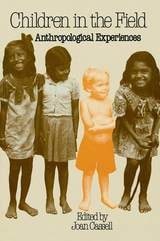
cover of Children In The Field

Children In The Field

edited by Joan Cassell

Temple University Press, 1994
"The wisdom of taking children on this journey into the abyss of otherness is debatable. That's the point: the unsettled (and unsettling) quality of this book is what makes it worth reading and pondering." --The Women's Review of Books The conditions under which knowledge is acquired help shape that knowledge. Yet, until quite recently, the conditions under which anthropologists observe and interact with members of other cultures were considered the stuff of memoirs, not science. Although many families have accompanied anthropologists to the field, few researchers have discussed this aspect of scientific life. This collection of narratives by anthropologists who brought children with them into the field combines personal drama, practical information, and advice with an examination of the way in which the presence of children can alter the relationship between those who study and those who are studied. The stories are funny, sad, horrifying, fascinating. Each essay presents different field conditions, locations, family constellations, experiences, and reactions. Photographs of the anthropologists and their children enhance the engaging and illuminating accounts. This book, the first study of its kind, will be essential reading for anyone involved in field research. "A superb collection of papers documenting the value, trauma, joy, and frustration of taking children along on a field work adventure. This book covers, among other topics: burying a child in the field, bearing a child in the field, analysis of the hardships children face in a difficult field experience, and children serving as role models in language learning and the establishment of rapport with community members. This should be required reading for anyone anticipating a field work experience." --Sue-Ellen Jacobs, University of Washington "[These] stories...present the missing factor in anthropological research, which is after all supposed to be producing the most human of disciplines, involved with the intercultural world of woman alive and man alive; at last in this book we have children alive. The volume covers difficulties both of family and field situation and truthfully faces the differences in cultures.... The vignettes of children's lives are unforgettable." --Edith L.B. Turner, University of Virginia
[more]
cover of Expected Miracles: Surgeons at Work

Expected Miracles

Surgeons at Work

Joan Cassell

Temple University Press, 1991

Expected Miracles explores the world of surgeons from their own perspective—how they perceive themselves, their work, colleagues, and communities. Recognizing that surgery is an art, a craft, a science, and a business, Joan Cassell offers, through poignant, painful, and thrilling descriptions, a vivid portrayal of the culture of surgery.

Cassell has entered a realm where laypersons are usually horizontal, naked, and anesthetized. Using the central metaphor of the surgical "miracle," she illuminates the drama of the operating room, where surgeons and patients alike expect heroic performance. She takes us backstage to overhear conversations about patients, families, and colleagues, observe operations, eavesdrop on gossip about surgeons’ performances, and examine the values, behavior, and misbehavior of surgeons at work.

Said one Chief of Surgery, "You couldn’t have a good surgeon who didn’t believe in the concept of the Hero." Following this lead, Cassell explores the heroic temperament of those who perform surgical "miracles" and finds that the demands and pressures of surgical practice require traits that in other fields, or in personal interactions, are often regarded as undesirable. She observes, "surgeons must tread a fine line between courage and recklessness, confidence and hubris, a positive attitude and a magical one." This delicate balance and frequent imbalance is portrayed through several character sketches. She contrasts the caring attention and technical mastery of The Exemplary Surgeon with the theatrical posturing of The Prima Donna and the slick showiness and questionable morals of The Sleazy Surgeon.

She also identifies the attributes that surgeons admire in each other. They believe that only peers can really evaluate each other, and, while doctors might not speak negatively about colleagues in public, the community of surgeons exerts considerable pressure on its members to perform competently.

Unlike "doctor-bashing" chronicles, Expected Miracles seeks to understand the charismatic authority of surgeons, its instability, and its price-to surgeons and to patients.
[more]
cover of Life And Death In Intensive Care

Life And Death In Intensive Care

Joan Cassell

Temple University Press, 2005

Life and Death in Intensive Care offers a unique portrait of the surgical intensive care unit (SICU), the place in medical centers and hospitals where patients with the gravest medical conditions—from comas to terminal illness—are treated. Author Joan Cassell employs the concept of "moral economies" to explain the dilemmas that patients, families, and medical staff confront in treatment. Drawing upon her fieldwork conducted in both the United States and New Zealand, Cassell compares the moral outlooks and underlying principles of SICU nurses, residents, intensivists, and surgeons. Using real life examples, Life and Death in Intensive Care clearly presents the logic and values behind the SICU as well as the personalities, procedures, and pressures that characterize every case. Ultimately, Cassell demonstrates the differing systems of values, and the way cultural definitions of medical treatment inform how we treat the critically ill.
[more]