Results by title
5 books match the query 'Castle'
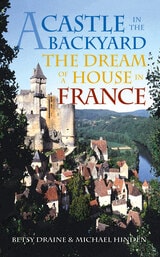
A Castle in the Backyard
The Dream of a House in FranceBetsy Draine and Michael Hinden
University of Wisconsin Press, 2006
Like any romance, this one has had its ups and downs, and Betsy and Michael chart its course in this delightful memoir. They offer an intimate glimpse of a region little known to Americans—the Dordogne valley, its castles and prehistoric art, its walking trails and earthy cuisine—and describe the charms and mishaps of setting up housekeeping thousands of miles from home.
Along with the region’s terrain and culture, A Castle in the Backyard introduces us to the people of Périgord—the castle’s proprietor, the village children, the gossipy real-estate agent, the rascally mason, and the ninety-year-old widow with a tale of heartbreak. A celebration of a place and its people, the book also reflects on the future of historic Périgord as tourism and development pose a challenge to its graceful way of life.
Castle and Cathedral
Longing for the Sacred in a Skeptical AgeBruce R. Berglund
Central European University Press, 2017
In the Castle of My Skin
George Lamming
University of Michigan Press, 1992
Nearly forty years after its initial publication, George Lamming's In the Castle of My Skin is considered a classic narrative of the Black colonial experience. This poetic autobiographical novel juxtaposes the undeveloped, unencumbered life of a small Caribbean island with the materialism and anxiety of the twentieth century.
Written when Lamming was twenty-three and residing in England, In the Castle of My Skin poignantly chronicles the author's life from his ninth to his nineteenth year. Through the eyes of a young boy the experiences of colonial education, class tensions, and natural disaster are interpreted and reinterpreted, mediated through the presence of the old villagers and friends who leave for the mainland.
One of the leading Black writers of the twentieth century, George Lamming is the author of numerous works exploring the colonial experience.
Music in the Castle
Troubadours, Books, and Orators in Italian Courts of the Thirteenth, Fourteenth, and Fifteenth CenturiesF. Alberto Gallo
University of Chicago Press, 1996
In the first of three elegant essays, Gallo examines the troubadours who traveled to northern Italian courts from Provence during the thirteenth century. He discusses their performance practices, the verbal and musical sophistication of their songs, and their role in the daily life of courtiers at Genoa, Ferrara, and Monferrato. The second essay concerns the now dispersed collection of the Visconti library at Pavia. Here, Gallo examines how this collection expressed the tastes of the fourteenth-century court of Giangaleazzo Visconti, how French arts were imported and imitated at Pavia, and the effects this had on music heard at the court. In the final essay, Gallo looks at the fifteenth-century tradition of improvised music, and especially the virtuoso lute player Pietrobono. Mythologized in literary circles of his day, Pietrobono becomes a point of departure for a discussion of the entire vision of music of Italian humanists, from Guarino Veronese to Aurelio Brandolini.
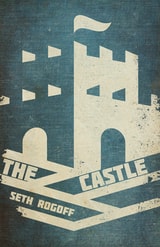
The Castle
A NovelSeth Rogoff
University of Alabama Press, 2024
A fictional return to the unsettling world of Franz Kafka’s iconic unfinished novel, The Castle.
Seth Rogoff's masterful and mesmerizing novel, The Castle, draws inspiration from the enigmatic and incomplete final sentence of Franz Kafka's influential work of the same title. Follow renowned translator Sy Kirschbaum as he finds his way into the deserted landscape of Kafka’s world where the village of Z. lies eerily silent. The inhabitants vanished like phantoms leaving only remnants of their lives.
From these fragments, Kirschbaum pieces together a vision of a world in crisis triggered by the arrival of a stranger named K. To unravel this mystery, not just for the sake of the vanished village of Z. but for the world beyond, Kirschbaum is compelled to venture where K. could not—the deepest core of the castle.
The Castle is built upon lost documents, forgotten stories, and imagined histories. Unbound by the constraints of an authoritarian and doomed reality, Kirschbaum embarks on an extraordinary journey, seeking meaning through the fertile ground of imagination and embracing the inherent paradox of existence.