Results by title
5 books match the query 'Casualties'
Bedrooms of the Fallen
Ashley Gilbertson
University of Chicago Press, 2014
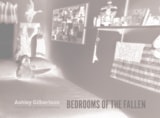
The book’s wide-format black-and-white images depict the bedrooms of forty fallen soldiers—the equivalent of a single platoon—from the United States, Canada, and several European nations. Left intact by families of the deceased, the bedrooms are a heartbreaking reminder of lives cut short: we see high school diplomas and pictures from prom, sports medals and souvenirs, and markers of the idealism that carried them to war, like images of the Twin Towers and Osama Bin Laden. A moving essay by Gilbertson describes his encounters with the families who preserve these private memorials to their loved ones, and shares what he has learned from them about war and loss.
Bedrooms of the Fallen is a masterpiece of documentary photography, and an unforgettable reckoning with the human cost of war.
No Average Day
The 24 Hours of October 24, 1944Rona Simmons
University of Missouri Press, 2024
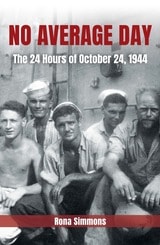
On Tuesday, October 24, 1944, nearly three years after the United States entered World War II, over 2,600 Americans perished—more than on any other single day of the conflict—yet the day remains overshadowed by more widely remembered dates in WWII history. Drawing from the accounts of men from diverse backgrounds who served in the U.S. Army, Navy, Marines, and Air Corps, Rona Simmons offers a gripping retelling of the fateful day, hour by hour and incident by incident. The book begins with Army Private First Class Paul Miller’s demise in a prisoner of war camp and ends with the death of Navy Seaman Second Class Wanza E. Matthews after the Japanese submarine I-56 attacked his ship off New Guinea. The sinking of the Japanese “hellship” Arisan Maru—a lesser-known tragedy of the war—looms large, deftly interwoven through each part of the narrative.
Perhaps the most compelling aspect of No Average Day is its attention to the human side of conflict, telling the stories of ordinary individuals—clerks, radio operators, cooks, sailors, machinist mates, riflemen, and pilots and their air crews—as they grapple with the horrors of the war. Despite its narrow focus, or perhaps because of it, No Average Day reveals the vastness of World War II through a consideration of the largely overlooked events that unfolded on what, for members of the US Armed Forces, was its deadliest day.
The Remains of War
Bodies, Politics, and the Search for American Soldiers Unaccounted For in Southeast AsiaThomas M. Hawley
Duke University Press, 2005
Hawley combines the theoretical insights of Judith Butler, Michel Foucault, and Emmanuel Levinas with detailed research into the history of the movement to recover the remains of soldiers missing in Vietnam. He examines the practices that constitute the Defense Department’s accounting protocol: the archival research, archaeological excavation, and forensic identification of recovered remains. He considers the role of the American public and the families of missing soldiers in demanding the release of pows and encouraging the recovery of the missing; the place of the body of the Vietnam veteran within the war’s legacy; and the ways that memorials link individual bodies to the body politic. Highlighting the contradictions inherent in the recovery effort, Hawley reflects on the ethical implications of the massive endeavor of the American government and many officials in Vietnam to account for the remains of American soldiers.
Unfriendly Fire
A Mother's MemoirPeg Mullen
University of Iowa Press, 1995
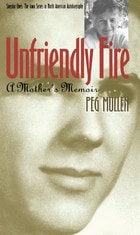
In 1968 Michael Mullen, a graduate student in biochemistry, was drafted; in 1969 he was sent to Vietnam as a foot soldier in Colonel Norman Schwarzkopf's Charlie Company; and in 1970 he was killed by the same “friendly fire” that destroyed thousands of other lives during the Vietnam War.
Back home on the family farm in Iowa, his parents made his death a crusade to awaken all parents to the insanity of war. C. D. B. Bryan's Friendly Fire and the TV movie of the same name documented these dramatic years, and Peg Mullen became a national symbol of grassroots activism. Now Peg Mullen shifts from symbol to reality as she tells her story in print for the first time.
Outspoken, fearless, and wickedly humorous, Peg Mullen had a duel mission in the years after Michael's death: to penetrate the lies and evasions behind the artillery misfire that killed her oldest son and to publicize the senseless horror of the Vietnam War. Unfriendly Fire draws on the many letters sent to the Mullens after Michael's death; in addition, Michael's own bitter, weary letters home are reprinted. In these the voices of parents, brothers, sisters, comrades, teachers, and Michael himself echo Peg Mullen's call for truth and peace.
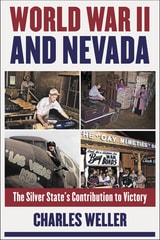
World War II and Nevada
The Silver State's Contribution to VictoryCharles Weller
University of Nevada Press, 2024
World War II and Nevada is an in-depth examination of the state’s role in the war. Nevada’s geographic location, land, sky, mineral resources, and the sacrifices of its people were crucial to victory—and transformed the state. The war brought the first significant development of the gaming industry; the introduction of a huge, permanent military presence; the diversification of its population; and a shift in political and economic power within the region.
Nevada’s previously unexamined role in the internment of Japanese Americans is explored, and so too is the role of women and minority groups in support of the war. The book concludes with a comprehensive list of those killed, wounded, or made prisoners of war during the conflict.
Weller provides the most thorough analysis of Nevada’s war effort to date and historians will find the book a valuable addition to their World War II history collections.