Results by title

7 books match the query 'Catholic Schools'

cover of A Bad and Stupid Girl

A Bad and Stupid Girl

Jean McGarry

University of Michigan Press, 2006

Siri is a legacy admission, rich and spoiled and destined to flunk out of her freshman year at college. Esther, her roommate, is a scholarship student from humble means, brilliant and driven to succeed.

Brought together by chance, the girls soon become partners in a struggle to find their way in a world where neither Esther’s brains nor Siri’s beauty is enough. Never having been forced to work hard at anything, Siri must rely on Esther to teach her to learn and attend class. But as Siri wakes from her dream world to discover the life of the mind, Esther begins shedding her rational bonds to explore the mysteries of the soul. For both, some of the most devastating lessons in the attainment of worldly knowledge come from love.

Deadpan funny and bittersweet, A Bad and Stupid Girl is above all else a moving portrait of two friends helping each other to uncover the potential splendor of their lives.
[more]
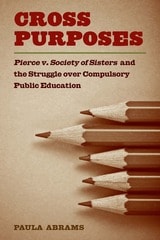
cover of Cross Purposes: Pierce v. Society of Sisters and the Struggle over Compulsory Public Education

Cross Purposes

Pierce v. Society of Sisters and the Struggle over Compulsory Public Education

Paula Abrams

University of Michigan Press, 2009

"A definitive study of an extremely important, though curiously neglected, Supreme Court decision, Pierce v. Society of Sisters."
---Robert O'Neil, Professor of Law Emeritus, University of Virginia School of Law

"A careful and captivating examination of a dramatic and instructive clash between nationalism and religious pluralism, and of the ancient but ongoing struggle for control over the education of children and the formation of citizens."
---Richard W. Garnett, Professor of Law and Associate Dean, Notre Dame Law School

"A well-written, well-researched blend of law, politics, and history."
---Joan DelFattore, Professor of English and Legal Studies, University of Delaware

In 1922, the people of Oregon passed legislation requiring all children to attend public schools. For the nativists and progressives who had campaigned for the Oregon School Bill, it marked the first victory in a national campaign to homogenize education---and ultimately the populace. Private schools, both secular and religious, vowed to challenge the law. The Catholic Church, the largest provider of private education in the country and the primary target of the Ku Klux Klan campaign, stepped forward to lead the fight all the way to the U.S. Supreme Court.

In Pierce v. Society of Sisters (1925), the court declared the Oregon School Bill unconstitutional and ruled that parents have the right to determine how their children should be educated. Since then, Pierce has provided a precedent in many cases pitting parents against the state.

Paula Abrams is Professor of Constitutional Law at Lewis & Clark Law School.
[more]
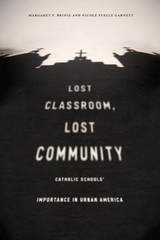
cover of Lost Classroom, Lost Community: Catholic Schools' Importance in Urban America

Lost Classroom, Lost Community

Catholic Schools' Importance in Urban America

Margaret F. Brinig and Nicole Stelle Garnett

University of Chicago Press, 2014

In the past two decades in the United States, more than 1,600 Catholic elementary and secondary schools have closed, and more than 4,500 charter schools—public schools that are often privately operated and freed from certain regulations—have opened, many in urban areas. With a particular emphasis on Catholic school closures, Lost Classroom, Lost Community examines the implications of these dramatic shifts in the urban educational landscape. 

More than just educational institutions, Catholic schools promote the development of social capital—the social networks and mutual trust that form the foundation of safe and cohesive communities. Drawing on data from the Project on Human Development in Chicago Neighborhoods and crime reports collected at the police beat or census tract level in Chicago, Philadelphia, and Los Angeles, Margaret F. Brinig and Nicole Stelle Garnett demonstrate that the loss of Catholic schools triggers disorder, crime, and an overall decline in community cohesiveness, and suggest that new charter schools fail to fill the gaps left behind.

This book shows that the closing of Catholic schools harms the very communities they were created to bring together and serve, and it will have vital implications for both education and policing policy debates.
[more]
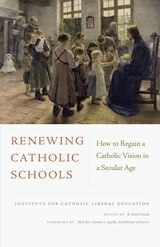
cover of Renewing Catholic Schools: How to Regain a Catholic Vision for a Secular Age

Renewing Catholic Schools

How to Regain a Catholic Vision for a Secular Age

R. Jared Staudt

Catholic University of America Press, 2020
Catholic education remains one of the most compelling expressions of the Church’s mission to form disciples. Despite decades of decline in the number of schools and students, many Catholic schools have been experiencing renewal by returning to the great legacy of the Catholic tradition. Renewing Catholic Schools offers an overview of the reasons behind this renewal and practical suggestions for administrators, clergy, teachers, and parents on how to begin the process of reinvigoration. The book begins by situating Catholic education within the Church’s mission. Fidelity to Catholic mission and identity, including a commitment to the fulness of truth, provides the fundamental mark for the true success of Catholic education. The Catholic intellectual tradition, in particular, established by figures such as Augustine, Boethius, and Aquinas, can continue to direct Catholic schools, providing a depth of vision to overcome today’s educational crisis. To transcend the now dominate secular model of education, Catholic schools can align their curriculum more closely to the Catholic tradition. One touchpoint comes from Archbishop Michael Miller’s The Holy See’s Teaching on Catholic Schools, which the book explores as a source for practical guidance. It also offers a Catholic vision for curriculum, examining the full range of subjects from gymnasium, the fine arts, the liberal arts, literature, history, and catechesis, all of which lead to a well-formed graduate, inspired by beauty, attune to truth, and ordered toward the good. Finally, the book provides a practical vision for renewing the school through the formation of teachers, creation of a school community, and by offering suggestions for implementation of a stronger Catholic mission and philosophy of education. The teacher, ultimately, should strive to teach like Jesus, while the community should joyfully embody the school’s mission, making it a lived reality. The book concludes with examples of Catholic schools that have successfully undergone renewal.
[more]
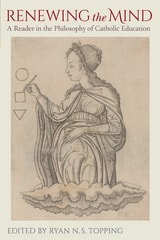
cover of Renewing the Mind

Renewing the Mind

Ryan N.S. Topping

Catholic University of America Press, 2015
Renewing the Mind includes an introductory essay on the history and renewal of Catholic education, followed by 38 selections each with an introduction, biography, and study questions; adorning the text throughout are illustrations from the National Gallery of Art. Educators of children and college students will find this an essential guide to the best of what has been said about what it means to be conformed to the mind of Christ.
[more]
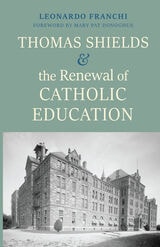
cover of Thomas Shields and the Renewal of Catholic Education

Thomas Shields and the Renewal of Catholic Education

Leonardo Franchi

Catholic University of America Press, 2023
This book explores the contribution of the Rev Dr Thomas Shields (1862-1921) to Catholic education in the United States of America in the late 19th and early 20th century. Fr Shields was a pioneer in combining a career as an academic in Catholic University of America with the publication of many resources for schools. Given his pioneering role in aligning Catholic educational thought with emerging insights in the sciences, and his multi-layered commitment to Catholic education as scholar, author of textbooks and founder of initiatives in the field of Teacher Education, it seems fitting that his considerable body of work should be the subject of fresh scholarly investigation. The book is in five parts. Part 1, “Catholicism as an Educational Movement”, sets out the contours of the intellectual climate in which Shields operated and presents Catholicism as a dynamic educational movement. Part 2, “Responding to Progressive Thought”, explores the relationship between Progressivism and Catholic Education, showing how the Catholic Church responded to the challenges presented by Progressive thought. Part 3, “Shields and the Reform of Pedagogy”, examines both Shields’ general pedagogical principles and how they relate to Catholic education. Part 4, “Forming Teachers in Heart and Mind”, considers Shields’ ideas on Catholic Teacher Formation, exploring issues such as culture, vocation, method and curriculum. Part 5, “The Catholic Education Series”, explores selected examples from Shields’ Catholic Education Series to identify how his material for schools reflected, to a greater or lesser extent, his wider educational ideas. As the present age is also witness to considerable and deep-rooted challenges to Catholic education and, indeed to the Catholic understanding of the human person, Shields’ work will inspire contemporary reform-minded Catholic educators to reassess and develop the mission of Catholic education in light of the traditions of the Church.
[more]
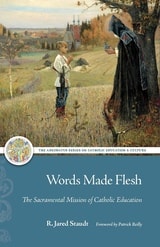
cover of Words Made Flesh: The Sacramental Mission of Catholic Education

Words Made Flesh

The Sacramental Mission of Catholic Education

R. Jared Staudt

Catholic University of America Press, 2024

Forming souls and building culture together form the sacramental mission of Catholic education. These profoundly related goals are laid out by the Church for education, following the general sacramental principle that permeates the whole of Catholic life. This approach seeks conformity to the Logos, the divine mind, that shapes the way disciples think, imagine, and pray. Guided by this approach, the student will be able to contemplate the truth of reality in a holistic and integrated fashion. As sacramental, it also leads to a concrete embodiment in the life of the Christian community and the daily actions of the disciple. A sacramental approach to education draws together the inner and outer life: mind and body, soul and culture, prayer and work, salvation and mission, the individual and community. For the future of society and renewal within the Church, we need nothing less than a reintegration of the person and our communities through the renewal of education, forming students deeply rooted in our heritage and prepared to hand it on in creative ways.
[more]