Results by title
3 books match the query 'Catholic hospitals'
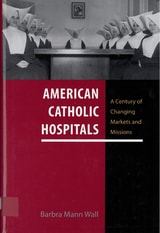
American Catholic Hospitals
A Century of Changing Markets and MissionsWall, Barbra Mann
Rutgers University Press, 2016
In American Catholic Hospitals, Barbra Mann Wall chronicles changes in Catholic hospitals during the twentieth century, many of which are emblematic of trends in the American healthcare system.
Wall explores the Church's struggle to safeguard its religious values. As hospital leaders reacted to increased political, economic, and societal secularization, they extended their religious principles in the areas of universal health care and adherence to the Ethical and Religious Values in Catholic Hospitals, leading to tensions between the Church, government, and society. The book also examines the power of women--as administrators, Catholic sisters wielded significant authority--as well as the gender disparity in these institutions which came to be run, for the most part, by men. Wall also situates these critical transformations within the context of the changing Church policy during the 1960s. She undertakes unprecedented analyses of the gendered politics of post-Second Vatican Council Catholic hospitals, as well as the effect of social movements on the practice of medicine.
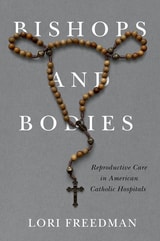
Bishops and Bodies
Reproductive Care in American Catholic HospitalsLori Freedman
Rutgers University Press, 2023
One out of every six patients in the United States is treated in a Catholic hospital that follows the policies of the U.S. Conference of Catholic Bishops. These policies prohibit abortion, sterilization, contraception, some treatments for miscarriage and gender confirmation, and other reproductive care, undermining hard-won patients’ rights to bodily autonomy and informed decision-making. Drawing on rich interviews with patients and providers, this book reveals both how the bishops’ directives operate and how people inside Catholic hospitals navigate the resulting restrictions on medical practice. In doing so, Bishops and Bodies fleshes out a vivid picture of how The Church’s stance on sex, reproduction, and “life” itself manifests in institutions that affect us all.
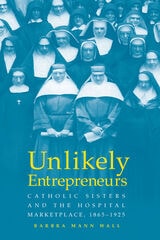
UNLIKELY ENTREPRENEURS
Catholic Sisters & the Hospital Marketplace, 1865–1925Barbra Mann Wall
The Ohio State University Press, 2005
In Unlikely Entrepreneurs, Barbra Mann Wall looks at the development of religious hospitals in the late nineteenth and early twentieth centuries and the entrepreneurial influence Catholic sisters held in this process. When immigrant nuns came to the United States in the late nineteenth century, they encountered a market economy that structured the way they developed their hospitals. Sisters enthusiastically engaged in the market as entrepreneurs, but they used a set of tools and understanding that were counter to the market. Their entrepreneurship was not to expand earnings but rather to advance Catholic spirituality.
Wall places the development of Catholic hospital systems (located in Illinois, Indiana, Minnesota, Texas, and Utah) owned and operated by Catholic sisters within the larger social, economic, and medical history of the time. In the modern health care climate, with the influences of corporations, federal laws, spiraling costs, managed care, and medical practices that rely less on human judgments and more on technological innovations, the “modern” hospital reflects a dim memory of the past. This book will inform future debates on who will provide health care as the sisters depart, how costs will be met, who will receive care, and who will be denied access to health services.