Results by title

7 books match the query 'Cézanne, Paul'
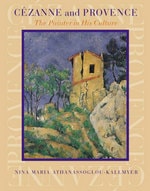
cover of Cezanne and Provence: The Painter in His Culture

Cezanne and Provence

The Painter in His Culture

Nina Maria Athanassoglou-Kallmyer

University of Chicago Press, 2003

In 1886 Paul Cézanne left Paris permanently to settle in his native Aix-en-Provence. Nina M. Athanassoglou-Kallmyer argues that, far from an escapist venture like Gauguin's stay in Brittany or Monet's visits to Normandy, Cézanne's departure from Paris was a deliberate abandonment intimately connected with late-nineteenth-century French regionalist politics.

Like many of his childhood friends, Cézanne detested the homogenizing effects of modernism and bourgeois capitalism on the culture, people, and landscapes of his beloved Provence. Turning away from the mainstream modernist aesthetic of his impressionist years, Cézanne sought instead to develop a new artistic tradition more evocative of his Provençal heritage. Athanassoglou-Kallmyer shows that Provence served as a distinct and defining cultural force that shaped all aspects of Cézanne's approach to representation, including subject matter, style, and technical treatment. For instance, his self-portraits and portraits of family members reflect a specifically Provençal sense of identity. And Cézanne's Provençal landscapes express an increasingly traditionalist style firmly grounded in details of local history and even geology. These landscapes, together with images of bathers, cardplayers, and other figures, were key facets of Cézanne's imaginary reconstruction of Provence as primordial and idyllic—a modern French Arcadia.

Highly original and lavishly illustrated, Cézanne and Provence gives us an entirely new Cézanne: no longer the quintessential icon of generic, depersonalized modernism, but instead a self-consciously provincial innovator of mainstream styles deeply influenced by Provençal culture, places, and politics.
[more]
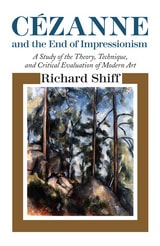
cover of Cezanne and the End of Impressionism: A Study of the Theory, Technique, and Critical Evaluation of Modern Art

Cezanne and the End of Impressionism

A Study of the Theory, Technique, and Critical Evaluation of Modern Art

Richard Shiff

University of Chicago Press, 1984

Drawing on a broad foundation in the history of nineteenth-century French art, Richard Shiff offers an innovative interpretation of Cézanne's painting. He shows how Cézanne's style met the emerging criteria of a "technique of originality" and how it satisfied critics sympathetic to symbolism as well as to impressionism. Expanding his study of the interaction of Cézanne and his critics, Shiff considers the problem of modern art in general. He locates the core of modernism in a dialectic of making (technique) and finding (originality). Ultimately, Shiff provides not only clarifying accounts of impressionism and symbolism but of a modern classicism as well.
[more]
cover of Cezanne: A Study of His Development

Cezanne

A Study of His Development

Roger Fry

University of Chicago Press, 1989

Roger Fry's classic study of the art and life of Paul Cézanne, originally published in 1927, has been acclaimed as a paradigm critical work for its clarity, perception, and originality. Himself an artist, Fry rejected prevailing modes of criticism, believing that form, not subject matter, should be the primary expressive element. Cézanne's work came closest to Fry's ideal—it gave formal expression to all of nature.

This study established Fry as a critical "father," the first of his line to explicate the ideas of "vision and design" in an attempt to understand modern art. His critical analysis has in many respects never been surpassed. Fry endeavored both to show the essential development of the painter's style and to approach individual works directly; he wrote that he would detect "the profound difference between Cézanne's message and what we have made of it." The result is a book, couched in Fry's most lucid, penetrating language, which is of great technical value to the painter and student and which offers the layman an illuminating demonstration of the remarkable force of Cézanne's art.
[more]
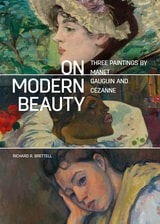
cover of On Modern Beauty: Three Paintings by Manet, Gauguin, and Cézanne

On Modern Beauty

Three Paintings by Manet, Gauguin, and Cézanne

Richard R. Brettell

J. Paul Getty Trust, The, 2019

A thought-provoking examination of beauty using three works of art by Manet, Gauguin, and Cézanne. As the discipline of art history has moved away from connoisseurship, the notion of beauty has become increasingly problematic. Both culturally and personally subjective, the term is difficult to define and nearly universally avoided. In this insightful book, Richard R. Brettell, one of the leading authorities on Impressionism and French art of the nineteenth and early twentieth centuries, dares to confront the concept of modern beauty head-on. This is not a study of aesthetic philosophy, but rather a richly contextualized look at the ambitions of specific artists and artworks at a particular time and place.
 
Brettell shapes his manifesto around three masterworks from the collection of the J. Paul Getty Museum: Édouard Manet’s Jeanne (Spring), Paul Gauguin’s Arii Matamoe (The Royal End), and Paul Cézanne’s Young Italian Woman at a Table. The provocative discussion reveals how each of these exceptional paintings, though depicting very different subjects—a fashionable actress, a preserved head, and a weary working woman—enacts a revolutionary, yet enduring, icon of beauty.
 
[more]
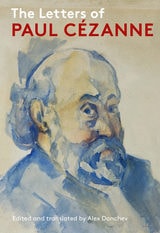
cover of The Letters of Paul Cézanne

The Letters of Paul Cézanne

Alex Danchev

J. Paul Getty Trust, The, 2013

Revered and misunderstood by his peers and lauded by later generations as the father of modern art, Paul Cézanne (1839-1906) has long been a subject of fascination for artists and art lovers, writers, poets, and philosophers. His life was a ceaseless artistic quest, and he channeled much of his wide-ranging intellect and ferocious wit into his letters. Punctuated by exasperated theorizing and philosophical reflection, outbursts of creative ecstasy and melancholic confession, the artist’s correspondence reveals both the heroic and all-toohuman qualities of a man who is indisputably among the pantheon of all-time greats.

This new translation of Cézanne’s letters includes more than twenty that were previously unpublished and reproduces the sketches and caricatures with which Cézanne occasionally illustrated his words. The letters shed light on some of the key artistic relationships of the modern period—about one third of Cézanne’s more than 250 letters are to his boyhood companion Émile Zola, and he communicated extensively with Camille Pissarro and the dealer Ambroise Vollard. The translation is richly annotated with explanatory notes, and, for the first time, the letters are cross-referenced to the current catalogue raisonné. Numerous inaccuracies and archaisms in the previous English edition of the letters are corrected, and many intriguing passages that were unaccountably omitted have been restored. The result is a publishing landmark that ably conveys Cézanne’s intricacy of expression.
[more]
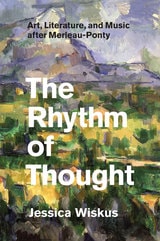
cover of The Rhythm of Thought: Art, Literature, and Music after Merleau-Ponty

The Rhythm of Thought

Art, Literature, and Music after Merleau-Ponty

Jessica Wiskus

University of Chicago Press, 2013
Between present and past, visible and invisible, and sensation and idea, there is resonance—so philosopher Maurice Merleau-Ponty argued and so Jessica Wiskus explores in The Rhythm of Thought. Holding the poetry of Stéphane Mallarmé, the paintings of Paul Cézanne, the prose of Marcel Proust, and the music of Claude Debussy under Merleau-Ponty’s phenomenological light, she offers innovative interpretations of some of these artists’ masterworks, in turn articulating a new perspective on Merleau-Ponty’s philosophy.
 
More than merely recovering Merleau-Ponty’s thought, Wiskus thinks according to it. First examining these artists in relation to noncoincidence—as silence in poetry, depth in painting, memory in literature, and rhythm in music—she moves through an array of their artworks toward some of Merleau-Ponty’s most exciting themes: our bodily relationship to the world and the dynamic process of expression. She closes with an examination of synesthesia as an intertwining of internal and external realms and a call, finally, for philosophical inquiry as a mode of artistic expression. Structured like a piece of music itself, The Rhythm of Thought offers new contexts in which to approach art, philosophy, and the resonance between them.
[more]
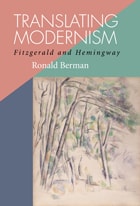
cover of Translating Modernism: Fitzgerald and Hemingway

Translating Modernism

Fitzgerald and Hemingway

Ronald Berman

University of Alabama Press, 2009

In Translating Modernism Ronald Berman continues his career-long study of the ways that intellectual and philosophical ideas informed and transformed the work of America’s major modernist writers.
Here Berman shows how Fitzgerald and Hemingway wrestled with very specific intellectual, artistic, and psychological influences, influences particular to each writer, particular to the time in which they wrote, and which left distinctive marks on their entire oeuvres. Specifically, Berman addresses the idea of "translating" or "translation"—for Fitzgerald the translation of ideas from Freud, Dewey, and James, among others; and for Hemingway the translation of visual modernism and composition, via Cézanne.
Though each writer had distinct interests and different intellectual problems to wrestle with, as Berman demonstrates, both had to wrestle with transmuting some outside influence and making it their own.
[more]