Results by title
28 books match the query 'Central Asia'
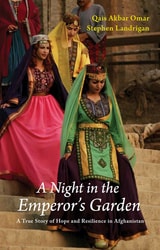
A Night in the Emperor's Garden
A True Story of Hope and Resilience in AfghanistanQais Akbar Omar and Stephen Landrigan
Haus Publishing, 2015
An actress visiting from Paris casually proposed to some Afghan actors in Kabul: Why not put on a play? The challenges were huge. It had been thirty years since men and women had appeared on stage together in Afghanistan. Was the country ready for it? Few Afghan actors had ever done theater. Did they even know how? They had performed only in films and television dramas.
Still, a company of actors gathered—among them a housewife, a policewoman, and a street kid turned film star. With no certainty of its outcome, they set out on a journey that would have life-changing consequences for all of them, and along the way lead to A Night in the Emperor’s Garden.
A Short History of the Silk Road
Jonathan Clements
Haus Publishing, 2017
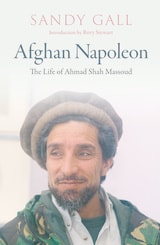
Afghan Napoleon
The Life of Ahmad Shah MassoudSandy Gall
Haus Publishing, 2022
When the Soviets invaded Afghanistan in 1979, the forces of resistance were disparate. Many groups were caught up in fighting each other and competing for Western arms. The exception were those commanded by Ahmad Shah Massoud, the military strategist and political operator who solidified the resistance and undermined the Russian occupation, leading resistance members to a series of defensive victories.
Sandy Gall followed Massoud during Soviet incursions and reported on the war in Afghanistan, and he draws on this first-hand experience in his biography of this charismatic guerrilla commander. Afghan Napoleon includes excerpts from the surviving volumes of Massoud’s prolific diaries—many translated into English for the first time—which detail crucial moments in his personal life and during his time in the resistance. Born into a liberalizing Afghanistan in the 1960s, Massoud ardently opposed communism, and he rose to prominence by coordinating the defense of the Panjsher Valley against Soviet offensives. Despite being under-equipped and outnumbered, he orchestrated a series of victories over the Russians. Massoud’s assassination in 2001, just two days before the attack on the Twin Towers, is believed to have been ordered by Osama bin Laden. Despite the ultimate frustration of Massoud’s attempts to build political consensus, he is recognized today as a national hero.
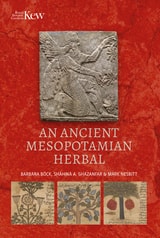
An Ancient Mesopotamian Herbal
Barbara Boeck, Shahina Ghazanfar, and Mark Nesbitt
Royal Botanic Gardens, Kew, 2024
Traditional medical systems continue to impact the lives of people around the globe. These systems vary greatly in their underlying beliefs, but all commonly rely on the consumption of plant matter as a central practice. An Ancient Mesopotamian Herbal is a new, fully illustrated book that explores the uses of plants in traditional medicine and how these botanical roots extend to modern, “conventional” medicinal treatments.
Divided into two parts, An Ancient Mesopotamian Herbal introduces the lands and ancient cultures of Mesopotamia before surveying the different forms of evidence and research methods informing this academic book. The book then looks to the modern day, focusing on thirty case studies of plant-based drugs. Bridging the divide between the humanities and sciences and using new research and data from modern-day Iraq and surrounding areas, An Ancient Mesopotamian Herbal draws on the expertise of archeo-botanists, scientists, and Assyriologists specializing in historic Mesopotamian medicine to provide new identifications of Assyrian and Babylonian herbal medicines while giving a concise overview of ancient Mesopotamian herbal lore.
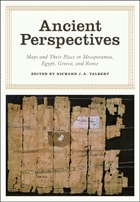
Ancient Perspectives
Maps and Their Place in Mesopotamia, Egypt, Greece, and RomeEdited by Richard J. A. Talbert
University of Chicago Press, 2012
Ancient Perspectives encompasses a vast arc of space and time—Western Asia to North Africa and Europe from the third millennium BCE to the fifth century CE—to explore mapmaking and worldviews in the ancient civilizations of Mesopotamia, Egypt, Greece, and Rome. In each society, maps served as critical economic, political, and personal tools, but there was little consistency in how and why they were made. Much like today, maps in antiquity meant very different things to different people.
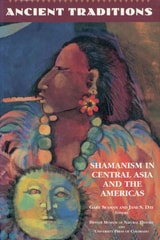
Ancient Traditions
Shamanism in Central Asia and the AmericasGary Seaman
University Press of Colorado, 1994
Over the centuries, shamanism has endured as an abiding topic of interest not only because of a human concern with the past but also because of a common yearning to acknowledge life lived in closer symbolic relationship to the earth. For readers interested in indigenous cultures and religions, this collection of essays clarifies much of the New Age speculation on universals in shamanism, offering solid research on specific ethnic and historical expressions.
In Ancient Traditions, prominent scholars in ethnography, anthropology, and the study of world religions bring to bear their diverse perspectives on this singularly fascinating topic. Contributors include Vladimir N. Basilov, Robert S. Carlsen, James A. Clifton, Jane S. Day, Vladimir Diachenko, Vera P. Diakonova, Peter T. Furst, Larisa R. Pavlinskaya, Martin Prechtel, Gary Seaman, Omer C. Stewart, Lawrence E. Sullivan, Robert J. Theodoratus, and Johannes Wilbert. Co-published with the Denver Museum of Nature and Science.
Central Asia
One Hundred Thirty Years of Russian Dominance, A Historical OverviewEdward A. Allworth, ed.
Duke University Press, 1994
Now in its third edition (it was first published in 1967 and revised in 1989), this new edition of Central Asia has been updated to include a new preface, a revised and updated bibliography, and a final chapter that brings the book up to 1994 in considering the crucial problems that stem from a deprivation of sovereign, indigenous leadership over the past 130 years. This volume provides a broad and essential background for understanding what has led up to the late twentieth-century configuration of Central Asia.

Cinemas of the Other
A Personal Journey with Film-Makers from Central AsiaGönül Dönmez-Colin
Intellect Books, 2012
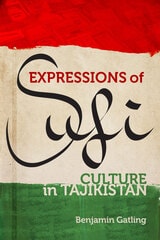
Expressions of Sufi Culture in Tajikistan
Benjamin Gatling
University of Wisconsin Press, 2018
Gatling demonstrates how Sufis transcend the oppressive religious politics of contemporary Tajikistan by using these forms to inhabit multiple times: the paradoxical present, the Persian sacred past, and the Soviet era. In a world consumed with the supposed political dangers of Islam, Gatling shows the intricate, ground-level ways that Muslim expressive culture intersects with authoritarian politics, not as artful forms of resistance but rather as a means to shape Sufi experiences of the present.
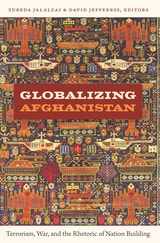
Globalizing Afghanistan
Terrorism, War, and the Rhetoric of Nation BuildingZubeda Jalalzai and David Jefferess, eds.
Duke University Press, 2011
Contributors. Gwen Bergner, Maliha Chishti, Cheshmak Farhoumand-Sims, Nigel C. Gibson, Zubeda Jalalzai, David Jefferess, Altaf Ullah Khan, Kamran Rastegar, Rodney J. Steward, Imre Szeman
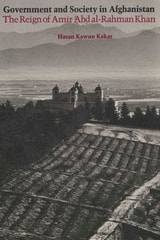
Government and Society in Afghanistan
The Reign of Amir ‘Abd al-Rahman KhanBy Hasan Kawun Kakar
University of Texas Press, 1979
This is an authoritative study of the administrative, social, and economic structure of Afghanistan during a decisive stage in its history. The period covered—the reign of the "Iron" Amir Rahman Khan—was in many ways the beginning of modern Afghanistan as a cohesive nation. Although Afghanistan had emerged as an entity in 1747, it was actually under the Amir that its borders were established, its internal unification completed, and the modern concept of nationhood implanted.
Kakar approaches this complex process by taking into consideration both the internal and the external forces that influenced its development. Thus, modernization, centralization, and nationalization are seen as both defensive reactions to European imperialism and necessary preconditions to capital formation and, consequently, industrialization.
The first part of the book covers the government of the Amir, from the personality of the ruler down to the operation of his new bureaucrats at the local level. Here Kakar presents a comprehensive treatment of the Afghan system of taxation and local government. The second part views these economic and social institutions from the perspective of the major segments of the populace—nomads, townsmen, tribes, women, slaves, landowners, mullahs, merchants, and so forth.
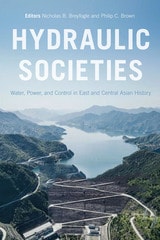
Hydraulic Societies
Water, Power, and Control in East and Central Asian HistoryNicholas B. Breyfogle
Oregon State University Press, 2023
Hydraulic Societies explores the linked themes of water, power, state-building, and hydraulic control. Bringing together a range of ecological, geographical, chronological, and methodological perspectives, the essays in this book address the how humans have long harnessed water and sought to contain its destructive power for political, economic and social ends. Water defines every aspect of life and remains at the center of human activity: in irrigation and agriculture; waste and sanitation; drinking and disease; floods and droughts; religious beliefs and practices; fishing and aquaculture; travel and discovery; scientific study; water pollution and conservation; multi-purpose dam building; boundaries and borders; politics and economic life; and wars and diplomacy.
From the earliest large irrigation works thousands of years ago, control over water has involved control over people, as the essays in this volume reflect. The intersections of water and political, economic, and social power historically span international as well as domestic politics and operate at scales ranging from the local to the global. The authors consider the role of water in national development schemes, water distribution as a tool of political power, international disputes over waterways and water supplies, and the place of water in armed conflicts. They explore the ways in which political power and social hierarchies have themselves been defined and redefined by water and its control, how state leaders legitimized their rule both culturally and economically through the control of water, and how water management schemes were a means to impose and refine colonial power.
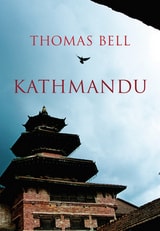
Kathmandu
Thomas Bell
Haus Publishing, 2016
Closed to the outside world until 1951 and trapped in a medieval time warp, Kathmandu is, as Bell argues, a jewel of the art world, a carnival of sexual license, a hotbed of communist revolution, a paradigm of failed democracy, a case study in bungled western intervention, and an environmental catastrophe. The layered development of the city can be seen in the successive generations of its gods and goddesses; its comfort in the caste system and ethos of aristocracy and kingship; and the recent destabilizing effects of consumerist approaches and the push for egalitarianism and democracy. In important ways, Kathmandu’s rapid modernization can be seen as an extreme version of what is happening in other traditional societies. Bell also discusses the ramifications of the recent Nepal earthquake.
A comprehensive look at a top global destination, Kathmandu is an entertaining and accessible chronicle for anyone eager to learn more about this fascinating city.
Learning to See Invisible Children
Inclusion of Children with Disabilities in Central AsiaKate Lapham
Central European University Press, 2013
Muslims in Central Asia
Expressions of Identity and ChangeJo-Ann Gross, ed.
Duke University Press, 1992
This study includes several geopolitical regions—Chinese Central Asia, Soviet Central Asia, Afghanistan, Transoxiana and Khurasan—and covers historical periods from the fifteenth century to the present. Drawing on scholarship in anthropology, religion, history, literature, and language studies, Muslims in Central Asia argues for an interdisciplinary, inter-regional dialog in the development of new approaches to understanding the Muslim societies in Central Asia. The authors creatively examine the social construction of identities as expressed through literature, Islamic discourse, historical texts, ethnic labels, and genealogies, and explore how such identities are formed, changed, and adopted through time.
Contributors. Hamid Algar, Muriel Atkin, Walter Feldman, Dru C. Gladney, Edward J. Lazzerini, Beatrice Forbes Manz, Christopher Murphy, Oliver Roy, Isenbike Togan
Postcards from Stanland
Journeys in Central AsiaDavid H. Mould
Ohio University Press, 2015
Central Asia has long stood at the crossroads of history. It was the staging ground for the armies of the Mongol Empire, for the nineteenth-century struggle between the Russian and British empires, and for the NATO campaign in Afghanistan. Today, multinationals and nations compete for the oil and gas reserves of the Caspian Sea and for control of the pipelines. Yet “Stanland” is still, to many, a terra incognita, a geographical blank.
Beginning in the mid-1990s, academic and journalist David Mould’s career took him to the region on Fulbright Fellowships and contracts as a media trainer and consultant for UNESCO and USAID, among others. In Postcards from Stanland, he takes readers along with him on his encounters with the people, landscapes, and customs of the diverse countries—Kazakhstan, Kyrgyzstan, Tajikistan, and Uzbekistan—he came to love. He talks with teachers, students, politicians, environmental activists, bloggers, cab drivers, merchants, Peace Corps volunteers, and more.
Until now, few books for a nonspecialist readership have been written on the region, and while Mould brings his own considerable expertise to bear on his account—for example, he is one of the few scholars to have conducted research on post-Soviet media in the region—the book is above all a tapestry of place and a valuable contribution to our understanding of the post-Soviet world.
Sherabad Oasis
Tracing Historical Landscape in Southern UzbekistanEdited by Ladislav Stanco and Petra Tušlová
Karolinum Press, 2020
Edited by Ladislav Stančo and Petra Tušlová, this volume continues the significant work of Czech researchers in Uzbekistan, a key Central Asian republic at the crossroads of history and culture.
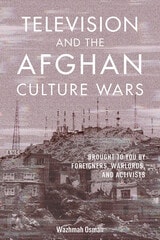
Television and the Afghan Culture Wars
Brought to You by Foreigners, Warlords, and ActivistsWazhmah Osman
University of Illinois Press, 2020
Fieldwork from across Afghanistan allowed Osman to record the voices of many Afghan media producers and people. Afghans offer their own seldom-heard views on the country's cultural progress and belief systems, their understandings of themselves, and the role of international interventions. Osman analyzes the impact of transnational media and foreign funding while keeping the focus on local cultural contestations, productions, and social movements. As a result, she redirects the global dialogue about Afghanistan to Afghans and challenges top-down narratives of humanitarian development.

The Central Asian Arabs of Afghanistan
Pastoral Nomadism in TransitionBy Thomas J. Barfield
University of Texas Press, 1981
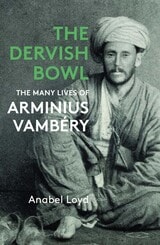
The Dervish Bowl
The Many Lives of Arminius VambéryAnabel Loyd
Haus Publishing, 2025
Who was Arminius Vámbéry? A poverty-stricken, Jewish autodidact; a linguist, traveler, and writer—or a sometime Zionist, inspiration for Dracula’s nemesis, and British secret agent? Vámbéry wrote his own story many times over, and it was these often highly embroidered accounts of journeys through Persia and Central Asia that saw him acclaimed in Victorian England as an intrepid explorer and daring adventurer. Against the backdrop of the “Great Game,” in which Russia and Britain jostled for territory, influence, and control of the borders and gateways to India and its wealth, Vámbéry played the roles of hero and double-dealer, of fascinated witness and imperialist charlatan.
The Dervish Bowl is the story of these competing narratives and a compelling investigation of both the ever-changing persona Vámbéry created for himself and the man who emerges from his private correspondence and the accounts of both his friends and his enemies, many of whom were themselves major players in the geopolitical adventures of the volatile nineteenth century—a time when Britain’s ambitions for her empire were at their height, yet nothing and no one was quite as they seemed.
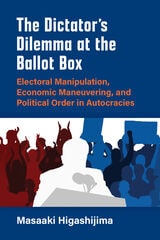
The Dictator's Dilemma at the Ballot Box
Electoral Manipulation, Economic Maneuvering, and Political Order in AutocraciesMasaaki Higashijima
University of Michigan Press, 2022
Contrary to our stereotypical views, dictators often introduce elections in which they refrain from employing blatant electoral fraud. Why do electoral reforms happen in autocracies? Do these elections destabilize autocratic rule? The Dictator’s Dilemma at the Ballot Box argues that strong autocrats who can garner popular support become less dependent on coercive electioneering strategies. When autocrats fail to design elections properly, elections backfire in the form of coups, protests, and the opposition’s stunning election victories. The book’s theoretical implications are tested on a battery of cross-national analyses with newly collected data on autocratic elections and in-depth comparative case studies of the two Central Asian republics of Kazakhstan and Kyrgyzstan.
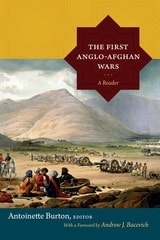
The First Anglo-Afghan Wars
A ReaderAntoinette Burton, ed.
Duke University Press, 2014
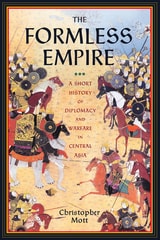
The Formless Empire
A Short History of Diplomacy and Warfare in Central AsiaChristopher Mott
Westholme Publishing, 2015
Central Asia, a vast region extending from eastern Russia and across Kazakhstan, Uzbekistan, Turkmenistan, Afghanistan, Tajikistan, Kyrgystan, Mongolia, and western China, has its own tradition of foreign policy rooted in the ancient nomadic culture of many of its peoples as well as the region’s distinctive geography. From the thundering hooves of Mongol or Cossack cavalry across the steppes to the clanking of tanks on parade in Moscow or Beijing, elements of this system still cast a shadow on the region at the heart of Earth’s largest continent. By tracing the evolution of Central Asian warfare and diplomacy through a series of historical examples, ranging from the ancient Xiongnu people and medieval Mongol Empire to the fall of the Soviet Union, historian Christopher Mott argues that the original system of informal relationships, indirect rule, and rapid military movement did not entirely fade from the region with the eclipse of the nomadic powers during the Middle Ages. In fact, many states like China, Iran, and Russia had already been influenced by nomadic people, and in so doing adapted their own diplomatic and military policies accordingly. The Formless Empire: A Short History of Diplomacy and Warfare in Central Asia is an engaging study of the nature of non-Western imperialism and great-power strategy. In addition, the book demonstrates that regional histories can show us the variety of political possibilities in the past and how they were adapted to changing circumstances—a point made even more important by the rapid changes facing global security and new forms of empire building.
“Christopher Mott’s extremely erudite and wide-ranging examination of the history of Central Asia shows us that we have been far too narrow-minded and Eurocentric in thinking about power and how the global system changes historically. Given the current interest in ‘caliphates’ we need to reflect on the history of the areas of the world that dance to a different historical drum than we do in the West.” —Andrew John Williams, author of France, Britain, and the United States in the Twentieth Century
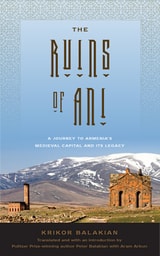
The Ruins of Ani
A Journey to Armenia's Medieval Capital and its LegacyKrikor Balakian
Rutgers University Press, 2019
From the tenth to the thirteenth centuries, the city of Ani was the jewel of the Armenian kingdom, renowned far and wide for its magnificent buildings. Known as the city of 1001 churches, Ani was a center for artistic innovation, and its architecture is a potential missing link between Byzantine and Gothic styles. By the fifteenth century, Ani was virtually abandoned, its stunning buildings left to crumble. Yet its ruins have remained a symbol of cultural accomplishment that looms large in the Armenian imagination.
The Ruins of Ani is a unique combination of history, art criticism, and travel memoir that takes readers on a thousand-year journey in search of past splendors. Today, Ani is a popular tourist site in Turkey, but the city has been falsified in its presentation by the Turkish government in order to erase Armenian history in the wake of the Armenian Genocide. This timely publication also raises questions about the preservation of major historic monuments in the face of post atrocity campaigns of cultural erasure.
Originally written by young priest Krikor Balakian in 1910, just a few years before the Armenian genocide, this book offers a powerful and poignant counterpart to Balakian’s acclaimed genocide memoir Armenian Golgotha. This new translation by the author’s great-nephew, Pulitzer Prize-winning poet Peter Balakian, eloquently renders the book’s vivid descriptions and lyrical prose into English. Including a new introduction that explores Ani’s continued relevance in the twenty-first century, The Ruins of Ani will give readers a new appreciation for this lost city’s status as a pinnacle of both Armenian civilization and human achievement.
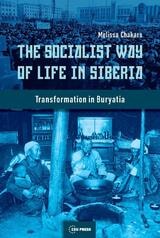
The Socialist Way of Life in Siberia
Transformation in BuryatiaMelissa Chakars
Central European University Press, 2014
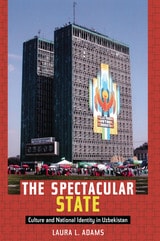
The Spectacular State
Culture and National Identity in UzbekistanLaura L. Adams
Duke University Press, 2010
Adams draws on her observations and interviews conducted with artists, intellectuals, and bureaucrats involved in the production of Uzbekistan’s national culture. These elites used globalized cultural forms such as Olympics-style spectacle to showcase local, national, and international aspects of official culture. While these state-sponsored extravaganzas were intended to be displays of Uzbekistan’s ethnic and civic national identity, Adams found that cultural renewal in the decade after Uzbekistan’s independence was not so much a rejection of Soviet power as it was a re-appropriation of Soviet methods of control and ideas about culture. The public sphere became more restricted than it had been in Soviet times, even as Soviet-era ideas about ethnic and national identity paved the way for Uzbekistan to join a more open global community.
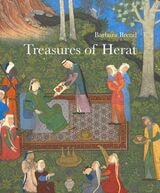
Treasures of Herat
Two Manuscripts of the Khamsah of Nizami in the British LibraryBarbara Brend
Gingko, 2021
With this book, Barbara Brend provides thorough consideration of two celebrated Persian manuscripts housed in the British Library. These two copies of the Khamsah (Quintet) a set of five narrative poems by twelfth-century poet Nizami, a master of allegorical poetry in Persian literature, were produced in Herat in the fifteenth century, one of the greatest periods of Persian painting. Although well known, the manuscripts have never before been written about in relation to each other. Brend tells the story of each poem and the painting that illustrates it, and she formally analyzes the images, placing them in their historical and artistic context.
The images from both highly prized manuscripts are beautifully reproduced in color, and the ownership history of one of the manuscripts—recorded in the form of seal impressions and inscriptions— is also included. Ursula Sims-Williams provides a translation and commentary of these important marks of ownership which identify the Mughal rulers Akbar, Jahangir, Shah Jahan, and Aurangzeb, among many others.
Women Musicians of Uzbekistan
From Courtyard to ConservatoryTanya Merchant
University of Illinois Press, 2015
Drawing on fieldwork and music study carried out between 2001 and 2014, Merchant challenges the Western idea of Central Asian women as sequestered and oppressed. Instead, she notes, Uzbekistan's women stand at the forefront of four prominent genres: maqom, folk music, Western art music, and popular music. Merchant's recounting of the women's experiences, stories, and memories underscores the complex role that these musicians and vocalists play in educational institutions and concert halls, street kiosks and the culturally essential sphere of wedding music. Throughout the book, Merchant ties nationalism and femininity to performances and reveals how the music of these women is linked to a burgeoning national identity.
Important and revelatory, Women Musicians of Uzbekistan looks into music's part in constructing gendered national identity and the complicated role of femininity in a former Soviet republic's national project.