Results by title
22 books match the query 'Ceramics'
An Archaeologist's Guide to Organic Residues in Pottery
Eleanora A. Reber
University of Alabama Press, 2022
Unlock the chemical secrets of ancient pottery in this guide for mastering organic residue pottery analysis.
Pottery analysis is a crucial component of excavating an archaeological site. Organic residues in pottery are made up of chemicals that absorb into pots over their lifetime. These residues can reveal what people ate, whether different types of vessels were used for different cooking or foodstuffs preparation, and whether “elite” vessels were in use.
Organic residue analysis is a technical specialty that blends an unusual type of instrumental organic chemistry and archaeology. Because it is considered an obscure technique, archaeologists of all degrees of experience tend to struggle with how to apply the technology to archaeological questions and how to sample effectively in the field to answer these questions.
Eleanora A. Reber’s An Archaeologist’s Guide to Organic Residues in Pottery is a user-friendly resource for all archaeologists. Composed of case studies gleaned from Reber’s more than twenty years of archaeological research, this guide covers the range of residues encountered in the field and explains the methods and application of organic residue analysis.
Reber illustrates the useful aspects of residue analysis, such as compound-specific isotope analysis for the identification of traces of maize and marine resources, conifer resins, and the psychoactive alkaloid biomarkers caffeine and nicotine. Special attention is paid to sampling and construction of meaning as well as research questions to help field archaeologists integrate residue analysis seamlessly into their projects
Art, Trade, and Culture in the Islamic World and Beyond
From the Fatimids to the MughalsEdited by Alison Ohta, Michael Rogers, and Rosalind Wade Haddon
Gingko, 2016
The essays range across a variety of topics. These include a look at tile production during the reign of the Qaytbay, the book bindings associated with Qansuh al-Ghuri, and the relationship between Mamluk metalwork and that found in Rasulid Yemen and Italy. Several essays examine inscriptions found on buildings of the Fatimid, Mamluk, and Ottoman periods, and others look at the debt of European lacquer works to Persian craftsmen, the Armenian patrons of eighteenth-century Chinese exports, and the influences of Islam on art and architecture found all across India. The result is a sweeping but deeply researched look at one of the richest networks of artistic traditions the world has ever known.
Athens, Etruria, and the Many Lives of Greek Figured Pottery
Sheramy D. Bundrick
University of Wisconsin Press, 2021
Thousands of Greek painted vases have emerged from excavations of tombs, sanctuaries, and settlements throughout Etruria, from southern coastal centers to northern communities in the Po Valley. Using documented archaeological assemblages, especially from tombs in southern Etruria, Bundrick challenges the widely held assumption that Etruscans were hellenized through Greek imports. She marshals evidence to show that Etruscan consumers purposefully selected figured pottery that harmonized with their own local needs and customs, so much so that the vases are better described as etruscanized. Athenian ceramic workers, she contends, learned from traders which shapes and imagery sold best to the Etruscans and employed a variety of strategies to maximize artistry, output, and profit.
Catawba Valley Mississippian
Ceramics, Chronology, and Catawba IndiansDavid G. Moore
University of Alabama Press, 2002
By the 18th century, the modern Catawba Indians were living along the river and throughout the valley that bears their name near the present North Carolina-South Carolina border, but little was known of their history and origins. With this elegant study, David Moore proposes a model that bridges the archaeological record of the protohistoric Catawba Valley with written accounts of the Catawba Indians from the 17th, 18th, and 19th centuries, thus providing an ethnogenesis theory for these Native Americans.
Because the Catawba Confederacy had a long tradition of pottery making, dating ceramics and using them for temporal control was central to establishing a regional cultural chronology. Moore accomplishes this with a careful, thorough review and analysis of disparate data from the whole valley. His archaeological discoveries support documentary evidence of 16th century Spaniards in the region interacting with the resident Indians. By tracking the Spanish routes through the Catawba River valley and comparing their reported interactions with the native population with known archaeological sites and artifacts, he provides a firm chronological and spatial framework for Catawba Indian prehistory.
With excellent artifact photographs and data-rich appendixes, this book is a model study that induces us to contemplate a Catawba genesis and homeland more significant than traditionally supposed. It will appeal to professional archaeologists concerned with many topics—Mississippian, Lamar, early historic Indians, de Soto, Pardo, and chiefdom studies—as well as to the broader public interested in the archaeology of the Carolinas.
Ceramic Petrography and Hopewell Interaction
James B. Stoltman
University of Alabama Press, 2015
Petrography is the microscopic examination of thin sections of pottery to determine their precise mineralogical composition. In this groundbreaking work, James B. Stoltman applies quantitative as well as qualitative methods to the petrography of Native American ceramics. As explained in Ceramic Petrography and Hopewell Interaction, by adapting refinements to the technique of petrography, Stoltman offers a powerful new set of tools that enables fact-based and rigorous identification of the composition and sources of pottery.
Stoltman’s subject is the cultural interaction among the Hopewell Interaction Sphere societies of the Ohio Valley region and contemporary peoples of the Southeast. Inferring social and commercial relationships between disparate communities by determining whether objects found in one settlement originated there or elsewhere is a foundational technique of archaeology. The technique, however, rests on the informed but necessarily imperfect visual inspection of objects by archaeologists. Petrography greatly amplifies archaeologists’ ability to determine objects’ provenance with greater precision and less guesswork.
Using petrography to study a vast quantity of pottery samples sourced from Hopewell communities, Stoltman is able for the first time to establish which items are local, which are local but atypical, and which originated elsewhere. Another exciting possibility with petrography is to further determine the home source of objects that came from afar. Thus, combining traditional qualitative techniques with a wealth of new quantitative data, Ceramic Petrography and Hopewell Interaction offers a map of social and trade relationships among communities within and beyond the Hopewell Interaction Sphere with much greater precision and confidence than in the past.
Ceramic Petrography and Hopewell Interaction provides a clear and concise explanation of petrographic methods, Stoltman’s findings about Hopewell and southeastern ceramics in various sites, and the fascinating discovery that visits to Hopewell centers by southeastern Native Americans were not only for trade purposes but more for such purposes as pilgrimages, vision- and power-questing, healing, and the acquisition of knowledge.
Ceramics and Community Organization among the Hohokam
David R. Abbott
University of Arizona Press, 2000
Through ceramic analyses from Classic period sites such as Pueblo Grande, Abbott shows that ceramic production sources and exchange networks can be determined from the composition, surface treatment attributes, and size and shape of clay containers. The distribution networks revealed by these analyses provide evidence for community boundaries and the web of social ties within them.
Abbott's meticulous research documents formerly unrecognized horizontal cohesiveness in Hohokam organizational structure and suggests how irrigation was woven into the fabric of their social evolution. By demonstrating the contribution that ceramic research can make toward resolving issues about community organization, this work expands the breadth and depth of pottery studies in the American Southwest.
Ceramics, Chronology, and Community Patterns
An Archaeological Study at MoundvilleVincas P. Steponaitis
University of Alabama Press, 2009
Moundville, located on the Black Warrior River in west-central Alabama, is one of the best known and most intensively studied archaeological sites in North America. Yet, in spite of all these investigations, many aspects of the site's internal chronology remained unknown until the original 1983 publication of this volume. The author embarked on a detailed study of Moundville ceramics housed in museums and collections, and hammered out a new chronology for Moundville.This volume is a clearly written description of the analytical procedures employed on these ceramic samples and the new chronology this study revealed. Using the refined techniques outlined in this volume, it was possible for the author to trace changes in community patterns, which in turn shed light on Moundville's internal development and its place among North America's ancient cultures.
Ceremonial Lithics in Classic Mesoamerica
Zachary Hruby
University Press of Colorado, 2025
Ceremonial Lithics in Classic Mesoamerica explores how and why ceremonial lithic artifacts were made in ancient Mesoamerica’s Classic period, focusing on their implications for economic and sociopolitical organization. Technological analyses of unique examples are interpreted to understand the processes of lithic production and how chipped stone was ritualized across Mesoamerica.
Investigations of ritualized lithics also draw on iconography, epigraphy, and ethnohistory to understand the meaning of these objects, including the so-called eccentric flints and obsidians of the Maya area and Central Mexico, massive debitage deposits in tomb contexts, and the use of utilitarian objects in ceremonial contexts. In the cases of the largest and most elaborate artifacts (e.g., the effigy flints of Copan, Honduras and the obsidian serpents of Teotihuacan), authors examine what the basic production processes may have been, while cases of blade and debitage deposits focus on how the objects were produced within their social context, in what sequence, and why they may have been chosen for ritual deposition.
Ceremonial Lithics in Classic Mesoamerica is the first book to address from a pan-Mesoamerican perspective how and why these objects were made. While obsidian and flint carried their own respective symbolic meanings, the final form of an artifact and the process of its production also contributed to its identification. Hence, this volume is an essential step toward understanding the ancient meanings imbued in these material objects.
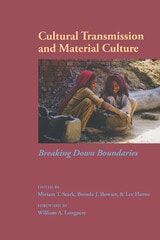
Cultural Transmission and Material Culture
Breaking Down BoundariesEdited by Miriam T. Stark, Brenda J. Bowser, and Lee Horne
University of Arizona Press, 2008
Working in several subdisciplines, contributors report on research in the areas of cultural boundaries, cultural transmission, and the socially organized nature of learning. Boundaries are found not only within and between the societies in these studies but also within and between the communities of scholars who study them. To break down these boundaries, this volume includes scholars who use multiple theoretical perspectives, including practice theory and evolutionary traditions, which are sometimes complementary and occasionally clashing. Geographic coverage ranges from the indigenous Americas to Africa, the Near East, and South Asia, and the time frame extends from the prehistoric or precontact to colonial periods and up to the ethnographic present. Contributors include leading scholars from the United States, Canada, the United Kingdom, and Europe. Together, they employ archaeological, ethnographic, ethnoarchaeological,experimental, and simulation data to link micro-scale processes of cultural transmission to macro-scale processes of social group boundary formation, continuity, and change.

High Uinta Trails
John Veranth
University of Utah Press, 1998
High Uinta Wilderness—three emotion-charged words that describe a very precious place. The highest mountains, the unique alpine ecosystem, and the largest designated Wilderness in Utah are all found here.
This is a complete rewriting of the original High Uinta Trails, first published in 1974. Access road and land management information has been expanded, new areas and routes have been added, and trail conditions have been completely updated.
The descriptions of the trails, lakes, ridges, and summits are an indispensable resource for selecting a destination and planning a trip but there are still plenty of undocumented places in the Uintas to explore.
Integrative Approaches in Ceramic Petrography
Edited by Mary Ownby, Isabelle Druc, and Maria Masucci
University of Utah Press, 2016
Ceramic petrography, a microscopic examination of the mineral content and structure within ceramic thin sections, reveals the origin and movement of pottery and sheds light on the technology of the artifact. Practiced by archaeologists since the 1930s, ceramic petrography was less commonly practiced until recently. Integrative Approaches in Ceramic Petrography highlights new results from this field and incorporates it prominently within current archaeological work.
Thirteen papers cover a broad spectrum of regional and temporal contexts with case studies that provide practical examples combining petrography with scientific, ethnographic, and experimental methods. The varied uses of ceramic petrography and the insights it has generated, illustrate the significance of this method for understanding past societies and the volume’s conclusion provides an astute overview of the field.
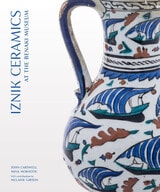
Iznik Ceramics at the Benaki Museum
John Carswell, Mina Moraitou, and Melanie Gibson
Gingko, 2023
The Benaki Museum of Islamic Art in Athens has a substantial collection of Iznik ceramics, intricate works created in the city of Iznik in Asia Minor that are decorated with vibrant colors and designs. Although well known to many who visit the museum, this collection—which includes tableware, tiles, and sherds—has never before been published in its entirety.
Archaeologist, scholar, and curator John Carswell first began studying and cataloging these objects in the 1980s. This project has since been revived and guided to fruition by the curator of the Benaki Museum of Islamic Art, Mina Moraitou, who has also contributed a chapter on the Museum’s founder Antonis Benakis and the formation of its Iznik collection. The catalog brings together these admired and sought-after ceramics, featuring over three hundred illustrations of pieces from the Museum’s collection.
Live Form
Women, Ceramics, and CommunityJenni Sorkin
University of Chicago Press, 2016
Sorkin focuses on three Americans who promoted ceramics as an advanced artistic medium: Marguerite Wildenhain, a Bauhaus-trained potter and writer; Mary Caroline (M. C.) Richards, who renounced formalism at Black Mountain College to pursue new performative methods; and Susan Peterson, best known for her live throwing demonstrations on public television. Together, these women pioneered a hands-on teaching style and led educational and therapeutic activities for war veterans, students, the elderly, and many others. Far from being an isolated field, ceramics offered a sense of community and social engagement, which, Sorkin argues, crucially set the stage for later participatory forms of art and feminist collectivism.
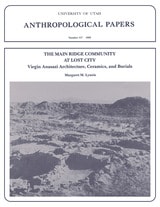
Main Ridge Community At Lost City
Virgin Anazazi Architecture, Ceramics, and BurialsMargaret Lyneis
University of Utah Press, 1992
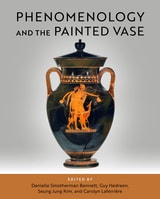
Phenomenology and the Painted Vase
Edited by Danielle Smotherman Bennett, Guy Hedreen, SeungJung Kim, and Carolyn Laferrière
University of Wisconsin Press, 2026
Most people today encounter ancient Greek vases as static, untouchable artifacts safely out of reach behind glass, in the quiet of a museum gallery. Once, however, these vessels were also useful objects, made to be held, filled, and generally used in a variety of settings, from the ritual to the quotidian. This volume considers these ancient vases together with the theoretical frameworks developed by pioneers of phenomenology such as Maurice Merleau-Ponty and Edmund Husserl, helping us encounter Greek vases as they once were. The principles of phenomenology require that we understand objects as active participants in shaping the manner in which humans experience the world. A phenomenological perspective allows us to see how the function and use of Greek vases shaped both their visual appearance and the perceptual experience of them—as well as our continued understanding of them today—while taking into account multisensory perspectives. With this alternative approach to the study of classical pottery, the authors offer new and illuminating insights not just into the objects in question but also into ancient Greek culture and life more broadly.
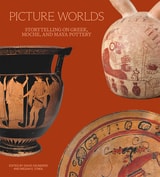
Picture Worlds
Storytelling on Greek, Moche, and Maya PotteryDavid Saunders
J. Paul Getty Trust, The, 2024
Satyrs and sphinxes, violent legumes, and a dancing maize deity figure in the stories painted on the pottery produced by the ancient Greek, Moche, and Maya cultures, respectively. Picture Worlds is the first book to examine the elaborately decorated terracotta vessels of these three distinct civilizations. Although the cultures were separated by space and time, they all employed pottery as a way to tell stories, explain the world, and illustrate core myths and beliefs. Each of these painted pots is a picture world. But why did these communities reach for pottery as a primary method of visual communication? How were the vessels produced and used? In this book, experts offer introductions to the civilizations, exploring these foundational questions and examining the painted imagery. Readers will be rewarded with a better understanding of each of these ancient societies, fascinating insights into their cultural commonalities and differences, and fresh perspectives on image making and storytelling, practices that remain vibrant to this day.
This volume is published to accompany an exhibition on view at the J. Paul Getty Museum at the Getty Villa from April 10 to July 29, 2024, and at the Michael C. Carlos Museum at Emory University from September 14 to December 15, 2024.
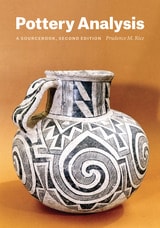
Pottery Analysis, Second Edition
A SourcebookPrudence M. Rice
University of Chicago Press, 2015
This new edition fully incorporates more than two decades of growth and diversification in the fields of archaeological and ethnographic study of pottery. It begins with a summary of the origins and history of pottery in different parts of the world, then examines the raw materials of pottery and their physical and chemical properties. It addresses ethnographic and ethnoarchaeological perspectives on pottery production; reviews the methods of studying pottery’s physical, mechanical, thermal, mineralogical, and chemical properties; and discusses how proper analysis of artifacts can reveal insights into their culture of origin. Intended for use in the classroom, the lab, and out in the field, this essential text offers an unparalleled basis for pottery research.
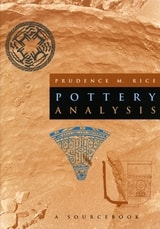
Pottery Analysis
A SourcebookPrudence M. Rice
University of Chicago Press, 1987
Shapely Bodies
The Image of Porcelain in Eighteenth-Century FranceChristine A. Jones
University of Delaware Press, 2013
Shapely Bodies: The Image of Porcelain in Eighteenth-Century France constructs the first cultural history of porcelain making in France. It takes its title from two types of “bodies” treated in this study: the craft of porcelain making shaped clods of earth into a clay body to produce high-end commodities and the French elite shaped human bodies into social subjects with the help of makeup, stylish patterns, and accessories. These practices crossed paths in the work of artisans, whose luxury objects reflected and also influenced the curves of fashion in the eighteenth century.
French artisans began trials to reproduce fine Chinese porcelain in the 1660s. The challenge proved impossible until they found an essential ingredient, kaolin, in French soil in the 1760s. Shapely Bodies differs from other studies of French porcelain in that it does not begin in the 1760s at the Sèvres manufactory when it became technically possible to produce fine porcelain in France, but instead ends there. Without the secret of Chinese porcelain, artisans in France turned to radical forms of experimentation. Over the first half of the eighteenth century, they invented artificial alternatives to Chinese porcelain, decorated them with French style, and, with equal determination, shaped an identity for their new trade that distanced it from traditional guild-crafts and aligned it with scientific invention. The back story of porcelain making before kaolin provides a fascinating glimpse into the world of artisanal innovation and cultural mythmaking.
To write artificial porcelain into a history of “real” porcelain dominated by China, Japan, and Meissen in Saxony, French porcelainiers learned to describe their new commodity in language that tapped into national pride and the mythic power of French savoir faire. Artificial porcelain cut such a fashionable image that by the mid-eighteenth century, Louis XV appropriated it for the glory of the crown. When the monarchy ended, revolutionaries reclaimed French porcelain, the fruit of a century of artisanal labor, for the Republic. Tracking how the porcelain arts were depicted in documents and visual arts during one hundred years of experimentation, Shapely Bodies reveals the politics behind the making of French porcelain’s image.
Published by University of Delaware Press. Distributed worldwide by Rutgers University Press.
The Mercantile Effect
Art and Exchange in the Islamicate World During the 17th and 18th CenturiesEdited by Sussan Babaie and Melanie Gibson
Gingko, 2017
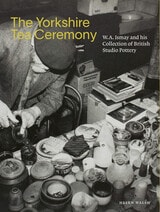
The Yorkshire Tea Ceremony
W. A. Ismay and His Collection of British Studio PotteryHelen Walsh
Paul Holberton Publishing, 2021
In the latter half of the twentieth century, “professional Yorkshireman” W. A. Ismay (1910–2001) amassed over 3,600 pieces by more than 500 potters. Surrounded by his family of pots, he lived in a tiny terraced house in Wakefield, Yorkshire, and left his collection and its associated archive to the city of York upon his death. This eclectic group of works contains objects created by many of the most significant potters working in the United Kingdom, including Lucie Rie, Hans Coper, Bernard Leach, and Michael Cardew, as well as lesser-known makers.
With new academic research into this little-studied collection and archive, Yorkshire Tea Ceremony explores Ismay’s journey as a collector and offers fresh perspectives on a marginalized area of British Modernism. Tracing the collection’s journey from private to public ownership illuminates issues surrounding the acquisition and reveals the transformative effect it has had on both curatorial practice and the ambition of regional public institutions. The W. A. Ismay Collection offers a well-documented example of the valuable contribution collectors can make to the British studio ceramics movement.
Published to coincide with the twentieth anniversary of the collection’s move from private to public ownership, this volume accompanies an exhibition at York Art Gallery’s Centre of Ceramic Art (CoCA).
Underworld
Imagining the Afterlife in Ancient South Italian Vase PaintingDavid Saunders
J. Paul Getty Trust, The, 2022
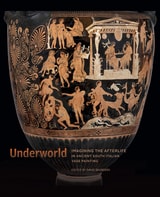
What happens to us when we die? What might the afterlife look like? For the ancient Greeks, the dead lived on, overseen by Hades in the Underworld. We read of famous sinners, such as Sisyphus, forever rolling his rock, and the fierce guard dog Kerberos, who was captured by Herakles. For mere mortals, ritual and religion offered possibilities for ensuring a happy existence in the beyond, and some of the richest evidence for beliefs about death comes from southern Italy, where the local Italic peoples engaged with Greek beliefs. Monumental funerary vases that accompanied the deceased were decorated with consolatory scenes from myth, and around forty preserve elaborate depictions of Hades’s domain.
For the first time in over four decades, these compelling vase paintings are brought together in one volume, with detailed commentaries and ample illustrations. The catalogue is accompanied by a series of essays by leading experts in the field, which provides a framework for understanding these intriguing scenes and their contexts. Topics include attitudes toward the afterlife in Greek ritual and myth, inscriptions on leaves of gold that provided guidance for the deceased, funerary practices and religious beliefs in Apulia, and the importance accorded to Orpheus and Dionysos. Drawing from a variety of textual and archaeological sources, this volume is an essential source for anyone interested in religion and belief in the ancient Mediterranean.