Results by title

10 books match the query 'Cervantes Saavedra, Miguel de'

cover of Cervantes and the Material World

Cervantes and the Material World

Carroll B. Johnson

University of Illinois Press, 2000

In this innovative revisiting of Don Quixote and the Novelas ejemplares, Carroll B. Johnson investigates in detail the cultural and material environment in which Cervantes placed his characters.
 
Cervantes and the Material World reveals a recurrent preoccupation with the clash of two different economic systems: a reenergized feudalism and an incipient capitalism. Overturning the common assumption that Don Quixote, Sancho Panza, and myriad other colorful characters carry out their adventures in a timeless social milieu, Johnson demonstrates how their perspectives and experiences are shaped by the events and crises of their immediate historical context.
 
Johnson examines how questions of the distribution of wealth, the ownership of the means of production, and membership in one or another economic order permeate Cervantes's fiction. Thoughtfully contextualizing key excerpts, he suggests how business activities, legal codes, and other materialist practices actively impinge on the lives of the characters, influencing and in some cases determining their motivations and their possibilities for action.
 
A major study that will change the face of Cervantes scholarship, Cervantes and the Material World is also an important resource for students of the Spanish Golden Age and Renaissance and baroque literature and culture.
 
[more]
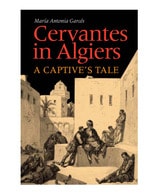
cover of Cervantes in Algiers: A Captive's Tale

Cervantes in Algiers

A Captive's Tale

Maria Antonia Garces

Vanderbilt University Press, 2005

Returning to Spain after fighting in the Battle of Lepanto and other Mediterranean campaigns against the Turks, the soldier Miguel de Cervantes was captured by Barbary pirates and taken captive to Algiers. The five years he spent in the Algerian bagnios or prison-houses (1575-1580) made an indelible impression on his works. From the first plays and narratives written after his release to his posthumous novel, the story of Cervantes's traumatic experience continuously speaks through his writings. Cervantes in Algiers offers a comprehensive view of his life as a slave and, particularly, of the lingering effects this traumatic experience had on his literary production.

No work has documented in such vivid and illuminating detail the socio-political world of sixteenth-century Algiers, Cervantes's life in the prison-house, his four escape attempts, and the conditions of his final ransom. Garces's portrait of a sophisticated multi-ethnic culture in Algiers, moreover, is likely to open up new discussions about early modern encounters between Christians and Muslims. By bringing together evidence from many different sources, historical and literary, Garces reconstructs the relations between Christians, Muslims, and renegades in a number of Cervantes's writings.

The idea that survivors of captivity need to repeat their story in order to survive (an insight invoked from Coleridge to Primo Levi to Dori Laub) explains not only Cervantes's storytelling but also the book that theorizes it so compellingly. As a former captive herself (a hostage of Colombian guerrillas), the author reads and listens to Cervantes with another ear.
[more]
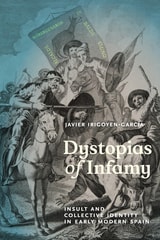
cover of Dystopias of Infamy: Insult and Collective Identity in Early Modern Spain

Dystopias of Infamy

Insult and Collective Identity in Early Modern Spain

Javier Irigoyen-García

Bucknell University Press, 2022

Insults, scorn, and verbal abuse—frequently deployed to affirm the social identity of the insulter—are destined to fail when that language is appropriated and embraced by the maligned group. In such circumstances, slander may instead empower and reinforce the collective identity of those perceived to be a threat to an idealized society. In this innovative study, Irigoyen-Garcia examines how the discourse and practices of insult and infamy shaped the cultural imagination, anxieties, and fantasies of early modern Spain. Drawing on sixteenth- and seventeenth-century literary works, archival research, religious and political literature, and iconographic documents, Dystopias of Infamy traces how the production of insults haunts the imaginary of power, provoking latent anxieties about individual and collective resistance to subjectification. Of particular note is Cervantes’s tendency to parody regulatory fantasies about infamy throughout his work, lampooning repressive law for its paradoxical potential to instigate the very defiance it fears.
[more]
cover of Living Quixote: Performative Activism in Contemporary Brazil and the Americas

Living Quixote

Performative Activism in Contemporary Brazil and the Americas

Rogelio Minana

Vanderbilt University Press, 2020

The 400th anniversaries of Don Quixote in 2005 and 2015 sparked worldwide celebrations that brought to the fore its ongoing cultural and ideological relevance. Living Quixote examines contemporary appropriations of Miguel de Cervantes's masterpiece in political and social justice movements in the Americas, particularly in Brazil.

In this book, Cervantes scholar Rogelio Miñana examines long-term, Quixote-inspired activist efforts at the ground level. Through what the author terms performative activism, Quixote-inspired theater companies and nongovernmental organizations deploy a model for rewriting and enacting new social roles for underprivileged youth. Unique in its transatlantic, cross-historical, and community-based approach, Living Quixote offers both a new reading of Don Quixote and an applied model for cultural activism—a model based, in ways reminiscent of Paulo Freire, on the transformative potential of performance, literature, and art.
[more]
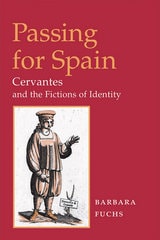
cover of Passing for Spain: CERVANTES AND THE FICTIONS OF IDENTITY

Passing for Spain

CERVANTES AND THE FICTIONS OF IDENTITY

Barbara Fuchs

University of Illinois Press, 2003

Passing for Spain charts the intersections of identity, nation, and literary representation in early modern Spain. Barbara Fuchs analyzes the trope of passing in Don Quijote and other works by Cervantes, linking the use of disguise to the broader historical and social context of Counter-Reformation Spain and the religious and political dynamics of the Mediterranean Basin.
 
In five lucid and engaging chapters, Fuchs examines what passes in Cervantes’s fiction: gender and race in Don Quijote and “Las dos doncellas”; religion in “El amante liberal” and La gran sultana; national identity in the Persiles and “La española inglesa.” She argues that Cervantes represents cross-cultural impersonation -- or characters who pass for another gender, nationality, or religion -- as challenges to the state’s attempts to assign identities and categories to proper Spanish subjects.
 
Fuchs demonstrates the larger implications of this challenge by bringing a wide range of literary and political texts to bear on Cervantes’s representations. Impeccably researched, Passing for Spain examines how the fluidity of individual identity in early modern Spain undermined a national identity based on exclusion and difference.
 
[more]
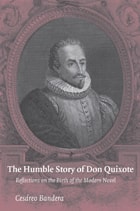
cover of The Humble Story of Don Quixote: Reflections on the Birth of the Modern Novel

The Humble Story of Don Quixote

Reflections on the Birth of the Modern Novel

Cesáreo Bandera

Catholic University of America Press, 2006
In this original study by Cesáreo Bandera, the intimate connection between the simplicity and humility of the story and its greatness is explored. Other comparisons are also made: the story of the picaresque rogue, on the one hand, and the psychological insights of the pastoral novel, on the other.
[more]
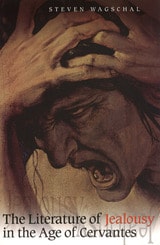
cover of The Literature of Jealousy in the Age of Cervantes

The Literature of Jealousy in the Age of Cervantes

Steven Wagschal

University of Missouri Press, 2007

Frequent and complex representations of jealousy in early modern Spanish literature offer symbolically rich and often contradictory images. Steven Wagschal examines these occurrences by illuminating the theme of jealousy in the plays of Lope de Vega, the prose of Miguel de Cervantes, and the complex poetry of Luis de Góngora. Noting the prevalence of this emotion in their work, he reveals what jealousy offered these writers at a time when Spain was beginning its long decline.
            Wagschal examines jealousy not only in canonical texts—The Jealous Old Man from Extremadura, The Commanders of Cordoba—but also in less-studied writings such as Lope de Vega’s Jealous Arminda and In Love but Discreet and Góngora’s “What of the Tall Envious Mountains.” Through close analysis of numerous works, read in relation to one another, he demonstrates how the rhetorical elaboration of jealousy is linked to the ideological makeup of the texts—complicating issues of race, class, gender, morality, epistemology, and aesthetics—and proposes that the theme of jealousy offered a means for working through political and cultural problems involving power.
            Grounding his study in the work of thinkers ranging from Vives and Descartes to Freud and DeSousa, Wagschal also draws on classical antiquity to unravel myths that impinge upon the texts he considers. By showing that the greatest hyperbole of each of these writers is a representation of jealousy, he calls for a reconsideration of an era’s literary giants, arguing not only for a reinterpretation of settled views on Cervantes but also for a reconsideration of Góngora’s role in the development of modern European aesthetics.
            With its fresh insights into the interrelationships among literature, art, and society, Wagschal’s study offers background theory for analyzing the emotions in literature and is the first book to treat an emotion in any national literature from the perspective of contemporary philosophy of mind. With its cogent insights into the jealous mind, it raises issues relevant both to the early modern period and to our contemporary world.
[more]
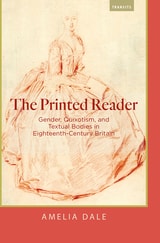
cover of The Printed Reader: Gender, Quixotism, and Textual Bodies in Eighteenth-Century Britain

The Printed Reader

Gender, Quixotism, and Textual Bodies in Eighteenth-Century Britain

Amelia Dale

Bucknell University Press, 2019

Shortlisted for the 2021 BARS First Book Prize (British Association for Romantic Studies)​

The Printed Reader explores the transformative power of reading in the eighteenth century, and how this was expressed in the fascination with Don Quixote and in a proliferation of narratives about quixotic readers, readers who attempt to reproduce and embody their readings. Through intersecting readings of quixotic narratives, including work by Charlotte Lennox, Laurence Sterne, George Colman, Richard Graves, and Elizabeth Hamilton, Amelia Dale argues that literature was envisaged as imprinting—most crucially, in gendered terms—the reader’s mind, character, and body. The Printed Reader brings together key debates concerning quixotic narratives, print culture, sensibility, empiricism, book history, and the material text, connecting developments in print technology to gendered conceptualizations of quixotism. Tracing the meanings of quixotic readers’ bodies, The Printed Reader claims the social and political text that is the quixotic reader is structured by the experiential, affective, and sexual resonances of imprinting and impressions. 

Published by Bucknell University Press. Distributed worldwide by Rutgers University Press.
[more]
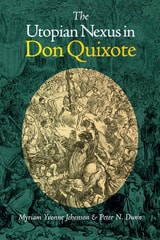
cover of The Utopian Nexus in Don Quixote

The Utopian Nexus in Don Quixote

Myriam Yvonne Jehenson

Vanderbilt University Press, 2006

Jehenson and Dunn explore the mythic utopian desires that drive Don Quixote and Sancho Panza in Don Quixote. By tracing the discourses surrounding what they identify as a myth of abundance and a myth of "simple wants" throughout Spain and the rest of Europe at the time, Jehenson and Dunn are able to contextualize some of the stranger incidents in Don Quixote, including Camacho's wedding. They bring to the forefront three aspects of the novel: the cultural and juridical background of Don Quixote's utopian program for reviving the original property-less condition of the Age of Gold; the importance for Sancho Panza of the myths of Cockaigne and Jauja; and the author's progressive skepticism about utopian programs.
[more]
cover of Tilting Cervantes: Baroque Reflections on Postmodern Culture

Tilting Cervantes

Baroque Reflections on Postmodern Culture

Bruce R. Burningham

Vanderbilt University Press, 2008

Tilting Cervantes examines several contemporary texts -- Fight Club, Brazil, The Matrix, and The Moor's Last Sigh, among others -- by reflecting them against a cluster of early modern Spanish and Latin American literary works, principally Don Quixote. Through a deliberate juxtaposition of these cross-cultural and cross-epochal texts, this book explores the notion that each of these varied cultural products can be read -in a very Borgesian manner- as precursors to each other, especially for contemporary readers who may not come to them in their "proper" chronological order. At the same time, and within this larger juxtaposition, this book examines the interrelated baroque and postmodern preoccupation with mirrors and self-reflexivity, and thus argues that many postmodern writers and performers do not so much break new ground as simply rediscover terrain already explored by such baroque literary figures as Cervantes, Lope de Vega, Francisco de Quevedo, and Sor Juana Ines de la Cruz.
[more]