Results by title
6 books match the query 'Cessario, Romanus'
A Short History of Thomism
Romanus Cessario, O.P.
Catholic University of America Press, 2005
Using carefully selected resources, Romanus Cessario has composed a short account of the history of the Thomist tradition as it manifests itself through the more than seven hundred years that have elapsed since the death of Saint Thomas
[more]
Introduction to Moral Theology (Catholic Moral Thought, Volume 1)
Romanus Cessario, O.P.
Catholic University of America Press, 2001
The present volume, the first in the new Catholic Moral Thought series, responds to the need for a new introduction to the basic and central elements of Catholic moral theology written in the light of Veritatis splendor.
[more]
Introduction to Moral Theology, revised edition
Romanus Cessario
Catholic University of America Press, 2013
Originally published in 2001, Introduction to Moral Theology responded to the need for a new introduction to the basic and central elements of Catholic moral theology written in the light of Veritatis splendor. Since then, it has become a standard text for students and a reputable resource on such topics as moral theology and the good of the human person created in God's image; natural law; principles of human action; determination of the moral good through objects, ends, and circumstances; and the virtues, gifts of the Holy Spirit, and the Beatitudes.
[more]
On the Virtues
Jean Capreolus
Catholic University of America Press, 2001
The selection from Capreolus's work represented in this translation shows him defending Aquinas's conclusions on faith, hope, charity, the gifts of the Holy Spirit, and the virtues against such adversaries.
[more]
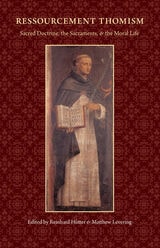
Ressourcement Thomism
Sacred Doctrine, the Sacraments, and the Moral LifeReinhard Hütter
Catholic University of America Press, 2010
The essays in this volume explore three areas in which St. Thomas Aquinas's voice has never fallen silent: sacred doctrine, the relationship of sacraments and metaphysics, and the central role of virtue in moral theology.
[more]
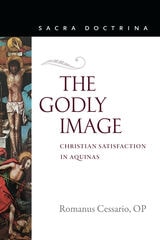
The Godly Image
Christian Satisfaction in AquinasRomanus Cessario
Catholic University of America Press, 2020
Christian satisfaction stands at the center of the Church’s teaching about salvation. Satisfaction pertains to studies about Christ, redemption, the Sacraments, and pastoral practice. The topic also enters into questions about God and the creature as well as about the divine mercy and providence. Somewhat neglected in the period after Vatican II, satisfaction now appears to scholars as the forgotten key to entering deeply into the mystery of Christ and his work. Seminarians especially will benefit from studying the place satisfaction holds in Catholic life.
Further, ecumenical work requires a proper understanding of the place that satisfaction holds in Christian theology. Various factors operative since the sixteenth century have worked to displace satisfaction almost entirely from reformed practice and theology. To address such concerns, The Godly Image, has, over the past several decades and more, done a great deal to put satisfaction within its proper context of image-restoration. That is, to interpret satisfaction within the context of the divine mercy and not the divine justice. This unique contribution to satisfaction studies owes a great deal to the achievement of Saint Thomas Aquinas. In this sense, the book enacts a retrieval of the theology of the high classical period. Like much of Aquinas’s refined teaching, a proper understanding requires appeal to the commentatorial tradition that follows him. Interested students will find in this study the touchstones for further studies of these authors.
The Godly Image aims also to distinguish the theology of Aquinas from that of the medieval author with whom the notion of satisfaction remains mostly identified, that is, Anselm of Canterbury. Although not a developed focus of the book’s contents, the attentive reader will recognize that Aquinas treats Saint Anselm with a reverential reading, even as the Common Doctor moves significantly away from interpretations of satisfaction that suggest that an angry God exacts from his innocent Son a painful substitutional penalty for a fallen human race.
[more]