Results by title
4 books match the query 'Chambers, Anthony'

A Tanizaki Feast
The International Symposium in VeniceAdriana Boscaro and Anthony Hood Chambers, Editors
University of Michigan Press, 1998
This volume presents 18 eighteen essays, written by scholars from six countries, on Tanizaki Jun’ichiro (1886–1965), one of the great writers of the 20th century. The essays were originally prepared for a landmark international symposium in Venice in 1995, at which 22 speakers addressed an audience of about two hundred students and scholars in the Aula Magna of the University of Venice. Topics include Tanizaki’s fiction, plays, and film scenarios; his aesthetics; his place in Japanese intellectual history; his depiction of the West; his use of humor; and film adaptations of his works. In 1964 Tanizaki was elected to honorary membership in the American Academy and Institute of Arts and Letters, the first Japanese to be so honored; and it is widely believed that he was being considered for the Nobel Prize in Literature.
[more]
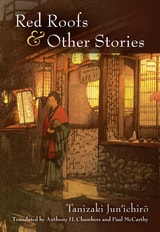
Red Roofs and Other Stories
Tanizaki Jun'ichiro; Translated by Anthony H. Chambers and Paul McCarthy
University of Michigan Press, 2016
Tanizaki Jun'ichiro (1886–1965), the author of Naomi; A Cat, a Man, and Two Women; and The Makioka Sisters, was one of the great writers of the twentieth century. The four stories in this volume date from the first and second decades of Tanizaki’s long career and reflect themes that appear throughout his work: exoticism, sexuality, sadomasochism, contrasts between traditional and modern societies, disparities between appearance and reality, the power of dreams, amorality, an interest in cinema, and a fascination with the techniques of storytelling. The stories—translated into English here for the first time—are: “The Strange Case of Tomoda and Matsunaga” (“Tomoda to Matsunaga no hanashi,” 1926), “A Night in Qinhuai” (“Shinwai no yo,” 1919), “The Magician” (“Majutsushi,” 1917), and “Red Roofs” (“Akai yane,” 1925).
[more]

Remembering Tanizaki Jun’ichiro and Matsuko
Diary Entries, Interview Notes, and Letters, 1954-1989Anthony H. Chambers
University of Michigan Press, 2017
Remembering Tanizaki Jun’ichirō and Matsuko provides previously unpublished memories, anecdotes, and insights into the lives, opinions, personalities, and writings of the great novelist Tanizaki Jun’ichirō (1886–1965) and his wife Matsuko (1903–1991), gleaned from the diaries of Edward Seidensticker and two decades of Anthony Chambers’s conversations with Mrs. Tanizaki and others who were close to the Tanizaki family.
[more]
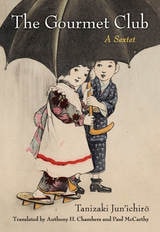
The Gourmet Club
A SextetTanizaki Jun'ichiro; Translated by Anthony H. Chambers and Paul McCarthy
University of Michigan Press, 2017
The decadent tales in this collection span 45 years in the extraordinary career of Japan’s master storyteller, Tanizaki Jun’ichiro¯ (1886–1965), the author of Naomi, A Cat, a Man, and Two Women, and The Makioka Sisters. Made accessible in English by the expertise of translators Anthony H. Chambers and Paul McCarthy, the stories in The Gourmet Club vividly explore an array of human passions. In “The Children,” three mischievous friends play sadomasochistic games in a mysterious Western-style mansion. The sybaritic narrator of “The Secret” experiments with cross-dressing as he savors the delights of duplicity. “The Two Acolytes” evokes the conflicting attractions of spiritual fulfillment and worldly pleasure in medieval Kyoto. In the title story, the seductive tastes, aromas, and textures of outlandish Chinese dishes blend with those of the seductive hands that proffer them to blindfolded gourmets. In “Mr. Bluemound,” Tanizaki, who wrote for a film studio in the early 1920s, considers the relationship between a flesh-and-blood actress and her image fixed on celluloid, which one memorably degenerate admirer is obsessed with. And, finally, “Manganese Dioxide Dreams” offers a tantalizing insight into the author’s mind as he weaves together the musings of an old man very like Tanizaki himself-Chinese and Japanese cuisine, a French murder movie, Chinese history, and the contents of a toilet bowl. These beautifully translated stories will intrigue and entertain readers who are new to Tanizaki, as well as those who have already explored the bizarre world of his imagination.
[more]