Results by title
2 books match the query 'Champā (Kingdom)'
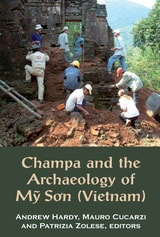
Champa and the Archaeology of M? So'n (Vietnam)
Edited by Andrew Hardy, Mauro Cucarzi, and Patrizia Zolese
National University of Singapore Press, 2009
The kings of ancient Champa, a civilization located in the central region of today's Vietnam, started building sacred temples in a circular valley more than 1500 years ago. The monuments, now known by the Vietnamese name M? So'n, were discovered by nineteenth-century colonial soldiers and first studied by the French architect Henri Parmentier. Bombed during the Vietnam War, the ruins of the brick towers, decorated with exquisite carvings and sculptures, were designated as a UNESCO World Cultural Heritage site in 1999. An Italian team has worked at the site for the last ten years, doing archaeological research and restoration work in cooperation with Vietnamese specialists. This book is the first published volume based on their efforts. The opening section consists of historical, anthropological and architectural studies of the civilization of Champa. The remainder of the book presents an unusually intimate and extensively illustrated portrait of the archaeologists' research and restoration work at M? So'n. While this book is important for specialists and students of the history and archaeology of Champa and Southeast Asia, it also tells a fascinating story that will appeal to general readers and visitors to this exceptional archaeological site.
[more]
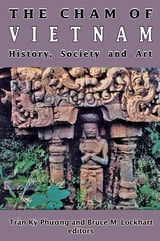
The Cham of Vietnam
History, Society and ArtEdited by Bruce Lockhart and Tran Ky Phuong
National University of Singapore Press, 2011
The Cham people once inhabited and ruled over a large stretch of what is now the central Vietnamese coast. The Indianized civilization of this Austronesian-speaking group flourished between roughly the third and fifteenth centuries, and they competed with the Vietnamese and Khmers for influence in mainland Southeast Asia, but the Cham territories eventually became part of modern Vietnam. Written by specialists in history, archaeology, anthropology, art history, and linguistics, the essays in The Cham of Vietnam contribute to a revisionist overview of Cham history by re-assessing the ways the Cham have been studied by different generations of scholars of what "Champa" has represented over the centuries of its history. Several chapters focus on archaeological work in central Vietnam and position recent discoveries within the broader framework of Cham history, but there are also discussions of Cham economy, society and culture. Through this study of a people that did not become a nation-state, the book provides penetrating insights into the history of Vietnam and on the broader dynamic of Southeast Asian history.
[more]