Results by title
2 books match the query 'Chandler, Raymond'
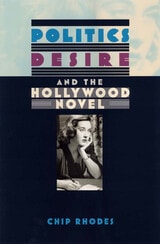
Politics, Desire, and the Hollywood Novel
Chip Rhodes
University of Iowa Press, 2008
The story of what happens when a serious writer goes to Hollywood has become a cliché: the writer is paid well but underappreciated, treated like a factory worker, and forced to write bad, formulaic movies. Most fail, become cynical, drink to excess, and at some point write a bitter novel that attacks the film industry in the name of high art. Like many too familiar stories, this one neither holds up to the facts nor helps us understand Hollywood novels. Instead, Chip Rhodes argues, these novels tell us a great deal about the ways that Hollywood has shaped both the American political landscape and American definitions of romance and desire.
Rhodes considers how novels about the film industry changed between the studio era of the 1930s and 1940s and the era of deregulated film making that has existed since the 1960s. He asserts that Americans are now driven by cultural, rather than class, differences and that our mainstream notion of love has gone from repressed desire to “abnormal desire” to, finally, strictly business.
Politics, Desire, and the Hollywood Novel pays close attention to six authors—Nathanael West, Raymond Chandler, Budd Schulberg, Joan Didion, Bruce Wagner, and Elmore Leonard—who have toiled in the film industry and written to tell about it. More specifically, Rhodes considers both screenplays and novels with an eye toward the different formulations of sexuality, art, and ultimately political action that exist in these two kinds of storytelling.
[more]
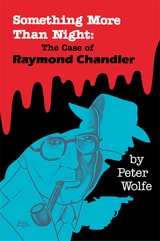
Something More than Night
The Case of Raymond ChandlerPeter Wolfe
University of Wisconsin Press, 1985
Raymond Chandler’s eminence as a mystery writer is unchallenged. Somerset Maugham and George Grella both rate him above Dashiell Hammett; Eric Partridge deems him “a serious artist and a very considerable novelist,” while praising him as “one of the finest novelists of his time.” Peter Wolfe examines the many sides of Chandler and his work—his apparent will to self-destruct, his obsession with beautiful women, and his apparent brush with homosexuality—and casts much new and needed light on this major American author.
[more]