Results by title
14 books match the query 'Changing World'
Aging in a Changing World
Older New Zealanders and Contemporary MulticulturalismMolly George
Rutgers University Press, 2022
An American Dilemma Revisited
Race Relations in a Changing WorldObie, Jr. Clayton
Russell Sage Foundation, 1996
Christianity and Process Thought
Spirituality for a Changing WorldJoseph A. Bracken
Templeton Press, 2006
“If someone were to ask,‘Where is God?’ how would you respond?”
Joseph A. Bracken, SJ, uses this question as a springboard to introduce the process-relational metaphysics of Alfred North Whitehead and other process theologians as he tries to reconcile the sometimes-conflicting views of traditional Christian doctrines and the modern scientific world. To present this material in an accessible manner to a wider audience, Bracken reworks Whitehead’s “model” of the God-world relationship, showing that God is involved in an ongoing, ever-changing relationship with humans and other . He also discusses the work of other contemporary theologians to help Christians come to terms with their role in our multi-dimensional pluralistic society.
Bracken examines divine and human creativity, the collective power of good and evil, divine providence and human freedom, prayer, altruism, and the basic question, “What is truth?” He shows how Whitehead&rsqio;s process thought approach to these issues can in fact "harmonize" traditional Christian beliefs and contemporary culture, benefiting both faith and reason.
Understanding the God-world relationship subtly influences our attitude toward ourselves, toward other human beings, and indeed toward all of God’s creatures, says Bracken. His revision of Whitehead's metaphysical vision in terms of a cosmic community shows how modern views of the world and God can be accepted and kept in balance with the traditional biblical views found in the Christian faith and how this balance can help Christians make better choices in a world shaped both by contemporary natural science and by traditional Christian spirituality.
“If we truly believe that in God we live and move and have our being and that as a result we share with the divine persons in a deeply communitarian way of life together with all of God’s creatures, we may be more readily inclined to make the periodic sacrifice of personal self-interest so as to pursue the higher good of sustained life in community. In the end, it is simply a matter of seeing the ‘bigger picture,’ realizing what life is ultimately all about.”
Fire Otherwise
Ethnobiology of Burning for a Changing WorldEdited by Cynthia T. Fowler and James R. Welch
University of Utah Press, 2018
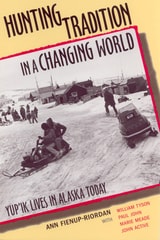
Hunting Tradition in a Changing World
Yup'ik Lives in Alaska TodayFienup-Riordan, Ann
Rutgers University Press, 2000
Lessons and Legacies I
The Meaning of the Holocaust in a Changing WorldPeter Hayes
Northwestern University Press, 1991
Lessons and Legacies II
Teaching the Holocaust in a Changing WorldDonald G. Schilling
Northwestern University Press, 1998
Lessons and Legacies II focuses on matters unique to Holocaust education. Consisting of selected papers delivered at the second Lessons and Legacies conference in 1992, the volume is organized in three sections: Issues, Resources, and Applications. Taken individually, the essays speak directly to specific concerns surrounding Holocaust education: the growing maturity of the Holocaust as a field of study; the difficult issue of explaining the perpetrators' behavior; the process of decision-making within Jewish communities during the Holocaust; issues of gender and family; the scope and content of survivor literature; and the structure of courses and the implications of being an educator in the field. Taken as a whole, the volume speaks to the reciprocal and mutually reinforcing relationship between teaching and scholarship in this important field.
Lessons and Legacies XI
Expanding Perspectives on the Holocaust in a Changing WorldEdited and with an introduction by Hilary Earl and Karl A. Schleunes
Northwestern University Press, 2015
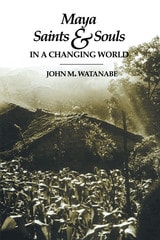
Maya Saints and Souls in a Changing World
By John M. Watanabe
University of Texas Press, 1992
The Maya of Santiago Chimaltenango have experienced increasingly rapid, even violent, integration into Guatemalan society in the last fifty years, yet they still distinguish themselves ethnically from Spanish-speaking Guatemalans and other Maya. Why this sense of ethnic identity persists—and also changes—over time is the focus of Maya Saints and Souls in a Changing World, a beautifully written ethnography of a Mam-speaking Maya town in the western highlands of Guatemala.
John Watanabe uniquely explores how Chimaltecos themselves define their local distinctiveness. This approach uncovers significant continuities in lifeways and world view that might otherwise remain imperceptible to an outsider.
Another important feature of the study is that it updates Charles Wagley's pioneering research in the community during the 1930s. Watanabe identifies both the external, historical factors that have prompted change in the community since Wagley's time and the people's responses to these changes.
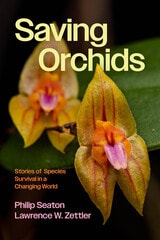
Saving Orchids
Stories of Species Survival in a Changing WorldPhilip Seaton and Lawrence W. Zettler
University of Chicago Press, 2025
A gorgeously illustrated ode to the beauty and significance of orchids—and to those fighting to save these unique plants across the globe.
Until recently, a myriad of lifeforms enriched our lives. In some places, listening to a nighttime chorus of frogs in the neighborhood marsh was an archetypal touchstone of childhood. Children would search for tadpoles, just steps away from native Lady’s Tresses orchids. Year by year, the chorus became quieter. Today, only a few frogs and orchids remain. Is this the world we want our children to inherit? Do we want orchids to slip through our fingers and, eventually, to vanish?
For biologists Philip Seaton and Lawrence W. Zettler, and the intrepid orchid defenders they introduce in this book, the answer is no. Seaton and Zettler have traveled the world over the past three decades, studying orchids—flagship species for plant conservation. Stunningly illustrated, this book is a culmination of stories about the people—young and old alike—dedicated to protecting these remarkable plants from extinction. In the 19th century, collectors removed, shipped, and sold vast numbers of orchids from the wild. Today, scientists strive to reverse this harm—to protect and rebuild remnants of orchids’ original habitats against human disruption, including climate change. Seaton and Zettler reveal these plants’ bizarre pollination partners, risky liaisons with fungi, and adaptation to human domestication to show that learning orchids’ scientific secrets—and finding human helpers—is key to these plants’ survival.
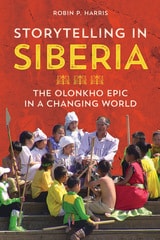
Storytelling in Siberia
The Olonkho Epic in a Changing WorldRobin P. Harris
University of Illinois Press, 2017
Drawing on her ten years of living in the Russian North, Robin P. Harris documents how the Sakha have used the Masterpiece program to revive olonkho and strengthen their cultural identity. Harris’s personal relationships with and primary research among Sakha people provide vivid insights into understanding olonkho and the attenuation, revitalization, transformation, and sustainability of the Sakha’s cultural reemergence. Interdisciplinary in scope, Storytelling in Siberia considers the nature of folklore alongside ethnomusicology, anthropology, comparative literature, and cultural studies to shed light on how marginalized peoples are revitalizing their own intangible cultural heritage.

The Royal Observatory, Greenwich, 1881–1939
Astronomy, Astronomers and Heritage in a Changing WorldLee T. Macdonald
University College London, 2026
The first detailed history of the Royal Observatory at Greenwich covering the period after the retirement of George Airy, seventh Astronomer Royal, in 1881.
This book charts an under-researched period in the long history of the Royal Observatory at Greenwich. It covers both the scientific and social-political history of the Royal Observatory, focusing on its significance within the history of astronomy and UK history more generally. Using a wealth of archival material—much of which was previously unpublished—Lee T. Macdonald's narrative brings the day-to-day operations of the Observatory to life and reveals how its mission in positional astronomy, combined with its cutting-edge research in photographic mapping and the study of solar eclipses, continues to expand the frontiers of astronomical research.

The Script of Life in Modern Society
Entry into Adulthood in a Changing WorldMarlis Buchmann
University of Chicago Press, 1989
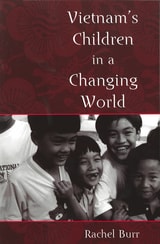
Vietnam's Children in a Changing World
Rachel Burr
Rutgers University Press, 2006
Like the majority of children living in the global South today, a large number of Vietnamese youths work to help support their families. International human rights organizations have focused on these children, seeking to bring their lives into line with an understanding of childhood that is generally accepted in the developed world.
In this ethnographic study, Rachel Burr draws on her daily observations of working children in Hanoi and argues that these youngsters are misunderstood by the majority of agencies that seek to help them. Most aid programs embrace a model of childhood that is based on Western notions of individualism and bountiful resources. They further assume that this model is universally applicable even in cultures that advocate a collective sense of self and in countries that do not share the same economic advantages.
Burr presents the voices and experiences of Vietnamese children in the streets, in a reform school, and in an orphanage to show that workable solutions have become lost within the rhetoric propagated by aid organizations. The reality of providing primary education or adequate healthcare for all children, for instance, does not stand a chance of being achieved until adequate resources are put in place. Yet, organizations preoccupied with the child rights agenda are failing to acknowledge the distorted global distribution of wealth in favor of Western nations.
Offering a unique, firsthand look at the experiences of children in contemporary Vietnam, this book also provides a broad analysis of how internationally led human rights agendas are often received at the local level.