Results by title
3 books match the query 'Charting'

Charting an Empire
Geography at the English Universities 1580-1620Lesley B. Cormack
University of Chicago Press, 1997
Cormack demonstrates that geography was part of the Arts curriculum between 1580 and 1620, read at university by a broad range of soon-to-be political, economic, and religious leaders. By teaching these young Englishmen to view their country in a global context, and to see England playing a major role on that stage, geography supplied a set of shared assumptions about the feasibility and desirability of an English empire. Thus, the study of geography helped create an ideology of empire that made possible the actual forays of the next century.
Geography emerges in Cormack's account as the fruitful ground between college and court, in whose well-prepared soil the seeds of English imperialism took root. Charting an Empire will interest historians of science, geography, cartography, education, and empire.

Confronting Technopoly
Charting a Course towards Human SurvivalEdited by Phil Rose
Intellect Books, 2017
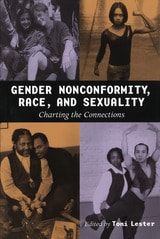
Gender Nonconformity, Race, and Sexuality
Charting the ConnectionsToni Lester
University of Wisconsin Press, 2002
How are culturally constructed stereotypes about appropriate sex-based behavior formed? If a person who is biologically female behaves in a stereotypically masculine manner, what are the social, political, and cultural forces that may police her behavior? And how will she manage her gendered image in response to that policing? Finally, how do race, ethnicity, or sexuality inform the way that sex-based roles are constructed, policed, or managed?
The chapters in this book address such questions from social science perspectives and then examine personal stories of reinvention and transformation, including discussions of the lives of dancers Isadora Duncan and Bill T. Jones, playwright Lorraine Hansberry, and surrealist artist Claude Cahun.Writers from fields as diverse as history, art, psychology, law, literature, sociology, and the activist community look at gender nonconformity from conceptual, theoretical, and empirical perspectives. They emphasize that gender nonconformists can be gay, lesbian, bisexual, transgender, or anyone else who does not fit a model of Caucasian heterosexual behavior characterized by binary masculine and feminine roles.