Results by title
3 books match the query 'Chicago Poems'

Chicago Poems
Carl Sandburg
University of Illinois Press, 1992
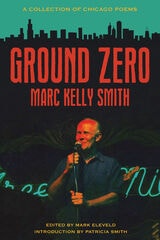
Ground Zero
A Collection of Chicago PoemsMarc Kelly Smith; Edited by Mark Eleveld; With an introduction by Patricia Smith
Northwestern University Press, 2021
Inception and implosion, Chicago’s grit and grandiosity all come together in the finite poetic power of the original Slam igniter, renowned poet Marc Kelly Smith and his retrospect denotation, Ground Zero.
A cultural, community, and adversarial figure, Smith has challenged the status quo and raised new questions about an environment in a state of continuous calamity. Smith’s power and influence have inspired celebrated figures who cut their teeth on both the stage and the page under his watchful eye—always speaking in the traditions of Carl Sandburg and Gwendolyn Brooks. Ground Zero challenges but pays homage to the thousand underbellies of Chicago with Smith’s wicked, cigarette-in-the-beer language: “I ain’t diggin’ no concrete coffin, / No backyard mausoleum / To keep me a pickle sweet aplenty / Plied with sardines and pork sausage wieners / Livin’ out the chance that some bubble-flesh victim / Will come puckered up and scabby lipped / To kiss me in the name of a new mankind.”
Ground Zero leaves no doubt. The Slampapi / instigator / visionary / you-may-love-me-or-hate-me-but-my-history-will-always-be-chiseled-in-everything-the-poetry-world-does-next collects a survey of his land and his experience, no matter how beautiful or flawed. This book lets the landmines of imagery and Chicago’s slow and uneasy drawl showcase one of our most original voices.
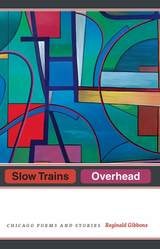
Slow Trains Overhead
Chicago Poems and StoriesReginald Gibbons
University of Chicago Press, 2010
Few people writing today could successfully combine an intimate knowledge of Chicago with a poet’s eye, and capture what it’s really like to live in this remarkable city. Embracing a striking variety of human experience—a chance encounter with a veteran on Belmont Avenue, the grimy majesty of the downtown El tracks, domestic violence in a North Side brownstone, the wide-eyed wonder of new arrivals at O’Hare, and much more—these new and selected poems and stories by Reginald Gibbons celebrate the heady mix of elation and despair that is city life. With Slow Trains Overhead, he has rendered a living portrait of Chicago as luminously detailed and powerful as those of Nelson Algren and Carl Sandburg.
Gibbons takes the reader from museums and neighborhood life to tense proceedings in Juvenile Court, from comically noir-tinged scenes at a store on Clark Street to midnight immigrants at a gas station on Western Avenue, and from a child's piggybank to nature in urban spaces. For Gibbons, the city’s people, places, and historical reverberations are a compelling human array of the everyday and the extraordinary, of poverty and beauty, of the experience of being one among many. Penned by one of its most prominent writers, Slow Trains Overhead evokes and commemorates human life in a great city.