Results by title
3 books match the query 'Chicano Politics'
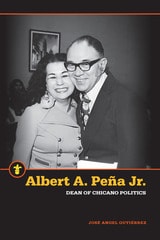
Albert A. Peña Jr.
Dean of Chicano PoliticsJosé Angel Gutiérrez
Michigan State University Press, 2017
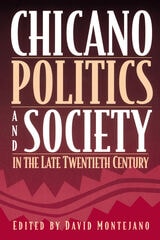
Chicano Politics and Society in the Late Twentieth Century
Edited by David Montejano
University of Texas Press, 1999
The various protest movements that together constituted the Chicano Movement of the 1960s and 1970s urged a "politics of inclusion" to bring Mexican Americans into the mainstream of United States political and social life. This volume of ten specially commissioned essays assesses the post-movement years, asking "what went wrong? what went right? and where are we now?" Collectively, the essays offer a wide-ranging portrayal of the complex situation of Mexican Americans as the twenty-first century begins.
The essays are grouped into community, institutional, and general studies, with an introduction by editor Montejano. Geographically, they point to the importance of "Hispanic" politics in the Southwest, as well as in Chicago wards and in the U.S. Congress, with ramifications in Mexico and Central America. Thematically, they discuss "non-traditional" politics stemming from gender identity, environmental issues, theatre production, labor organizing, university policymaking, along with the more traditional politics revolving around state and city government, the Congressional Hispanic Caucus, and various advocacy organizations.
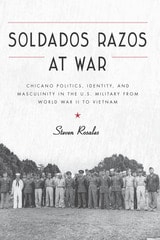
Soldados Razos at War
Chicano Politics, Identity, and Masculinity in the U.S. Military from World War II to VietnamSteven Rosales
University of Arizona Press, 2017
What were the catalysts that motivated Mexican American youth to enlist or readily accept their draft notices in World War II, Korea, or Vietnam? In Soldados Razos at War, historian and veteran Steven Rosales chronicles the experiences of Chicano servicemen who fought for the United States, explaining why these men served, how they served, and the impact of their service on their identity and political consciousness.
As a social space imbued with its own martial and masculine ethos, the U.S. military offers an ideal way to study the aspirations and behaviors that carried over into the civilian lives of these young men. A tradition of martial citizenship forms the core of the book. Using rich oral histories and archival research, Rosales investigates the military’s transformative potential with a particular focus on socioeconomic mobility, masculinity, and postwar political activism across three generations.
The national collective effort characteristic of World War II and Korea differed sharply from the highly divisive nature of American involvement in Vietnam. Thus, for Mexican Americans, military service produced a wide range of ideological reactions, with the ideals of each often in opposition to the others. Yet a critical thread connecting these diverse outcomes was a redefined sense of self and a willingness to engage in individual and collective action to secure first-class citizenship.