Results by title
2 books match the query 'Child Placement'
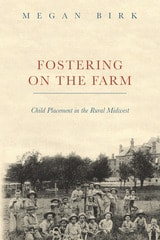
Fostering on the Farm
Child Placement in the Rural MidwestMegan Birk
University of Illinois Press, 2019
From 1870 until after World War I, reformers led an effort to place children from orphanages, asylums, and children's homes with farming families. The farmers received free labor in return for providing room and board. Reformers, meanwhile, believed children learned lessons in family life, citizenry, and work habits that institutions simply could not provide.
Drawing on institution records, correspondence from children and placement families, and state reports, Megan Birk scrutinizes how the farm system developed--and how the children involved may have become some of America's last indentured laborers. Between 1850 and 1900, up to one-third of farm homes contained children from outside the family. Birk reveals how the nostalgia attached to misplaced perceptions about healthy, family-based labor masked the realities of abuse, overwork, and loveless upbringings endemic in the system. She also considers how rural people cared for their own children while being bombarded with dependents from elsewhere. Finally, Birk traces how the ills associated with rural placement eventually forced reformers to transition to a system of paid foster care, adoptions, and family preservation.
Drawing on institution records, correspondence from children and placement families, and state reports, Megan Birk scrutinizes how the farm system developed--and how the children involved may have become some of America's last indentured laborers. Between 1850 and 1900, up to one-third of farm homes contained children from outside the family. Birk reveals how the nostalgia attached to misplaced perceptions about healthy, family-based labor masked the realities of abuse, overwork, and loveless upbringings endemic in the system. She also considers how rural people cared for their own children while being bombarded with dependents from elsewhere. Finally, Birk traces how the ills associated with rural placement eventually forced reformers to transition to a system of paid foster care, adoptions, and family preservation.
[more]
The Art of Child Placement
Jean Charnley
University of Minnesota Press, 1955
The Art of Child Placement was first published in 1955.The social worker -- experienced or neophyte -- who is engaged in the complicated job of placing children in foster homes or institutions will find helpful guidance in this book. Although she writes primarily of the problems of foster placement, the author offers a philosophy and principles that will be useful also in child adoption work.Mrs. Charnley discusses child placement in relation to the physiological and psychological growth patterns of children. She shows how the social worker can ease the child’s pain of separation from home and parents and tells how to reach a confused young mind with the explanation for such an uprooting. She focuses her viewpoint upon the child but gives careful attention also to such intimately related problems as casework with foster and “own” parents. The book is rich in case histories which show the processes involved in solving typical problems. Many of the cases are suitable for staff discussions and in-service training programs, since they are condensed and presented in sharp focus.
[more]