Results by title
2 books match the query 'Child analysis'

Birth of the Other
Rosine Lefort, in collaberation with Robert Lefort
University of Illinois Press, 1994
Originally published as Naissance de l' Autre (1980), Birth
of the Other offers a rare look at language acquisition from a Lacanian
perspective. In 1951-52 Rosine Lefort conducted the treatment of two largely
preverbal children, guiding them through psychoanalysis and meticulously
documenting their activities. Lefort has applied her subsequent training
in Lacanian theory to these early case notes, which provide remarkably
lucid examples of exceedingly difficult concepts.
This exceptional work thus clarifies many misconceptions about psychoanalytic
theory, furnishes unique insight into what Lacan calls the "time
of analysis," and grants a clearer understanding of the relationship
between language and the unconscious.
"Anyone interested in
Lacan's psychoanalytical theories should not fail to read these revealing
clinical studies by one of Lacan's most authoritative and lucid interpreters."
-- Herman Rapaport, author of Between the Sign and the Gaze
[more]
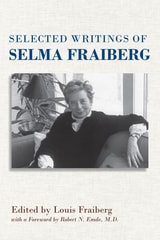
Selected Writings of Selma Fraiberg
Edited by Louis Fraiberg with a Foreword by Robert N. Emde, M.D.
The Ohio State University Press, 1987
Social worker, psychoanalyst, and child-development expert Selma Fraiberg’s iconic book, The Magic Years, has influenced generations of caregivers, therapists, and clinicians since its publication in 1959. No less rich are the essays that make up this new, accessibly priced reissue of her Selected Writings. Like The Magic Years, these essays (including her hugely influential “Ghosts in the Nursery”) glean their insights from years of clinical study and contain Fraiberg’s synthesis of and groundbreaking contributions to attachment theory, child psychology, social work, and, through her work with blind children, the experience of disability in infancy and childhood. Clinical rigor paired with attunement to the emotional lives of her subjects was Fraiberg’s hallmark: as her husband Louis writes in his preface to this volume, “Once, when asked how she knew what babies were thinking, she replied, ‘They tell me.’” Lucid and elegantly written, her Selected Writings will remain a valuable resource for new generations of social workers, mental-health professionals, educators, and others who work with young children.
[more]