Results by title
4 books match the query 'Child authors'
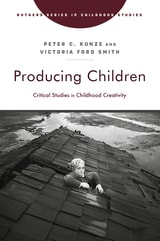
Producing Children
Critical Studies in Childhood CreativityPeter C. Kunze
Rutgers University Press, 2025
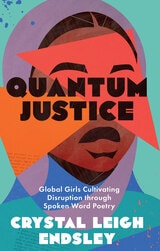
Quantum Justice
Global Girls Cultivating Disruption through Spoken Word PoetryCrystal Leigh Endsley
University of Texas Press, 2023
How girls of color from eight global communities strategize on questions of identity, social issues, and political policy through spoken word poetry.
Around the world, girls know how to perform. Grounded in her experience of “putting a mic in the margins” by facilitating workshops for girls in Ethiopia, South Africa, Tanzania, and the United States, scholar/advocate/artist Crystal Leigh Endsley highlights how girls use spoken word poetry to narrate their experiences, dreams, and strategies for surviving and thriving. By centering the process of creating and performing spoken word poetry, this book examines how girls forecast what is possible for their collective lives.
In this book, Endsley combines poetry, discourse analysis, photovoice, and more to forge the feminist theory of “quantum justice,” which forefronts girls’ relationships with their global counterparts. Using quantum justice theory, Endsley examines how these collaborative efforts produce powerful networks and ultimately map trajectories of social change at the micro level. By inviting transnational dialogue through spoken word poetry, Quantum Justice emphasizes how the imaginative energy in hip-hop culture can mobilize girls to connect and motivate each other through spoken word performance and thereby disrupt the status quo.
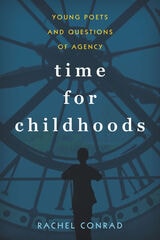
Time for Childhoods
Young Poets and Questions of AgencyRachel Conrad
University of Massachusetts Press, 2020
Time for Childhoods presents a selection of striking twentieth-and twenty-first-century American poetry written by young people, and highlights how young poets imagined and shaped time for their own poetic purposes. Through close engagement with archival materials, as well as select interviews and correspondence with adult mentors, Conrad discerns how young writers figured social realities and political and racial injustices, and discusses what important advocates such as Gwendolyn Brooks and June Jordan can teach us about supporting the agency of young poets. This essential study demonstrates that young poets have much to contribute to ongoing conversations about time and power.
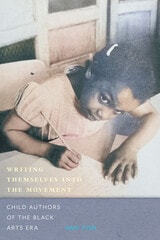
Writing Themselves into the Movement
Child Authors of the Black Arts EraAmy Fish
University of Massachusetts Press, 2024
Between 1967 and 1972, a previously obscure group of authors entered the US cultural spotlight. During this five-year period, at least thirty anthologies of poetry and prose by African American, Latinx, Asian American, and Native American children came out of adult-led workshops, classrooms, and sites of juvenile incarceration. Mass-market publishers, independent imprinters, and local mimeograph machines produced volumes with titles such as I Am Somebody! and The Me Nobody Knows: Children’s Voices from the Ghetto. These young writers actively participated in the Black Arts Movement, and some collaborated with well-known adult authors, most prominently June Jordan. Their anthologies gained national media coverage, occasionally became bestsellers, were quoted by James Baldwin, and even inspired a hit Broadway musical. While writings by children had long attracted adult attention, this flurry of youth writing and publishing was distinguished by the widespread belief that children of color from poor and working-class neighborhoods were uniquely able to speak truth about American racism and inequality.
Focusing on Black and Latinx youth authorship within New York City, and using deep archival research and elegant close readings, Amy Fish examines child-authored texts of this era within the context of their literary production and reception. These young writers were often supervised and edited by white adults, raising concerns about the authenticity and agency of their voices. Fish contends that young authors themselves shared these concerns and that they employed savvy rhetorical strategies of address, temporality, and trope to self-consciously interrogate the perils and possibilities of their adult-influenced work. Young writers thus contributed to the era’s important debates about the nature of authorship and readership within a racist society, while also using their writing as an intimate occasion of self-discovery.