Results by title
10 books match the query 'Child psychology'
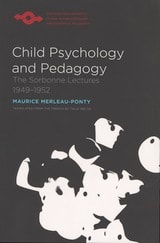
Child Psychology and Pedagogy
The Sorbonne Lectures 1949-1952Maurice Merleau-Ponty
Northwestern University Press, 2010
Maurice Merleau-Ponty is one of the few major phenomenologists to engage extensively with empirical research in the sciences, and the only one to examine child psychology with rigor and in such depth. His writings have recently become increasingly influential, as the findings of psychology and cognitive science inform and are informed by phenomenological inquiry.
Merleau-Ponty’s Sorbonne lectures of 1949 to 1952 are a broad investigation into child psychology, psychoanalysis, pedagogy, phenomenology, sociology, and anthropology. They argue that the subject of child psychology is critical for any philosophical attempt to understand individual and intersubjective existence. Talia Welsh’s new translation provides Merleau-Ponty’s complete lectures on the seminal engagement of phenomenology and psychology.
Merleau-Ponty’s Sorbonne lectures of 1949 to 1952 are a broad investigation into child psychology, psychoanalysis, pedagogy, phenomenology, sociology, and anthropology. They argue that the subject of child psychology is critical for any philosophical attempt to understand individual and intersubjective existence. Talia Welsh’s new translation provides Merleau-Ponty’s complete lectures on the seminal engagement of phenomenology and psychology.
[more]
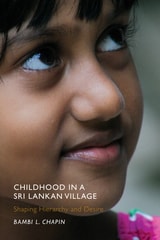
Childhood in a Sri Lankan Village
Shaping Hierarchy and DesireChapin, Bambi L
Rutgers University Press, 2014
Like toddlers all over the world, Sri Lankan children go through a period that in the U.S. is referred to as the “terrible twos.” Yet once they reach elementary school age, they appear uncannily passive, compliant, and undemanding compared to their Western counterparts. Clearly, these children have undergone some process of socialization, but what?
Over ten years ago, anthropologist Bambi Chapin traveled to a rural Sri Lankan village to begin answering this question, getting to know the toddlers in the village, then returning to track their development over the course of the following decade. Childhood in a Sri Lankan Village offers an intimate look at how these children, raised on the tenets of Buddhism, are trained to set aside selfish desires for the good of their families and the community. Chapin reveals how this cultural conditioning is carried out through small everyday practices, including eating and sleeping arrangements, yet she also explores how the village’s attitudes and customs continue to evolve with each new generation.
Combining penetrating psychological insights with a rigorous observation of larger social structures, Chapin enables us to see the world through the eyes of Sri Lankan children searching for a place within their families and communities. Childhood in a Sri Lankan Village offers a fresh, global perspective on child development and the transmission of culture.
[more]
Minnesota Symposia on Child Psychology
Volume 1John Hill
University of Minnesota Press, 1968
Minnesota Symposia on Child Psychology: Volume 1 was first published in 1968.This volume introduces a series which will make available in book form the papers given at the annual symposia on child psychology sponsored by the Institute of Child Development at the University of Minnesota. Each volume will present the papers from one symposium. For each symposium a number of outstanding child psychologists are invited to present papers dealing with their own programs of research. Each participant is given the opportunity of summarizing and integrating the findings of several studies and discussing the conceptual framework or rationale for the series of studies.This volume, based on the program of the 1966 symposium, includes six papers by nine contributors: Jacob L. Gewirtz, Robert D. Hess, Virginia C. Shipman, E. Mavis Hetherington, O. Ivar Lovaas, Patrick Suppes, Lester Hyman, Max Jerman, and Burton L. White. The papers reflect current research trends in both child psychology and psychology in general, including discussions of the socialization of the child in the culture of poverty (Hess and Shipman); extensions in behavior theory based on the study of children (Gewirtz); the application of behavior theory to clinical intervention (Lovaas); the role of imitation in human learning (Lovaas, Hetherington); the use of computers in instruction and basic research (Suppes, et al.); environmental influences on cognitive processes (White, Hess and Shipman, Suppes, et al.); infant development (White); parental influences in socialization (Hetherington, Hess); and the clarification of stimulus functions (Gewirtz, Lovaas, White).
[more]
Minnesota Symposia on Child Psychology
Volume 2John Hill
University of Minnesota Press, 1969
Minnesota Symposia on Child Psychology: Volume 2 was first published in 1969.This is the second volume in the series which is based on papers from the annual Minnesota Symposia on Child Psychology, sponsored by the Institute of Child Development at the University of Minnesota. Volume 2 presents material from five papers given at the 1967 symposium. For each symposium a number of outstanding child psychologists are invited to give papers dealing with their own programs of research. Each participant is provided with the opportunity of summarizing and integrating the findings of several studies and discussing the conceptual framework or rationale for the series of studies.This volume includes five papers ten contributors: “Stable Patterns of Behavior: The Significance of Enduring Orientations for Personality Development” by Wanda C. Bronson; “The Child’s Grammar from I to III” by Roger Brown, Courtney Cazden, and Ursula Bellugi-Klima; “A New APPROACH to Behavioral Ecology” by Bettye M. Caldwell; “Effects of Cognition on Perception: A Problem and a Paradigm for Developmental Study” by Maurice Hershenson; and “Cross-Cultural Longitudinal Research on Child Development: Studies of American and Mexican Schoolchildren” by Wayne H. Holtzman, Rogelio Diaz-Guerrero, Jon D. Swartz, and Luis Lara Tapia.
[more]
Minnesota Symposia on Child Psychology
Volume 3John Hill
University of Minnesota Press, 1969
Minnesota Symposia on Child Psychology: Volume 3 was first published in 1969.This is the third volume in the series which is based on papers from the annual Minnesota Symposia on Child Psychology, sponsored by the Institute of Child Development at the University of Minnesota. The material in this volume is based on six papers presented at the 1968 symposium. For each symposium a number of outstanding child psychologists are invited to give papers dealing with their respective programs of research.The contents of this volume are: “Effects of Stimulus Familiarization on Child Behavior” by Gordon N. Cantor, University of Iowa; “Animal Studies of Early Experience: Some Principles Which Have Implication for Human Development” by Victor H. Denenberg, University of Connecticut; “Early Stimulation and Cognitive Development” by Wendell E. Jeffrey, University of California, Los Angeles; “The Development of Stimulus Selection” by Eleanor E. Maccoby, Stanford University; “Adolescent Attitudes and Behavior in Their Reference Groups within Differing Sociocultural Settings” by Muzafer Sherif and Carolyn W. Sherif, both of Pennsylvania State University; “Modeling and Reactive Components of Sibling Interaction” by Brian Sutton-Smith, Teachers College, Columbia University, and B.G. Rosenberg, Bowling Green State University. John P. Hill, the editor, comments on each of the papers in a preface.
[more]
Minnesota Symposia on Child Psychology
Volume 4John Hill
University of Minnesota Press, 1970
Minnesota Symposia on Child Psychology: Volume 4 was first published in 1970.This is the fourth volume in a series which is based on papers from the annual Minnesota Symposia on Child Psychology, sponsored by the Institute of Child Development at the University of Minnesota. The basis for this book is the material from the 1969 symposium. For each symposium a number of outstanding child psychologists are invited to give papers dealing with their respective programs of research.This volume contains six papers by eight contributors: “The Effects of Early Life Experiences on Developmental Processes and Susceptibility to Disease in Animals” by Robert Ader, University of Rochester Medical Center; “The Antecedents and Adult Correlates of Academic and Intellectual Achievement Effort” by Virginia C. Crandall and Esther S. Battle, Fels Research Institute; “The Role of Peer-Group Experience in Moral Development” by Edward C. Devereux, Jr., Cornell University; “The Development of Motor Skills and Social Relationships among Primates through Play” by Phyllis Jay Dolhinow and Naomi Bishop, University of California, Berkeley; “Systems of Perceptual and Perceptual-Motor Development” by Herbert L. Pick, Jr., University of Minnesota; and “Mental Elaboration and Proficient Learning” by William D. Rohwer, Jr., University of California, Berkeley.
[more]
Minnesota Symposia on Child Psychology
Volume 5John Hill
University of Minnesota Press, 1971
Minnesota Symposia on Child Psychology: Volume 5 was first published in 1971.This volume, like the previous volumes in this series, is based on the papers given at an annual Minnesota Symposium on Child Psychology sponsored by the Institute of Child Development at the University of Minnesota. The content of this book is based on the papers of the 1970 symposium. For each symposium a number of outstanding child psychologists are invited to present papers dealing with their respective programs of research.Six papers by ten contributors are published here: “The Role of Modalities in Perceptual Cognitive Development” by Jacqueline J. Goodnow, George Washington University; “Hypnosis and Childlikeness” by Ernest R. Hilgard, Stanford University; “Explorations into Patterns of Mental Development and Prediction from the Bayley Scales of Infant Development” by Jane V. Hunt and Nancy Bayley, both of the University of California, Berkeley; “A Dyadic Analysis of ‘Aggressive’ Behaviors” by Gerald R. Patterson and J. A. Cobb, both of the Oregon Research Institute; “Development of Hierarchical, Configurational Conceptual Models for Parent Behavior and Child Behavior” by Earl S. Schaefer, National Institute of Mental Health; and “Some Aspects of the Development of Space Perception” by Seymour Wapner, Leonard Cirillo, and A. Harvey Baker, all of Clark University.
[more]

Selected Writings of Selma Fraiberg
Edited by Louis Fraiberg with a Foreword by Robert N. Emde, M.D.
The Ohio State University Press, 1987
Social worker, psychoanalyst, and child-development expert Selma Fraiberg’s iconic book, The Magic Years, has influenced generations of caregivers, therapists, and clinicians since its publication in 1959. No less rich are the essays that make up this new, accessibly priced reissue of her Selected Writings. Like The Magic Years, these essays (including her hugely influential “Ghosts in the Nursery”) glean their insights from years of clinical study and contain Fraiberg’s synthesis of and groundbreaking contributions to attachment theory, child psychology, social work, and, through her work with blind children, the experience of disability in infancy and childhood. Clinical rigor paired with attunement to the emotional lives of her subjects was Fraiberg’s hallmark: as her husband Louis writes in his preface to this volume, “Once, when asked how she knew what babies were thinking, she replied, ‘They tell me.’” Lucid and elegantly written, her Selected Writings will remain a valuable resource for new generations of social workers, mental-health professionals, educators, and others who work with young children.
[more]
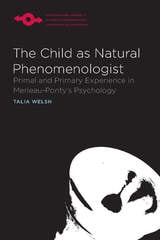
The Child as Natural Phenomenologist
Primal and Primary Experience in Merleau-Ponty's PsychologyTalia Welsh
Northwestern University Press, 2013
Maurice Merleau-Ponty (1908–1961) is well known for his work in phenomenology, but his lectures in child psychology and pedagogy have received little attention, probably because Talia Welsh translated the lectures in their entirety only in 2010. The Child as Natural Phenomenologist summarizes Merleau-Ponty’s work in child psychology, shows its relationship to his philosophical work, and argues for its continued relevance in contemporary theory and practice.
Welsh demonstrates Merleau-Ponty’s unique conception of the child’s development as inherently organized, meaningful, and engaged with the world, contrary to views that see the child as largely internally preoccupied and driven by instinctual demands. Welsh finds that Merleau-Ponty’s ideas about human psychology remain relevant in today’s growing field of child studies and that they provide important insights for philosophers, sociologists, and psychologists to better understand the human condition.
Welsh demonstrates Merleau-Ponty’s unique conception of the child’s development as inherently organized, meaningful, and engaged with the world, contrary to views that see the child as largely internally preoccupied and driven by instinctual demands. Welsh finds that Merleau-Ponty’s ideas about human psychology remain relevant in today’s growing field of child studies and that they provide important insights for philosophers, sociologists, and psychologists to better understand the human condition.
[more]

The Vulnerable Age Phenomenon
Michael Inbar
Russell Sage Foundation, 1976
A volume in the Social Science Frontiers series, which are occasional publications reviewing new fields for social science development. These occasional publications seek to summarize recent work being done in particular areas of social research, to review new developments in the field, and to indicate issues needing further investigation. The publications are intended to help orient those concerned with developing current research programs and broadening the use of social science in the policy-making process. A Volume in the Russell Sage Foundation's Social Science Frontiers Series
[more]