Results by title
22 books match the query 'Childbirth'

A Colonial Lexicon
Of Birth Ritual, Medicalization, and Mobility in the CongoNancy Rose Hunt
Duke University Press, 1999
Relying on archival research in England and Belgium, as well as fieldwork in the Congo, Hunt reconstructs an ethnographic history of a remote British Baptist mission struggling to survive under the successive regimes of King Leopold II’s Congo Free State, the hyper-hygienic, pronatalist Belgian Congo, and Mobutu’s Zaire. After exploring the roots of social reproduction in rituals of manhood, she shows how the arrival of the fast and modern ushered in novel productions of gender, seen equally in the forced labor of road construction and the medicalization of childbirth. Hunt focuses on a specifically interwar modernity, where the speed of airplanes and bicycles correlated with a new, mobile medicine aimed at curbing epidemics and enumerating colonial subjects. Fascinating stories about imperial masculinities, Christmas rituals, evangelical humor, colonial terror, and European cannibalism demonstrate that everyday life in the mission, on plantations, and under a strongly Catholic colonial state was never quite what it seemed. In a world where everyone was living in translation, privileged access to new objects and technologies allowed a class of “colonial middle figures”—particularly teachers, nurses, and midwives—to mediate the evolving hybridity of Congolese society. Successfully blurring conventional distinctions between precolonial, colonial, and postcolonial situations, Hunt moves on to discuss the unexpected presence of colonial fragments in the vibrant world of today’s postcolonial Africa.
With its close attention to semiotics as well as sociology, A Colonial Lexicon will interest specialists in anthropology, African history, obstetrics and gynecology, medical history, religion, and women’s and cultural studies.

All that We Ask of You Is to Always Be Happy
Bridget Bell
CavanKerry Press, 2025
Maternal mental illness is an ongoing health crisis and deserves awareness, not only in the medical world but in the poetry world, too. Bridget Bell’s All that We Ask of You Is to Always Be Happy offers support to current mothers, mothers-to-be, family members of people suffering from perinatal mental illnesses, OB-GYNs, nurses, and any other healthcare providers. Bell uses various poetic forms to shed light on the challenges that come with motherhood, including the physical and emotional challenges of childbirth while celebrating the beauty of women’s strength and resilience. Written with deep care and fearlessness, Bell’s debut collection is both an educational tool and a powerful component of recovery in that shares others’ similar stories.

Birth
A Literary CompanionKristin & Lynne Kovacic & Barrett
University of Iowa Press, 2002
Birthing Fathers
The Transformation of Men in American Rites of BirthRichard K. Reed
Rutgers University Press, 2005
In the past two decades, men have gone from being excluded from the delivery room to being admitted, then invited, and, finally, expected to participate actively in the birth of their children. No longer mere observers, fathers attend baby showers, go to birthing classes, and share in the intimate, everyday details of their partners' pregnancies.
In this unique study, Richard Reed draws on the feminist critique of professionalized medical birthing to argue that the clinical nature of medical intervention distances fathers from child delivery. He explores men's roles in childbirth and the ways in which birth transforms a man's identity and his relations with his partner, his new baby, and society. In other societies, birth is recognized as an important rite of passage for fathers. Yet, in American culture, despite the fact that fathers are admitted into delivery rooms, little attention is given to their transition to fatherhood.
The book concludes with an exploration of what men's roles in childbirth tell us about gender and American society. Reed suggests that it is no coincidence that men's participation in the birthing process developed in parallel to changing definitions of fatherhood more broadly. Over the past twenty years, it has become expected that fathers, in addition to being strong and dependable, will be empathetic and nurturing.
Well-researched, candidly written, and enriched with personal accounts of over fifty men from all parts of the world, this book is as much about the birth of fathers as it is about fathers in birth.
Bodies of Knowledge
The Medicalization of Reproduction in GreeceEugenia Georges
Vanderbilt University Press, 2008
Recipient of the 2006 Norman L. and Roselea J. Goldberg Prize for the best project in the area of medicine.
The author, a second-generation Greek American, returned to Greece with her young daughter to do fieldwork over the course of a decade. Focusing on Rhodes, an island that blends continuity with the past and rapid social change in often unexpected ways, she interviewed over a hundred women, doctors, and midwives about issues of reproduction.
The result is a detailed portrait of how a longstanding system of "local" gynecological and obstetrical knowledge under the control of women was rapidly displaced in the the period following World War II, and how the technologically-intensive biomedical model that took its place in turn assumed its own distinctive signature.
Bodies of Knowledge is a vivid ethnographic study of how a presumably globalizing and homogenizing process like medicalization can be reshaped as women and medical experts alike selectively accept or reject new practices and technologies. Georges found, for example, that women in Rhodes have enthusiastically embraced some new technologies, like fetal imaging during pregnancy, but rejected others, like medical contraception. They are also avid consumers of popular childbirth manuals.
This book is the recipient of the 2006 Norman L. and Roselea J. Goldberg Prize for the best project in the area of medicine.
Challenging Pregnancy
A Journey through the Politics and Science of Healthcare in AmericaGenevieve Grabman
University of Iowa Press, 2022
Ultimately, national anti-abortion politics—not medicine or her own choices—determined the outcome of Grabman’s pregnancy. At every juncture, anti-abortion politics limited the care available to her, the doctors and hospitals willing to treat her, the tools doctors could use, and the words her doctors could say. Although she asked for aggressive treatment to save at least one baby, hospital ethics boards blocked all able doctors from helping her.
Challenging Pregnancy is about Grabman’s harrowing pregnancy and the science and politics of maternal healthcare in the United States, where every person must self-advocate for the desired outcome of their own pregnancy.
MAKING MIDWIVES LEGAL
Childbirth, Medicine, and the Law, Second EditionRaymond G. DeVries
The Ohio State University Press, 1996
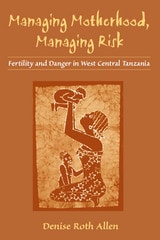
Managing Motherhood, Managing Risk
Fertility and Danger in West Central TanzaniaDenise Roth Allen
University of Michigan Press, 2004
In Managing Motherhood, Managing Risk, Denise Roth Allen persuasively argues that development interventions in the Third World often have unintended and unacknowledged consequences. Based on twenty-two months of fieldwork in the Shinyanga Region of west central Tanzania, this rich and engaging ethnography of women's fertility-related experiences highlights the processes by which a set of seemingly well-intentioned international maternal health policy recommendations go awry when implemented at the local level.
An exploration of how threats to maternal health have been defined and addressed at the global, national, and local levels, Managing Motherhood, Managing Risk presents two contrasting, and oftentimes competing, definitions of risk: those that form the basis of international recommendations and national maternal health policies and those that do not. The effect that these contrasting definitions of risk have on women's fertility-related experiences at the local level are explored throughout the book.
This study employs an innovative approach to the analysis of maternal health risk, one that situates rural Tanzanian women's fertility-related experiences within a broader historical and sociocultural context. Beginning with an examination of how maternal health risk was defined and addressed during the early years of British colonial rule in Tanganyika and moving to a discussion of an internationally conceived maternal health initiative that was launched on the world stage in the late 1980s, the author explores the similarities in the language used and solutions proposed by health development experts over time.
This set of "official" maternal health risks is then compared to an alternative set of risks that emerge when attention is focused on women's experiences of pregnancy and childbirth at the local level. Although some of these latter risks are often spoken about as deriving from spiritual or supernatural causes, the case studies presented throughout the second half of the book reveal that the concept of risk in the context of pregnancy and childbirth is much more complex, involving the interplay of spiritual, physical, and economic aspects of everyday life.

Midwifery and Childbirth in America
Judith Rooks
Temple University Press, 1999
The author vividly describes the history of struggle among health care providers over the meaning and handling of the birth process. The medical model and the midwifery model continue to collide today, the former focusing on pathology and monitoring the patient for it, the latter focusing on birth as a normal, healthy process.
The education and professional training of those who care for women during pregnancy, childbirth, and the important postpartum period reflects these divisions. Obstetrics, family physicians, midwives, nurses, and others play roles in providing the necessary care. In focusing on midwives, Rooks deals fairly and sensitively between certified nurse-midwives and direct-entry midwives, most of whom lack formal educational preparation in midwifery.
This book describes clearly and with documented scientific evidence the specific benefits of the midwifery approach to the care of pregnant women and their families. In clear language accessible to the lay reader, Rooks summarizes the research on the unintended effects of obstetrical interventions, such as episiotomies, epidurals, C-sections, and continuous electronic fetal heart monitoring, and the effectiveness and important benefits of an approach that focuses on the positive potential of childbearing, as contrasted with a narrow focus of potential for pathology. While she acknowledges the importance of access to medical care, extensive research shows the advantages of the midwifery approach. Much that passes for "routine" obstetric care in the United States has been found to be unnecessary, ineffective, or even harmful when applied to women with normal pregnancies.
The arguments over the control of childbirth are set in the context of recent changes in health care, including the current transition to managed care; the impact of the women's movement and movements for natural childbirth, home birth, and breastfeeding; and women's fear of and concern about the pain associated with labor. Rooks also explains the influence of the reports and recommendations of prestigious scientific and health-policy commissions and of federal initiatives and programs on the care provided to pregnant women in this country. She contrasts U.S. practices with those of comparable industrialized countries like the European states, Canada, Australia, New Zealand, and Japan.
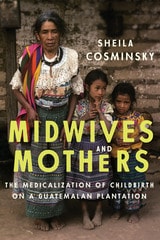
Midwives and Mothers
The Medicalization of Childbirth on a Guatemalan PlantationBy Sheila Cosminsky
University of Texas Press, 2016
The World Health Organization is currently promoting a policy of replacing traditional or lay midwives in countries around the world. As part of an effort to record the knowledge of local midwives before it is lost, Midwives and Mothers explores birth, illness, death, and survival on a Guatemalan sugar and coffee plantation, or finca, through the lives of two local midwives, Doña Maria and her daughter Doña Siriaca, and the women they have served over a forty-year period.
By comparing the practices and beliefs of the mother and daughter, Sheila Cosminsky shows the dynamics of the medicalization process and the contestation between the midwives and biomedical personnel, as the latter try to impose their system as the authoritative one. She discusses how the midwives syncretize, integrate, or reject elements from Mayan, Spanish, and biomedical systems. The midwives’ story becomes a lens for understanding the impact of medicalization on people’s lives and the ways in which women’s bodies have become contested terrain between traditional and contemporary medical practices. Cosminsky also makes recommendations for how ethno-obstetric and biomedical systems may be accommodated, articulated, or integrated. Finally, she places the changes in the birthing system in the larger context of changes in the plantation system, including the elimination of coffee growing, which has made women, traditionally the primary harvesters of coffee beans, more economically dependent on men.
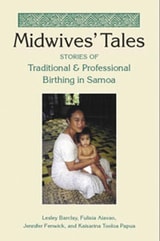
Midwives' Tales
Stories of Traditional and Professional Birthing in SamoaLesley Barclay
Vanderbilt University Press, 2005
The overall picture of changing birthing practices is complex and sometimes tinged with ironies. As the introduction says, "These Samoan nurses and midwives did not immediately attempt to mediate new and old ways of birthing after the colonial leadership of their profession left. They themselves became cultural agents for change as they continued the role of 'colonizing' their own birth tradition and taught the fa'atosaga [Samoan for midwife] Western techniques, at the same time trying to provide a professional midwife for all women. Paradoxically they often chose a social midwife for their own births and supported or at least condoned the social midwives close to them. . . . Kaisarina, while working as the leading professional midwife in the country, and working almost totally in hospital practice herself, simultaneously assisted her mother-in-law with her social practice of midwifery. Vipulo's story shows how a professional midwife preferred to have her mother, a social midwife, deliver her at home."
A particular objective of the authors is to encourage a reconception of maternity care in countries where professional services are rare and not available to all women. The book challenges common assumptions, still held in many postcolonial countries, that a simple migration of Western-style, hospital-focused care is necessarily always an achievable or desirable goal. It also demonstrates the considerable progress that one group has made in rethinking and developing a model of maternity care that works within their society and culture. As these midwives' stories suggest, solutions to some of the problems caused by gaps in the kinds of resources that Westerners take for granted can be found in partnerships and cultural wisdom that already exist in Samoa and, by extension, other developing countries.
No Alternative
Childbirth, Citizenship, and Indigenous Culture in MexicoBy Rosalynn A. Vega
University of Texas Press, 2018
Recent anthropological scholarship on “new midwifery” centers on how professional midwives in various countries are helping women reconnect with “nature,” teaching them to trust in their bodies, respecting women’s “choices,” and fighting for women’s right to birth as naturally as possible. In No Alternative, Rosalynn A. Vega uses ethnographic accounts of natural birth practices in Mexico to complicate these narratives about new midwifery and illuminate larger questions of female empowerment, citizenship, and the commodification of indigenous culture, by showing how alternative birth actually reinscribes traditional racial and gender hierarchies.
Vega contrasts the vastly different birthing experiences of upper-class and indigenous Mexican women. Upper-class women often travel to birthing centers to be delivered by professional midwives whose methods are adopted from and represented as indigenous culture, while indigenous women from those same cultures are often forced by lack of resources to use government hospitals regardless of their preferred birthing method. Vega demonstrates that women’s empowerment, having a “choice,” is a privilege of those capable of paying for private medical services—albeit a dubious privilege, as it puts the burden of correctly producing future members of society on women’s shoulders. Vega’s research thus also reveals the limits of citizenship in a neoliberal world, as indigeneity becomes an object of consumption within a transnational racialized economy.

Partial Stories
Maternal Death from Six AnglesClaire L. Wendland
University of Chicago Press, 2022
By the early twenty-first century, about one woman in twelve could expect to die of a pregnancy or childbirth complication in Malawi. Specific deaths became object lessons. Explanatory stories circulated through hospitals and villages, proliferating among a range of practitioners: nurse-midwives, traditional birth attendants, doctors, epidemiologists, herbalists. Was biology to blame? Economic underdevelopment? Immoral behavior? Tradition? Were the dead themselves at fault?
In Partial Stories, Claire L. Wendland considers these explanations for maternal death, showing how they reflect competing visions of the past and shared concerns about social change. Drawing on extended fieldwork, Wendland reveals how efforts to legitimate a single story as the authoritative version can render care more dangerous than it might otherwise be. Historical, biological, technological, ethical, statistical, and political perspectives on death usually circulate in different expert communities and different bodies of literature. Here, Wendland considers them together, illuminating dilemmas of maternity care in contexts of acute change, chronic scarcity, and endemic inequity within Malawi and beyond.
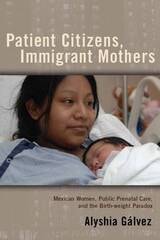
Patient Citizens, Immigrant Mothers
Mexican Women, Public Prenatal Care, and the Birth Weight ParadoxGalvez, Alyshia
Rutgers University Press, 2011
According to the Latina health paradox, Mexican immigrant women have less complicated pregnancies and more favorable birth outcomes than many other groups, in spite of socioeconomic disadvantage. Alyshia Gálvez provides an ethnographic examination of this paradox. What are the ways that Mexican immigrant women care for themselves during their pregnancies? How do they decide to leave behind some of the practices they bring with them on their pathways of migration in favor of biomedical approaches to pregnancy and childbirth?
This book takes us from inside the halls of a busy metropolitan hospital’s public prenatal clinic to the Oaxaca and Puebla states in Mexico to look at the ways Mexican women manage their pregnancies. The mystery of the paradox lies perhaps not in the recipes Mexican-born women have for good perinatal health, but in the prenatal encounter in the United States. Patient Citizens, Immigrant Mothers is a migration story and a look at the ways that immigrants are received by our medical institutions and by our society
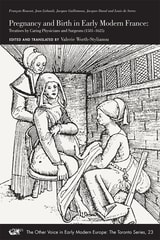
Pregnancy and Birth in Early Modern France
Treatises by Caring Physicians and Surgeons (1581–1625)François Rousset, Jean Liebault, Jacques Guillemeau, Jacques Duval, and Louis de Serres
Iter Press, 2013
—Gianna Pomata
Professor of the History of Medicine, Johns Hopkins University
Pushing in Silence
Modernizing Puerto Rico and the Medicalization of ChildbirthBy Isabel M. Córdova
University of Texas Press, 2017
As Puerto Rico rapidly industrialized from the late 1940s until the 1970s, the social, political, and economic landscape changed profoundly. In the realm of heath care, the development of medical education, new medical technologies, and a new faith in science radically redefined childbirth and its practice. What had traditionally been a home-based, family-oriented process, assisted by women and midwives and “accomplished” by mothers, became a medicalized, hospital-based procedure, “accomplished” and directed by biomedical, predominantly male, practitioners, and, ultimately reconfigured, after the 1980s, into a technocratic model of childbirth, driven by doctors’ fears of malpractice suits and hospitals’ corporate concerns.
Pushing in Silence charts the medicalization of childbirth in Puerto Rico and demonstrates how biomedicine is culturally constructed within regional and historical contexts. Prior to 1950, registered midwives on the island outnumbered registered doctors by two to one, and they attended well over half of all deliveries. Isabel M. Córdova traces how, over the next quarter-century, midwifery almost completely disappeared as state programs led by scientifically trained experts and organized by bureaucratic institutions restructured and formalized birthing practices. Only after cesarean rates skyrocketed in the 1980s and 1990s did midwifery make a modest return through the practices of five newly trained midwives. This history, which mirrors similar patterns in the United States and elsewhere, adds an important new chapter to the development of medicine and technology in Latin America.
Risk, Reproduction, and Narratives of Experience
Lauren Fordyce
Vanderbilt University Press, 2012
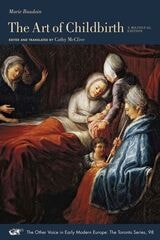
The Art of Childbirth
A Seventeenth-Century Midwife’s Epistolary Treatise to Doctor Vallant: A Bilingual EditionMarie Baudoin
Iter Press, 2022
In 1671, Marie Baudoin (1625–1700), head midwife and governor of the Hôtel-Dieu of Clermont-Ferrand, sent a treatise on the art of childbirth to her powerful Parisian patron, Dr. Vallant. The story of how Baudoin’s knowledge and expertise as a midwife came to be expressed, recorded, and archived raises the question: Was Baudoin exceptional because she was herself extraordinary, or because her voice has reached us through Vallant’s careful archival practices? Either way, Baudoin’s treatise invites us to reconsider the limits of what we thought we knew midwives “could be and do” in seventeenth-century France. Grounding Marie Baudoin’s text in a microanalysis of her life, work, and the Jansenist network between Paris and Clermont-Ferrand, this book connects historiographies of midwifery, Jansenism, hospital administration, public health, knowledge and record-keeping, and women’s work, underscoring both Baudoin’s capabilities and the archival accidents and intentions behind the preservation of her treatise in a letter.
The Medical Delivery Business
Health Reform, Childbirth, and the Economic OrderPerkins, Barbara Bridgman
Rutgers University Press, 2004
Americans at the end of the twentieth century worried that managed care had fundamentally transformed the character of medicine. In The Medical Delivery Business, Barbara Bridgman Perkins uses examples drawn from maternal and infant care to argue that the business approach in medicine is not a new development. Health care reformers throughout the century looked to industrial, corporate, and commercial enterprises as models for the institutions, specialties, and technological strategies that defined modern medicine.
In the case of perinatal care, the business model emphasized specialized over primary care, encouraged the use of surgical and technological procedures, and unnecessarily turned childbirth into an intensive care situation. Active management techniques, for example, encouraged obstetricians to accelerate labor with oxytocin to augment their productivity. Despite the achievements of the childbirth and women’s health movement in the 1970s, aggressive medical intervention has remained the birth experience for millions of American women (and their babies) every year.
The Medical Delivery Business challenges the conventional view that a dose of the market is good for medicine. While Perkins is sympathetic to the goals of progressive and feminist reformers, she questions whether their strategies will succeed in making medicine more equitable and effective. She argues that the medical care system itself needs to be fundamentally "re-formed," and the reforms must be based on democracy, caring, and social justice as well as economics.

This Giving Birth
Pregnancy and Childbirth in American Women's WritingJulie Tharp
University of Wisconsin Press, 2000
Women and Weasels
Mythologies of Birth in Ancient Greece and RomeMaurizio Bettini
University of Chicago Press, 2013
Writing Childbirth
Women’s Rhetorical Agency in Labor and OnlineKim Hensley Owens
Southern Illinois University Press, 2015
Women seeking to express concerns about childbirth or to challenge institutionalized medicine by writing online birth plans or birth stories exercise rhetorical agency in undeniably feminist ways. In Writing Childbirth: Women’s Rhetorical Agency in Labor and Online, author Kim Hensley Owens explores how women create and use everyday rhetorics in planning for, experiencing, and writing about childbirth.
Drawing on medical texts, popular advice books, and online birth plans and birth stories, as well as the results of a childbirth writing survey, Owens considers how women’s agency in childbirth is sanctioned, and how it is not. She examines how women’s rhetorical choices in writing interact with institutionalized medicine and societal norms. Writing Childbirth reveals the contradictory messages women receive about childbirth, their conflicting expectations about it, and how writing and technology contribute to and reconcile these messages and expectations.
Demonstrating the value of extending rhetorical investigations of health and medicine beyond patient-physician interactions and the discourse of physicians, Writing Childbirth offers fresh insight into feminist rhetorical agency and technology and expands our understanding of the rhetorics of health and medicine.